
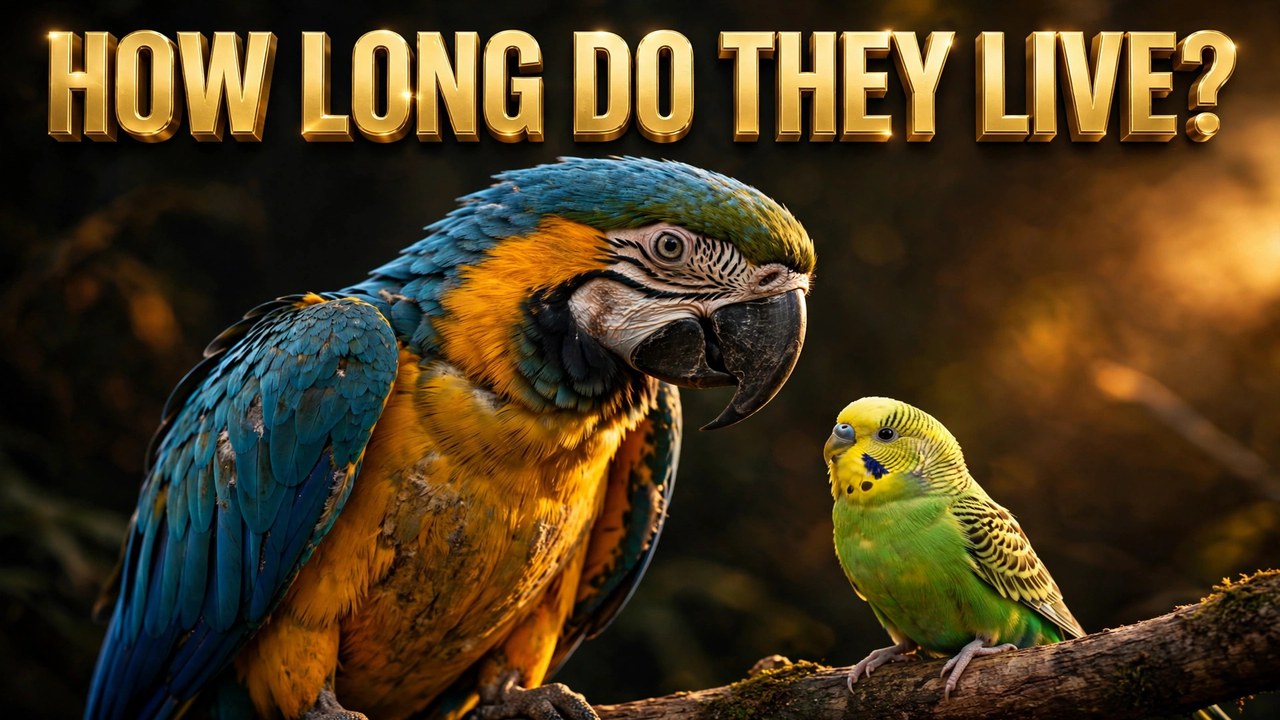

Here’s something most first-time bird owners don’t realize until it’s too late: bringing home a parrot isn’t like adopting a dog. A budgie might share a decade with you — but a macaw could share your entire adult life, and possibly outlive you. Choosing a bird means choosing a timeline.
Below is a detailed lifespan chart for 15 of the world’s most popular pet bird species, with captive lifespans based on veterinary and breeder records — plus what actually determines whether your bird reaches the top of its range or the bottom.
Lifespan Chart: 15 Popular Pet Bird Species
| Species | Average Captive Lifespan | Maximum Recorded |
|---|---|---|
| Budgerigar (Budgie) | 5–10 years | ~15 years |
| Zebra Finch | 5–10 years | ~12 years |
| Canary | 10–15 years | ~20 years |
| Lovebird | 10–15 years | ~20 years |
| Cockatiel | 15–25 years | ~30 years |
| Green-Cheeked Conure | 20–25 years | ~30 years |
| Sun Conure | 25–30 years | ~35 years |
| Quaker Parrot | 20–30 years | ~35 years |
| Indian Ringneck Parakeet | 25–30 years | ~35 years |
| Caique | 25–35 years | ~40 years |
| Eclectus Parrot | 30–50 years | ~55 years |
| Amazon Parrot | 40–60 years | ~70 years |
| African Grey Parrot | 40–60 years | ~70 years |
| Blue-and-Gold Macaw | 50–60 years | ~80 years |
| Umbrella Cockatoo | 40–70 years | ~80 years |
Note: These are captive lifespans with good care. Wild lifespans are typically much shorter due to predators, disease and food scarcity.
Why the Huge Range? What Actually Decides Lifespan
Two budgies from the same clutch can live 6 years or 14 years. The difference is almost never genetics — it’s care. Here’s what moves a bird toward the top of its range:
1. Diet Is the Number One Factor
An all-seed diet is the leading cause of premature death in pet birds — fatty liver disease, vitamin A deficiency and obesity kill thousands of budgies and cockatiels years early. Birds on varied diets (quality pellets, daily vegetables, limited seed) routinely outlive seed-only birds by 30–50%. For a budgie, that’s the difference between 7 years and 11.
2. Size Matters — Bigger Birds Live Longer
This is one of biology’s most consistent rules: larger parrot species live dramatically longer than small ones. A macaw’s slow metabolism and long developmental period translate to decades of life. But size isn’t everything — a well-cared-for cockatiel can outlive a neglected Amazon.
3. Mental Stimulation Prevents Slow Decline
Chronic boredom doesn’t just cause feather plucking — it’s linked to weakened immunity and stress-related disease. Parrots are among the most intelligent animals on Earth; a bird with puzzles, foraging toys, training sessions and social time ages slower than one staring at a cage wall.
4. Veterinary Care Catches the Silent Killers
Birds hide illness as a survival instinct, so by the time symptoms show, disease is often advanced. Annual avian vet checkups catch the problems owners can’t see: early liver disease, respiratory infections, tumors. Owners who do yearly checkups consistently report birds living into the top of their species’ range.
5. Sleep, Air and Safety
Chronic sleep deprivation (under 10 hours of darkness), exposure to cigarette smoke, non-stick pan fumes (PTFE — lethal to birds), scented candles and air fresheners all shave years off. The birds that hit record ages almost always lived in clean-air, routine-stable homes.
How to Maximize Your Bird’s Lifespan: The Checklist
- Feed like it matters — because it does: pellets + vegetables daily, seeds as a supplement, not the base.
- 12 hours of darkness for most species; hormonal balance depends on it.
- Annual avian vet visits, not just emergency trips.
- Daily out-of-cage time with flight or exercise.
- Clean air: no smoking indoors, no PTFE cookware, no aerosol sprays near the bird.
- Enrichment rotation: new toys, foraging challenges and training every week.
The Lifetime Commitment Reality Check
Before falling in love with a baby macaw, do the math honestly. A 25-year-old buying a macaw is potentially signing up for a 60-year relationship — longer than most marriages. African Greys and cockatoos routinely outlive their first owners, which is why rescues are full of grieving, plucking older birds.
Ask yourself: where will I be in 30 years? Who takes the bird if my life changes? Responsible breeders and rescues ask these questions for a reason. A budgie or cockatiel is a wonderful decade-plus companion; a large parrot is a generational commitment. Choose the timeline you can truly honor.
Frequently Asked Questions
Which pet bird lives the longest?
Among common pets, large macaws and cockatoos — 50 to 70+ years in captivity, with verified individuals reaching 80. The kākāpō, a wild New Zealand parrot, can live 60–90 years, making parrots among the longest-lived birds on Earth.
Why did my budgie only live 5 years?
The most common reasons are seed-only diet (fatty liver disease), undetected illness, poor air quality, or chronic stress. Five years is the low end of the budgie range — with varied diet and vet care, 10+ is realistic.
Do male and female birds live equally long?
Generally yes, with one exception: females of species prone to chronic egg-laying can have shorter lifespans due to calcium depletion and egg-binding risks. Proper light cycles (10–12 hours dark) reduce this risk.
Can an old bird’s lifespan still be extended?
Absolutely. Switching an older bird to a better diet, adding enrichment and starting vet checkups can add meaningful years at any age. It’s never too late to improve care.
What’s the oldest parrot ever recorded?
Cookie, a Major Mitchell’s cockatoo at Brookfield Zoo, lived to 83. Among documented pet parrots, several cockatoos and macaws have verified lifespans past 70 years.
Note: Lifespan figures are compiled from veterinary literature, breeder records and zoo data. Individual birds vary — genetics, early-life care and luck all play roles.
