
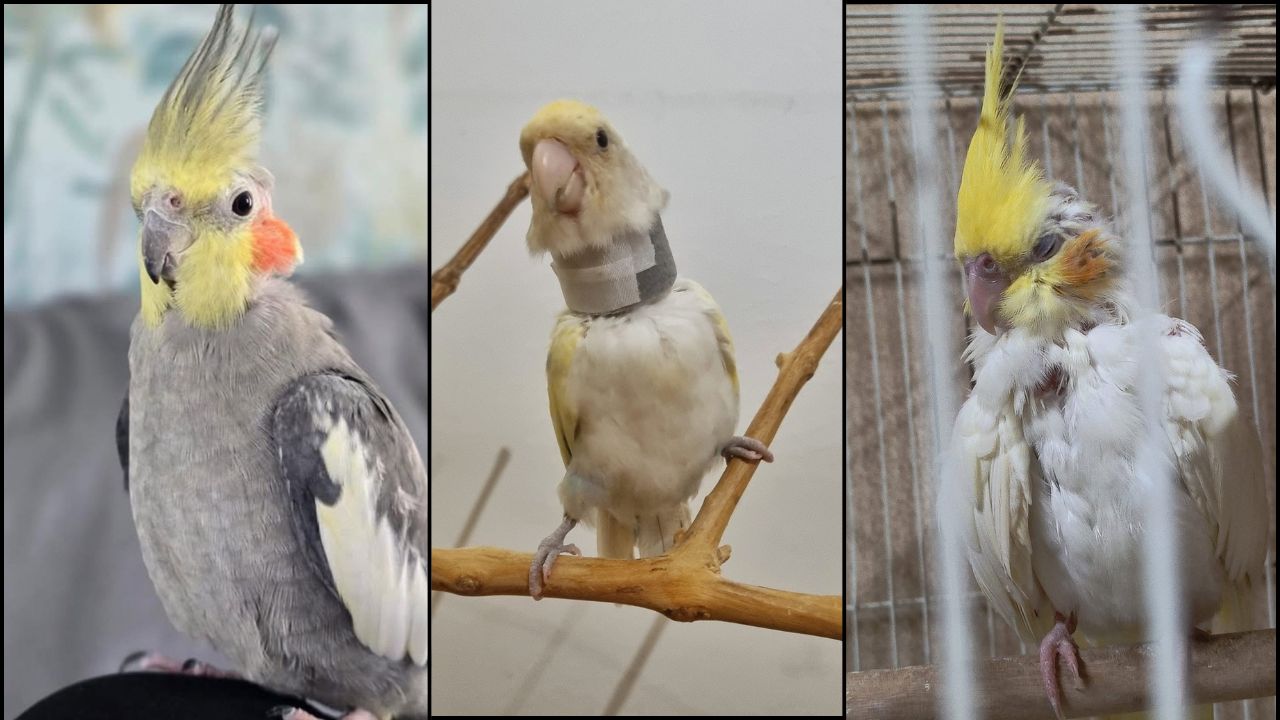

Neil has run Paradise Pets Swindon since 1988 — over 35 years of selling cockatiels, fielding worried phone calls from their owners, and watching what happens when people correctly identify a problem early, and what happens when they do not. The question in this article’s title is one of the most common things he is asked in summer. This is his honest, complete answer.
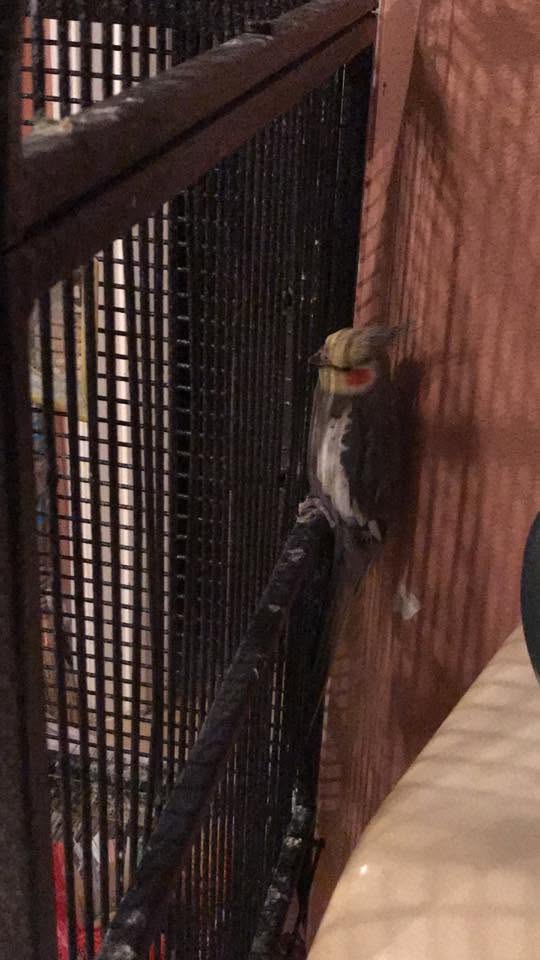
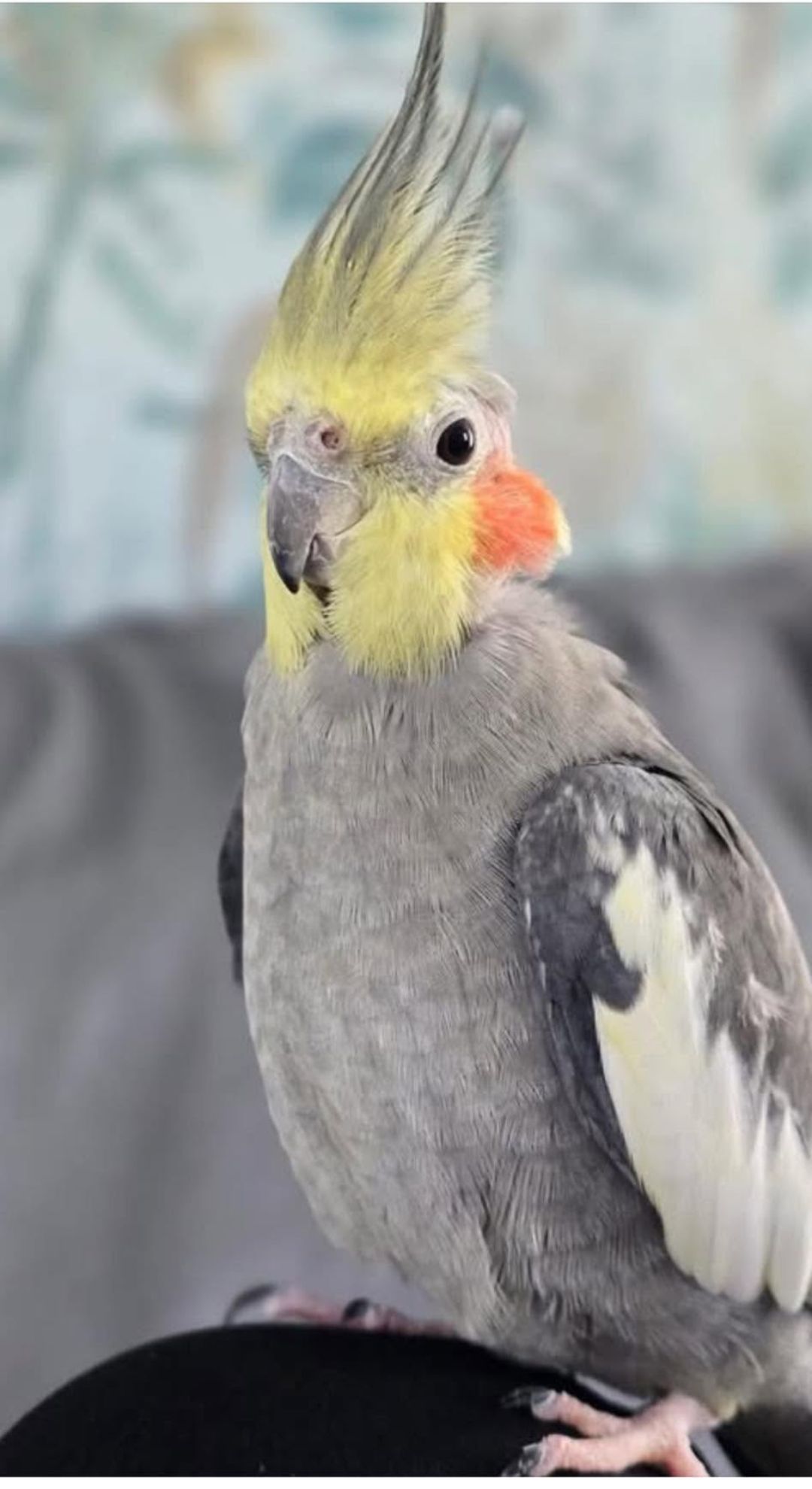
A customer rang me on a Tuesday morning in late June. Her cockatiel — a grey male she had bought from us about four years ago, one of the chattiest birds I have sold — had been unusually quiet for three days and was spending most of the afternoon on the lower perch with his feathers slightly puffed up. She had noticed some feathers on the cage floor. She had read online that this was probably moulting. She was ringing to check whether she should be worried.
I asked her three questions. I will tell you what they were, and why, in a moment.
The reason I want to start with that phone call is that it represents something I see and hear every summer, and it matters enormously — the difference between a cockatiel that is going through something entirely normal and a cockatiel that is quietly telling its owner it is unwell. Those two things can look almost identical to an owner who does not know what to look for. And in a species that is specifically built to hide vulnerability, the window for acting on the difference is narrower than most people realise.
The Short Answer — And Why It Is Not Good Enough On Its Own
Yes, a cockatiel sleeping more than usual in summer can be completely normal. Moulting — the annual process of shedding old feathers and growing new ones — places significant physical demands on a bird. Growing new feathers requires energy and nutrients that the bird’s body is redirecting away from its normal activity. A cockatiel going through a moult will often sleep more, vocalise less, seem quieter and less interactive than usual, and may be moodier or less willing to be handled. All of that is normal, and it passes.
But here is the part the internet search tends to leave out: excessive sleeping in a cockatiel is also one of the earliest and most consistent signs of illness. The same behaviour — more sleep, less noise, reduced activity, feathers slightly raised — appears in both scenarios. And the difference between “my bird is moulting” and “my bird is unwell and declining” is not visible on the surface. It requires observation, context, and knowing your specific bird well enough to read the distinction.
Getting it wrong in the direction of assuming everything is fine when it is not is not a small mistake. A cockatiel that is genuinely ill can decline quickly once it can no longer sustain the effort of appearing well. The window for effective veterinary intervention, which was already narrowed by the time you noticed something, can close faster than most owners expect.
So the short answer is: it might be moulting. It might not be. Here is how to tell the difference, and here is what to do about each.
What Normal Moulting Looks Like — And What It Does Not
A healthy moult in a cockatiel is gradual, symmetrical, and comes with specific physical signs that an observant owner can identify.
The most obvious is feathers on the cage floor and the appearance of pin feathers — the small, white, waxy-looking sheaths visible on the head, neck, and sometimes the body, through which new feathers grow. These are not comfortable for the bird. They are itchy and somewhat sensitive, which is why a moulting cockatiel will often want its head scratched more than usual — it cannot reach the pin feathers on its own head to preen them — and may be less tolerant of handling elsewhere on its body.
A moulting cockatiel will typically sleep more and be less active during peak moult. This is real and it is normal. But here is the crucial distinction: a bird that is moulting and otherwise well will still have moments of its normal energy. It will still eat with its normal appetite. It will still respond to its owner, still have periods of alertness and interest in what is happening around it. The increased sleep is part of a broader picture that includes a bird that is fundamentally still engaged with its environment, just doing so with less energy than usual.
Moulting also follows a consistent pattern in a healthy bird — symmetrical, gradual, with new feathers visibly coming through. A bird losing feathers in patches, asymmetrically, or with no visible pin feathers growing through is not showing a normal moult. That pattern needs veterinary attention.
Cockatiels kept indoors under artificial lighting and in temperature-controlled environments may not moult strictly seasonally — they can moult at various times of year, and some go through softer, more prolonged moults rather than dramatic seasonal ones. Knowing your bird’s individual moulting pattern, built up over the years you have had it, is genuinely useful here.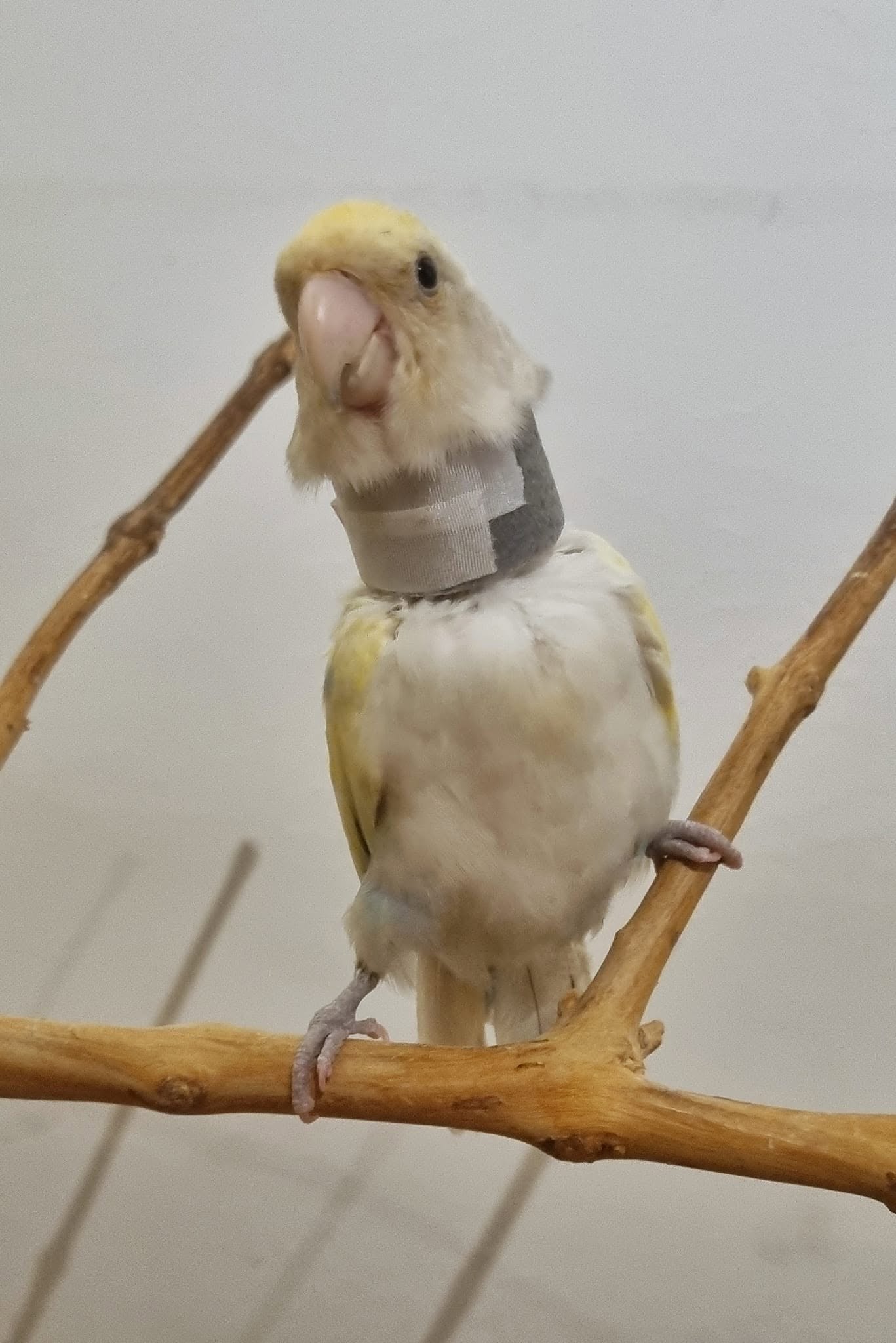
What Illness Looks Like — The Signs That Are Not Moulting
This is the list I want every cockatiel owner to read and remember, because these are the things that tell you the situation has moved past moulting into something that needs a vet.
A cockatiel that is sleeping more but is genuinely unwell will typically show a combination of the following. It will be puffed up not just when resting but persistently, through periods when it would normally be alert. It will lose appetite — not just eating a little less, but showing a genuine reduction in interest in food. Its droppings will change — in colour, consistency, or volume — and the change will persist for more than a day. It may sit lower in the cage than usual, or move to the cage floor, which in a bird that normally perches is a significant warning sign. Its tail may bob slightly when at rest, which indicates respiratory effort and should never be ignored. There may be discharge from the nostrils or eyes, however minor.
The key distinction from moulting is this: a sick bird has lost the spark. The moments of alertness and engagement that punctuate even a tired, moulting bird’s day are absent or minimal. When you approach the cage or call to it, there is less response than there used to be. That absence — the bird that is present but not really there — is the sign I would ask you to take seriously above all others.
Cockatiels are capable of maintaining a convincing appearance of wellness for a considerable time when they are unwell, because the instinct to do so is deep and powerful. By the time a bird abandons that effort — by the time it is sitting on the cage floor, visibly distressed, making it obvious that something is wrong — it has usually been fighting something for days or weeks. That is the stage at which even excellent veterinary care faces a harder task. The goal is to catch things before it reaches that point.
The Three Questions I Asked That Tuesday Morning
I told you I asked three questions when that customer rang about her cockatiel. Here they are, and here is why they are the right questions.
The first was: is he still eating? Not less than usual — is he actively eating, showing interest in his food, going to the bowl? A bird that has gone off food is a bird whose body is telling you something. A moulting bird that is otherwise well will typically eat with its normal appetite, sometimes more, because it needs the nutritional resources to grow new feathers.
The second was: what do his droppings look like? This is the question most owners do not think to check, and it is one of the most informative things a bird’s body produces. Normal droppings have a consistent appearance — a dark, firm portion and a white portion, with the amount of liquid varying somewhat with how much fruit or vegetables the bird has had. A significant change in colour, a dramatic increase in liquid, green discolouration, or droppings that are much smaller than normal are all signs that something has changed internally. A change that persists for more than a day without a dietary explanation needs attention.
The third was: when you go to the cage and talk to him, does he respond the way he normally would? Not necessarily coming forward or being as chatty as usual — but is there recognition, interest, a sense of his normal personality still being present? A moulting bird, even a tired and grumpy one, will usually still acknowledge you. A bird that looks through you, or that cannot summon the energy to respond, is telling you something different.
In that particular case, the answers were reassuring on all three counts. He was eating normally, his droppings were unchanged, and he still perked up when she went to the cage, even if he was less vocal than usual. She could see pin feathers on his head. I told her it sounded like a moult and to watch him closely — daily — for any of the changes I have described, and to ring me or go straight to an avian vet if anything shifted.
He came through the moult fine. She rang to tell me three weeks later.
The Summer Factor — Heat, Light, and What They Actually Do To Cockatiels
There is a third possibility alongside moulting and illness that is worth understanding, particularly in the context of a UK summer that has been running warmer than the historical average in recent years.
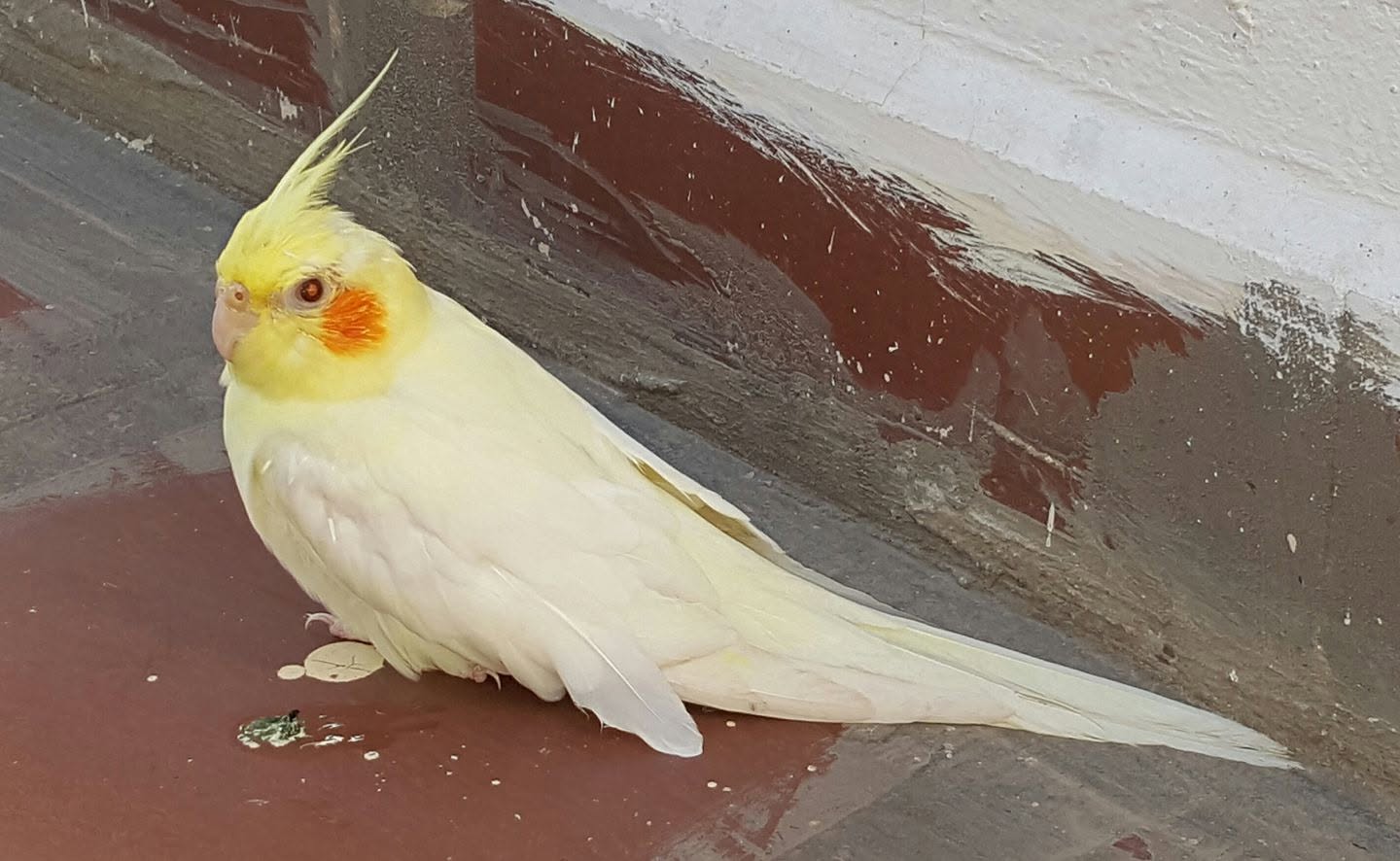
Cockatiels are Australian birds. Their wild counterparts live across a wide range of Australian environments and are capable of tolerating considerable heat. But the cockatiels kept in UK homes are acclimatised to UK indoor temperatures, and a sustained spell of unusual warmth — particularly in a room that heats up significantly during the day — can cause a bird to reduce its activity and sleep more as a response to the thermal load on its body.
Heat stress in birds is a genuine concern, and it is distinct from both moulting and illness, though it can make an already-unwell bird deteriorate more quickly. The signs of heat stress include panting with the beak open, wings held slightly away from the body, and a bird that is genuinely seeking shade or the coolest part of its cage. If your cockatiel is showing any of those signs during a warm spell, moving the cage out of direct sunlight or away from a south-facing window, ensuring good air circulation — without putting the bird in a direct draught — and providing fresh cold water is the immediate response. A seriously heat-stressed bird needs veterinary attention.
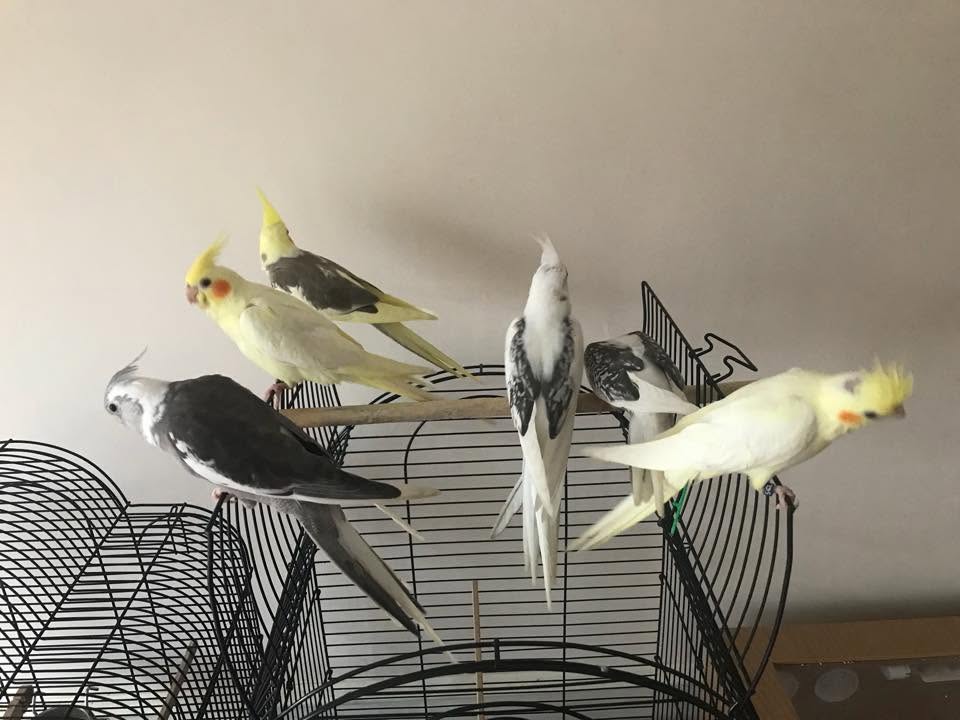
Extended daylight in summer also affects cockatiels through their hormonal systems. Longer days can trigger hormonal activity that influences behaviour, sometimes making birds more restless at one end and more lethargic at another. This is not illness and it is not moulting. It is the bird’s body responding to the same cues it would have responded to in the wild — and it is one more reason why knowing your specific bird’s normal behaviour across the seasons is more useful than any general description of what cockatiels do.
Why The Baseline Question Matters More Than Any Symptom List
I have written about this elsewhere on this site, but it bears repeating here because it is the thread that runs through every answer to this question.
No symptom list I can give you is as useful as your own deep familiarity with your own bird. A cockatiel sleeping more than usual is only meaningful if you know what usual looks like. A reduction in vocalisation is only a warning sign if you know how vocal your bird normally is. The three questions I asked that customer were useful because she had four years of knowing that specific bird — four years of watching his routine, his habits, his personality — that gave her answers enough context to mean something.
If you are a newer cockatiel owner, or if you have not previously paid close attention to your bird’s daily patterns, the most useful thing you can do right now is start doing so. Five minutes of deliberate observation at roughly the same time each day — not glancing at the cage, but actually watching the bird — builds the baseline against which any change becomes visible. What perches does it favour? How active is it at different times of day? How does it respond when you approach? What do its droppings normally look like? How much does it eat?
That knowledge, built consistently over even a few weeks, is worth more than any checklist. Because the change you need to catch is not the dramatic one — the bird lying on the floor, obviously unwell. It is the subtle one. The bird that is slightly less itself than it was yesterday. The bird that did not come to the front of the cage when you walked past, when it usually does. The bird that left most of its food rather than finishing it. Those things are catchable if you know what you are comparing against. They are invisible if you do not.
When To Go Straight To An Avian Vet — No Waiting
I want to be completely clear about this, because I have seen the consequences of waiting too long, and they are avoidable.
If your cockatiel is showing any of the following, do not wait to see if it improves. Do not try home remedies. Do not add vitamins to the water and hope for the best. Go to an avian vet — not a general small animal practice that will do their best but may lack specific bird expertise, but a vet with genuine avian experience — as soon as you can get an appointment, and today if any of the serious signs below are present.
Tail bobbing visibly when the bird is at rest. Any discharge from the nostrils or eyes. The bird sitting on the cage floor with no interest in its surroundings. Breathing that is audible, laboured, or involves the whole body. A bird that has not eaten for more than a day. Any sudden change in the colour of droppings — bright green, black, or very pale — that is not explained by a dietary change. A bird that collapses or cannot maintain its balance on a perch.
These are not wait-and-see symptoms. They are the signs that the bird has been unable to maintain its appearance of wellness any longer, and the situation is already advanced. In a bird of this size, the deterioration that follows can be rapid. Early veterinary intervention at the first subtle signs produces dramatically better outcomes than intervention at this stage. But if you are at this stage, the answer is still to go immediately — not tomorrow, and not after the weekend.
Frequently Asked Questions
How long does a cockatiel moult last?
A typical moult lasts between four and eight weeks in a healthy bird, though this varies. Birds kept indoors under artificial light may moult more gradually or at unusual times of year. A moult that appears to go on for several months without resolution, or that leaves visible bald patches, is not a normal moult and warrants veterinary assessment.
Should I change my cockatiel’s diet during a moult?
Supporting the moult with good nutrition makes sense. Feathers are primarily protein, and a bird growing a new coat benefits from a diet with adequate protein and the amino acids that support feather development. A varied diet that goes beyond seed — including quality pellets, fresh leafy greens, and the cuttlebone that provides calcium — is the right approach year-round, but it matters particularly during moult. Talk to us about what we would specifically recommend if you are unsure.
My cockatiel is sleeping more but still eating and chatting. Should I worry?
If the bird is genuinely still eating with its normal appetite, its droppings are unchanged, and it still has moments of its normal personality — responding to you, showing interest in its surroundings — and you can see pin feathers or feathers on the cage floor, this is most likely a moult. Watch it closely and daily. If any of those things change — if appetite drops, if droppings change, if the spark goes — move promptly to contacting an avian vet.
How do I find an avian vet in the UK?
Not every veterinary practice has experience with birds, and the quality of avian care varies considerably. The Association of Avian Veterinarians maintains a directory of members with avian expertise. It is worth identifying an avian vet in your area before you need one urgently — finding that contact when your bird is in acute distress is considerably harder than finding it in advance. Come and ask us if you are in the Swindon area and are not sure where to go.
Can I give my cockatiel vitamins to help with moulting?
A balanced, varied diet is far more effective than supplementation for supporting a moult in a bird that is otherwise well. Over-supplementation — particularly of fat-soluble vitamins — can cause problems of its own. If you are concerned that your bird’s diet is not adequate and want to support it through a heavy moult, come and talk to us about what we would recommend. I would not suggest purchasing general over-the-counter bird vitamins without specific guidance on what is appropriate for the situation.
Back To That Tuesday Morning
The customer who rang me about her cockatiel did the right thing. She noticed something different, she did not dismiss it, and she asked. The asking cost her nothing and took five minutes. The outcome was that she left that conversation knowing specifically what to watch for and what would tell her the situation had changed — and it gave her four years of familiarity with that bird context enough to be genuinely reassuring.
That is the model I would ask every cockatiel owner to follow. Not anxiety about every small change, but informed attention that knows the difference between the two — and knows when to act.
If you are not sure whether what you are seeing is a moult or something more, come in or ring us. Describe what you are observing. We will ask you the questions that matter, and we will tell you honestly what we think you are looking at and what to do next. That conversation is exactly what this counter has been for since 1988.
Worried About Your Cockatiel? Come And Talk To Us.
If something about your bird’s behaviour has changed and you are not sure whether to be concerned, we would rather you asked us early than waited until you were certain. A short conversation now is worth considerably more than a delayed one later.