


Neil has sold and kept budgies at Paradise Pets Swindon since 1988 — over 35 years of experience with one of the UK’s most popular cage birds. A budgie that has stopped singing is one of the most common concerns owners bring to the counter — and one of the most important to get right, because silence in a bird that used to sing is never nothing. This article is his honest, complete guide on every reason a budgie stops singing, what each one means, and exactly what to do about it.
An elderly gentleman came in on a grey Wednesday morning last winter. He had kept budgies for over twenty years — not consecutively, but in three separate pairs across his adult life, each pair living well into their teens under his care. He knew his birds. He was not someone who came in with unfounded concerns.
His current bird — a blue male called Arthur — had been singing every morning for four years without exception. Not quietly. Loudly, elaborately, with the kind of sustained, complex song that a well-settled, happy male budgie produces when he considers his situation satisfactory.
Three weeks ago, Arthur had stopped.
Not reduced. Stopped. Still eating, the man said. Still moving. Still responsive when he approached the cage. But the morning song — the reliable, four-year daily performance that the man had come to structure his mornings around — was gone.
“He’s quiet,” the man said. “Not ill-quiet. But quiet.”
That distinction — not ill-quiet, but quiet — was exactly the right one to make. And the fact that he had made it, after twenty years of budgie keeping, told me he already knew something had changed. He just wanted to understand what.
First — What Singing Actually Is in a Budgie
Before you can understand why a budgie stops singing, it helps to understand what singing actually is — because it is not one thing. Different kinds of budgie vocalisation serve different purposes, and they stop for different reasons.
The sustained, elaborate song of a healthy male budgie — the chattering, the whistling, the mimicry, the long complex sequences that he develops and refines over months and years — is primarily a social and territorial behaviour. It says: I am here, I am well, I am content, and this space is mine. It is produced most reliably when a bird is in a secure, stable, socially satisfying environment and is in good hormonal and physical condition.
Contact calls — the shorter, repeated vocalisations that budgies use to maintain flock awareness — are different. They are produced when the bird wants to know where other flock members are, or to signal its own location. A bird that is singing in the full sense is usually also producing contact calls. A bird that has gone quiet will typically have reduced both.
Female budgies sing too — quieter, less complex, less sustained than males. The loss of song in a female is worth the same attention as in a male, but it is a more subtle change to detect because the baseline is lower.
- Sustained complex song in males is a social and territorial behaviour — produced when the bird is well, settled, and in good condition
- Contact calls serve a different function — flock awareness and location signalling — and typically reduce alongside song when something is wrong
- Female budgies sing — less elaborately than males, but the loss of that song is equally significant
- Song is not just sound — it is a reliable indicator of the bird’s overall state. When it stops, the state has changed
- The duration of the silence matters — one quiet day is different from three quiet weeks. The longer the silence, the more important the investigation

The 8 Reasons a Budgie Stops Singing
In thirty-five years, I have seen budgie song loss caused by all of the following. Some are benign and temporary. Some require immediate attention. Knowing which is which — and how to distinguish between them — is what this guide is for.
Reason 1: Moult — The Most Common and Most Overlooked
This is the first thing I check, because it is the most frequent cause of temporary song loss in otherwise healthy budgies — and the one that most owners do not immediately connect to silence.
Budgies moult once or twice a year, replacing worn feathers with new ones in a gradual process that takes several weeks. Moulting is energetically expensive — growing new feathers consumes significant resources — and many budgies reduce or stop singing during a heavy moult as their body directs energy toward feather production rather than complex vocalisation.
A moulting budgie is not unwell. It is doing something physiologically demanding. The song reduction is the equivalent of a person being quieter than usual when they are tired — a rational allocation of limited energy, not a sign of distress.
The tell is the pin feathers — the new feathers still in their waxy sheaths emerging from the skin, visible as small, stiff, pointed quills particularly on the head and neck. A bird with visible pin feathers that has reduced its song but is otherwise eating normally, moving normally, and responding normally is almost certainly in the middle of a moult. The song will return when the moult is complete.
- Moult is energetically expensive — the bird reduces non-essential activity, including singing, during heavy feather replacement
- Pin feathers visible on the head and neck are the diagnostic sign — small, pointed, waxy quills emerging from the skin
- The bird is otherwise well — eating, moving, responsive, droppings normal
- The silence is partial or intermittent rather than complete — most moulting birds reduce song rather than eliminating it entirely
- The timeline is weeks not months — a moult-related song reduction should show visible improvement as pin feathers open and the moult progresses
- Support the moult with good nutrition — egg food two to three times a week provides protein that feather production requires
Reason 2: Seasonal Change and Day Length
Budgie song is regulated partly by hormones, and those hormones are regulated partly by day length. As the UK moves into autumn and winter — days shortening, light levels reducing — many budgies reduce their singing naturally, in response to the same photoperiodic cues that govern their reproductive cycle.
This is a natural, seasonal pattern that owners who have kept the same bird through multiple years will often recognise. The bird sings most actively in spring and summer. It is quieter in winter. The difference between this and something concerning is the gradualness of the reduction, the alignment with the season, and the absence of any other change in the bird’s condition or behaviour.
The problem arises when artificial lighting disrupts this pattern. A bird kept in a room where lights are on late into the evening — experiencing artificially long days — may not show the natural winter reduction. Or may show an inconsistent pattern as the artificial and natural light cues conflict. Managing the light environment — a consistent cage cover time that provides ten to twelve hours of darkness regardless of household lighting — helps the bird maintain a stable hormonal cycle and reduces the unpredictability of seasonal song changes.
- Song is partly hormone-driven and hormones are partly regulated by day length — winter brings natural song reduction in many birds
- The seasonal pattern is gradual and consistent — not sudden, not accompanied by other changes
- Owners who have kept the same bird across multiple years often recognise the seasonal pattern from previous winters
- Artificial lighting that extends the perceived day length disrupts the natural cycle and can produce irregular, unpredictable song patterns
- A consistent cage cover time — covered by 8 to 9pm regardless of household activity — helps maintain stable hormonal regulation through the winter months
Reason 3: A Change in the Environment or Household
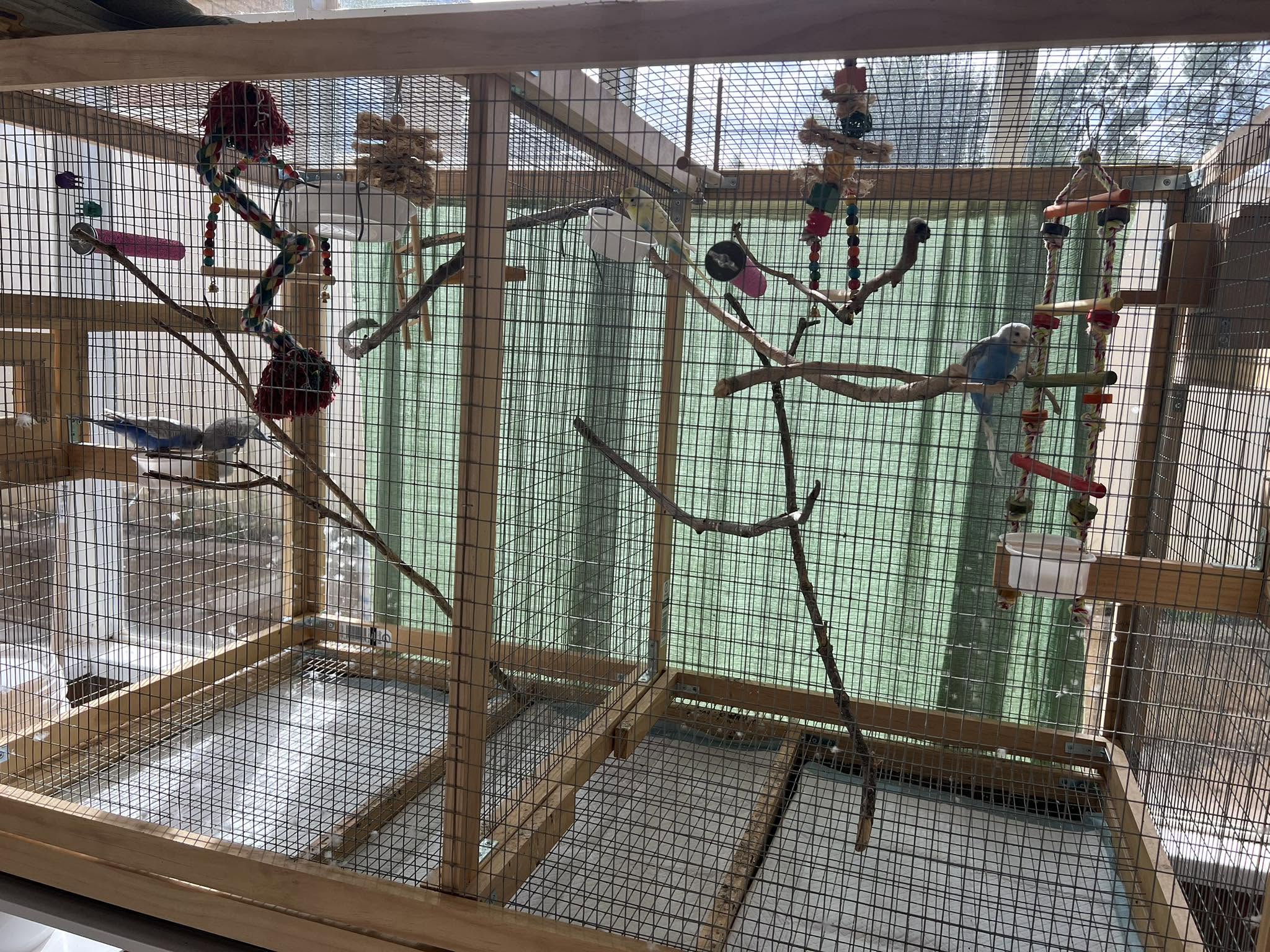
Budgies are sensitive to their environment in ways that their apparent hardiness makes easy to underestimate. A change that seems minor from a human perspective — furniture rearranged, a new piece of electrical equipment in the room, a different scent in the air — can produce a period of increased alertness and reduced vocalisation in a bird that is reassessing whether its environment is safe.
More significant changes — a house move, a new pet in the household, a new person regularly present, significant noise disruption from building work or nearby traffic changes — produce more sustained song reduction. The bird is not unwell. It is in a state of heightened environmental vigilance, and complex song is not produced by birds in vigilant states. The vigilant bird conserves sound and attention for assessing threat, not for social display.
The key question when a change in environment is the suspected cause: what changed, and when did the silence start? If these correlate — the furniture moved last week and the singing stopped three days ago — you have identified the likely cause. The resolution is time and stability. Most budgies habituate to environmental changes within one to three weeks if the change is not ongoing and threatening.
- Any significant environmental change can trigger a period of increased vigilance and reduced song — house moves, new pets, new people, building work, changed room layout
- The correlation between change and silence is the diagnostic — when did the change happen, when did the singing stop?
- The bird is otherwise well — eating, moving, responsive. Just alert and quiet
- A new predator in the household — cat, dog — is a sustained stress that will not resolve through habituation if the predator has ongoing access to the room where the cage is
- Most environmental adjustments produce song recovery within one to three weeks once the bird has assessed and accepted the change as non-threatening
- Introducing changes gradually where possible — new furniture in stages, new pets introduced slowly — reduces the magnitude of the vigilance response
Reason 4: Loss of a Companion Bird
This is the reason that produces the most prolonged song loss and the one I handle most carefully in these conversations — because the owner is almost always grieving the lost bird themselves, and the remaining bird’s silence is part of that grief in the most direct way.
Budgies form genuine bonds with their flock companions. When a paired bird dies, the survivor loses not just company but the entire social context from which its vocalisation emerged. Song in a paired budgie is partly directed at the pair bond — at the other bird. When that bird is gone, the song has no recipient. The social motivation for complex vocalisation is reduced or removed.
The duration of the silence after a companion loss varies considerably between individuals. Some birds resume singing within weeks as they accept the changed situation. Others remain significantly quieter for months. A bird that was singing elaborately with a companion may never return to exactly that level of vocalisation alone — because the companion was part of what produced it.
The most effective response, if the owner is in a position to consider it, is a new companion bird — introduced slowly and carefully, but providing the social context that restores the motivation to sing. A bird that was quiet for months after losing a companion will very often resume singing within weeks of a successful new companion introduction.
- Song in a paired bird is partly directed at the pair bond — loss of the companion removes the social motivation for complex vocalisation
- The silence after companion loss is not illness — it is grief, in the most practical biological sense
- The duration of song reduction after companion loss varies — weeks in some birds, months in others, and some never return to the same level alone
- A new companion bird, introduced carefully, often restores singing within weeks — the social motivation returns with the social context
- Do not rush a companion introduction — a week of side-by-side cages before any shared space is the minimum for a safe introduction
- Give the bird time before concluding that something medical is wrong — companion loss is one of the most significant events in a budgie’s social life
Reason 5: Illness — The Reason That Cannot Wait
I put this at number five not because it is the fifth most common reason, but because I want owners to have read the benign causes first — so that when I say illness now, they understand the distinction between the quiet of moult or seasonal change and the quiet that means something is medically wrong.
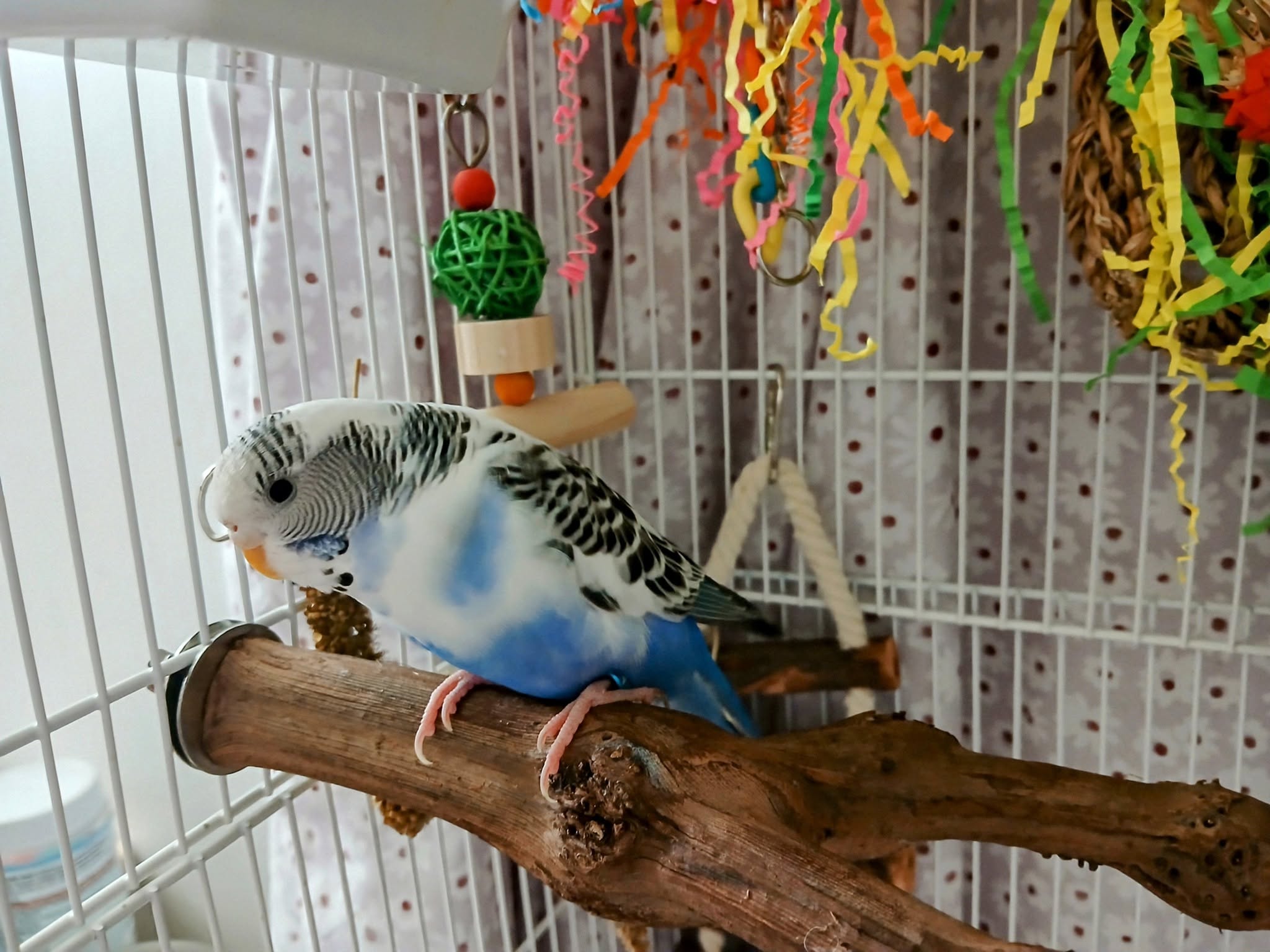
A budgie that is unwell will almost always become quieter. It is one of the earliest external signs of illness in a bird that is otherwise trying to mask its condition. The singing — which requires energy, hormonal stability, and general wellbeing — is one of the first things to go when the body is dealing with infection, systemic disease, or physiological stress.
What distinguishes illness-related silence from the other causes on this list is the combination of signs rather than the silence alone. A moulting bird is quiet but active, eating normally, with pin feathers visible. A bird with an environmental adjustment is alert and responsive, eating normally, watching everything. An ill bird is something else — quieter in a way that has a different quality to it, with other subtle signs present if you know how to look.
- Song loss combined with any of the following is a vet situation today: feathers very slightly or obviously puffed when awake, posture slightly hunched, droppings changed in colour or consistency, reduced appetite, reduced responsiveness to approach
- The absence of pin feathers rules out moult as the cause — if the bird is quiet and there is no moult in progress, look harder at other causes including illness
- Sudden, complete silence in a bird that was singing actively the previous day is more concerning than gradual reduction — the speed of onset is diagnostic information
- A bird that used to respond to your voice and now barely does — even if still on the perch and apparently eating — has changed in a way that warrants closer attention
- Thirty-five years of budgies has taught me that the owners who say “he just seems not quite right” about a quiet bird are right far more often than they are wrong
- Feathers puffed when the bird is awake and the room is warm
- Any change in dropping colour, consistency, or volume
- Reduced response to your voice or approach compared to the bird’s established pattern
- Tail bobbing with each breath — a sign of respiratory effort
- Any discharge from eyes or nose
- Weight loss — weigh the bird weekly and compare to baseline
Reason 6: Hormonal Changes — Including in Females
Hormonal changes affect budgie behaviour profoundly — and vocalisation is one of the behaviours most directly affected. Male budgies going through hormonal peaks associated with breeding condition may sing more intensely for a period and then less as the hormonal state shifts. Female budgies coming into or out of breeding condition may show similar fluctuations.
In males, the hormonal state that produces peak singing — elevated testosterone, long-day perception, access to a receptive female or a mirror that simulates one — is also the state that can produce other behaviours alongside increased song: regurgitation for the owner or a toy, excessive cage territory behaviour, persistent head bobbing. When the hormonal state passes, the song often reduces with it.
In females, particularly females without a companion male, the hormonal cycle can produce egg-laying in the absence of fertilisation — a physically demanding process that reduces song, reduces activity generally, and can cause significant health consequences if it becomes chronic. A female that has gone quiet alongside spending more time on the cage floor, sitting low, or showing a distended abdomen warrants a vet visit.
- Hormonal fluctuations in males can produce peaks of singing followed by quieter periods as the hormonal state changes
- The reduction of a hormonal peak is natural — it does not require intervention if the bird is otherwise well
- Reducing hormonal triggers — removing mirrors, reducing day length, stopping back and wing stroking which stimulates breeding behaviour — can smooth out the peaks and troughs
- Female song loss combined with sitting low on the cage floor, a distended abdomen, or signs of straining warrants immediate vet attention — possible egg binding
- Chronic egg laying in a female without a male is a serious welfare and health concern that should be discussed with an avian vet
Reason 7: Poor Environment — The Slow, Invisible Cause
This is the cause that I find hardest to explain gently — because it requires saying to an owner that the environment their bird has been living in has been inadequate, and that the song they loved has been reduced partly by conditions they controlled and did not realise were the problem.
A budgie in a cage that is too small, on a diet of seed only, in a room with inadequate natural light, with no enrichment and nothing that varies from one day to the next, will sing less than a budgie in good conditions. Not necessarily much less — the suppression is often gradual, and owners adapt to the reduced baseline without noticing the change because it happened slowly over months.
But there is a version of this that is unambiguous. When an owner upgrades a cage — moves a bird from a small ornamental cage to a proper flight cage — the singing frequently returns or increases within weeks. The bird was not particularly quiet before. It is loudly, obviously vocal after. The comparison reveals what the inadequate conditions were suppressing.
- A cage below minimum size — less than 60cm width — suppresses natural vocalisation behaviour by limiting the flight and activity from which song naturally emerges
- A seed-only diet produces nutritional deficiencies that affect energy and hormonal function, both of which influence song production
- Inadequate natural light reduces the hormonal stimulation that drives singing — north-facing rooms with no daylight access produce quieter birds than light-filled rooms
- No enrichment and no variety in the environment produces a bird with low environmental engagement — and low engagement produces low vocalisation
- Cage upgrades and diet improvements frequently produce visible song increases within weeks — the change is one of the most rewarding welfare improvements owners report to me

Reason 8: Age — The Honest Conversation
A budgie that is past eight or nine years of age will sing less than the same bird at three or four. Not always dramatically less — some elderly budgies remain remarkably vocal well into their teens — but the sustained, elaborate morning performances of a young, healthy male often reduce in duration and complexity as the bird ages.
This is normal and it is not cause for distress. Age reduces energy. It affects hormonal production. It changes what the bird can sustain. An older budgie that sings less than it used to but is otherwise well — eating, moving, responsive — is an old bird, not an ill one.
The important distinction: age-related song reduction is gradual and consistent with overall reduced energy and activity. Sudden song loss in an older bird — a noticeable change from recent pattern — is not age. It is a symptom. Older birds are more vulnerable to illness, not less, and sudden change in an aged budgie should be taken to a vet rather than attributed to age without investigation.
- Song naturally reduces in frequency and complexity as a budgie ages — this is normal in a bird that is otherwise well
- Age-related song reduction is gradual, consistent, and accompanied by other indicators of reduced energy — not sudden
- A bird that is older but still eating well, moving normally, and responding to the owner is ageing, not ill
- Sudden song loss in an older bird is a symptom, not age — it warrants investigation rather than acceptance
- An annual well-bird check with an avian vet is particularly valuable for birds over seven years — baseline data in an older bird makes any change significantly easier to interpret and act on
The Daily Observation Habit — Your Most Valuable Tool
The man who came in about Arthur had noticed a three-week silence because he had been listening to the same bird every morning for four years. His knowledge of his bird’s normal was deep and detailed. It was that depth of knowledge that told him the silence was not ordinary — even when the bird looked, in most other respects, fine.
That is the whole skill. Not medical knowledge. Not specialist equipment. Knowing your specific bird’s normal well enough to notice when it changes.
- The morning song. Does the bird sing in the morning? How long? How complex? This is the baseline that tells you most quickly when something has shifted. A bird that sang for forty-five minutes every morning and is now singing for ten is telling you something.
- The contact calls through the day. Does the bird call when you leave the room? When you return? Does it respond to sounds from elsewhere in the house with contact calls? Reduced contact calling alongside reduced song is more significant than reduced song alone.
- Droppings. Check the cage floor every morning before the bird moves and disturbs them. Any change in colour, consistency, or volume is an early sign of internal change — often before any other symptom is visible.
- Weight. A kitchen scale, a weekly weigh-in, a note in a diary. Weight loss is often the first systemic indicator of illness in budgies and among the hardest to detect visually. A bird losing five percent of body weight over two weeks, detected on a weekly weigh-in, is a scheduled appointment rather than an emergency.
- The quality of engagement. Does the bird respond to your voice? Does it move toward you? Does it seem to register your presence in the room? A bird that has become less engaged — less responsive, less interested — is changing in a way that matters regardless of whether it is still producing some sound.
Frequently Asked Questions
My budgie used to sing all morning and now only sings for a few minutes — is this serious?
A reduction rather than a complete stop is more likely to have a benign cause — moult, seasonal change, a minor environmental adjustment. But it still warrants attention. Note when it started, whether it coincides with any change in the household or environment, whether there are visible pin feathers indicating moult, and whether any other aspect of the bird’s behaviour has changed. If the reduction is isolated, gradual, and the bird is otherwise completely well, monitor for two to three weeks. If it is not improving by then, or if anything else changes, contact an avian vet.
My budgie is female and has always been fairly quiet — how do I know if her silence is different from normal?
You need her personal baseline, not a general one. A female budgie that chirped quietly three or four times a day and now rarely makes a sound has changed significantly even though her starting point was low. The comparison is always to the same bird’s own established pattern, not to an external standard. If you have owned the bird long enough to know what her normal sounds like, you are in a position to detect when it changes. If you are not certain — if she has always seemed quiet and you cannot tell if this is different — the safest course is a well-bird check with an avian vet to establish a health baseline.
Can I do anything to encourage the singing to return?
Yes — but what you do depends on the cause. If moult, support with good nutrition and wait. If seasonal, manage the light environment consistently and wait. If environmental change, give stability and time. If companion loss, consider a new companion bird. If environment is inadequate, upgrade the cage and vary the diet. If illness, see a vet. Playing recordings of budgie song to a quiet bird is sometimes suggested — it can stimulate contact calling and in some birds encourages vocalisation. It is not a substitute for addressing the underlying cause, but it is harmless and occasionally effective as a gentle stimulus.
Arthur was the man’s bird at the start — what was actually wrong with him?
His silence turned out to be moult combined with a minor environmental change — the man had rearranged his living room furniture about a month earlier, which he had not initially connected to the silence. Both resolved within three weeks of the conversation. Arthur was singing again by the time the man came back in to buy some egg food. The gentleman said, “I knew something was different. I just didn’t know what.” Knowing your bird well enough to know that is the whole thing.
Where can I get budgie advice in Swindon?
Come and see us at Paradise Pets, Manor Garden Centre, Cheney Manor Industrial Estate, Swindon SN2 2QJ. Or ring us on 01793 512400. We have been keeping and advising on budgies for over 35 years. If your bird has stopped singing and you are not sure why, come in and describe exactly what you are seeing. We will help you work out what is most likely and whether a vet visit is needed.
One Last Thing From Me
Arthur came back singing.
The gentleman rang me about three weeks after his visit to tell me. The moult had completed. The furniture had been in its new position long enough that Arthur had assessed and accepted it. The song returned gradually — a few minutes the first day, then longer, then back to the full morning performance that had been absent for a month.
“Same song as always,” the man said, with the tone of someone reporting something that mattered more than it perhaps should.
It should matter. A budgie’s song is the most reliable daily indicator of its wellbeing that exists. When it stops, that indicator has changed. Finding out why — and finding out quickly enough to act on what you find — is the whole difference between an owner who keeps their bird well for fifteen years and one who loses it at seven and wonders, in retrospect, if they had missed something.
You noticed the silence. That is the right beginning. Now you know what to do with it.

Budgie Gone Quiet? Come In and Let’s Work Out Why
We have been keeping and advising on budgies for over 35 years. A budgie that has stopped singing always has a reason — and working out what that reason is starts with a good description of what you are seeing. Come in and tell us. We will help you distinguish the ordinary from the urgent. Free advice, no obligation. That is how we have always done things.