


Neil has run Paradise Pets Swindon since 1988 — over 35 years as an independent UK pet retailer. He has watched the industry change across those decades, watched regulations arrive and be ignored, watched welfare standards improve in some places and remain unchanged in others. This article is his honest account of why some UK pet shops still sell animals they should not be selling, what drives those decisions, what the consequences are for animals and owners, and what he thinks needs to change.
A woman came in about two years ago with a Chinese water dragon in a small plastic carry box. She had bought it three weeks earlier from a pet shop in a retail park about fifteen miles from here.
The animal was thin. Its eyes were sunken. It was not moving with the alert, responsive quality that a healthy water dragon should have. She had bought it on an impulse, she said — her son had seen it in the shop and wanted it, and the staff had told her it was fine for beginners and easy to keep.
It was not fine for beginners. It was not easy to keep. Chinese water dragons require precise humidity management, a specific temperature gradient, UVB lighting, a large enclosure with climbing structures and a water feature, and a diet of appropriately sized live insects. The husbandry requirements are significant even for experienced keepers. For a family who had never kept a reptile and had been given none of this information at point of sale, the animal had no realistic chance.
It died four days after she came in.
I have been in this industry for thirty-five years. That story — or something very like it — is not unusual. It happens because some UK pet shops sell animals whose welfare requirements they cannot adequately meet in store, whose husbandry needs they do not adequately explain to buyers, and whose suitability for the buyer they do not adequately assess before selling. And it has been happening, with variations, for as long as I have been in retail.
First — What the Problem Actually Is
The problem is not simply that some pet shops sell exotic animals. Exotic animals can be kept well by people who know what they are doing and who have been given accurate information and appropriate preparation. The problem is the combination of factors that produce bad outcomes — and that combination is more common than the industry publicly acknowledges.
The problem has three components, and all three need to be present to produce the kind of outcome I described above. Remove any one of them and the risk reduces significantly.
The first component is stocking animals whose welfare requirements cannot realistically be met in a retail environment. An animal that requires specific humidity, temperature, lighting, and space — and that is being held in a small display unit on a retail floor — is not being kept adequately. It is being kept at the minimum level that prevents visible distress, which is not the same thing.
The second component is inadequate point-of-sale information and assessment. Selling a Chinese water dragon to a family who have never kept a reptile, without adequate explanation of what the animal needs and honest assessment of whether the buyer can provide it, is a welfare failure regardless of how the animal was kept in store.
The third component is commercial pressure. A pet shop is a business. A live animal in a display unit represents cash tied up in stock that is also incurring cost — feeding, heating, lighting, staff time. The pressure to sell that animal, quickly and without unnecessary friction, is real and consistent.
- Animals stocked whose welfare cannot be adequately met in retail display conditions
- Inadequate husbandry information provided at point of sale — or information actively minimised to facilitate the sale
- No meaningful assessment of buyer suitability before purchase
- Commercial pressure to sell live stock quickly to reduce holding costs
- Inadequate staff knowledge — staff who have not been trained to the level needed to advise accurately on complex species
- Regulatory framework that is insufficient to prevent the worst outcomes and inconsistently enforced where it does exist
The Animals Most Commonly Sold Inappropriately
Thirty-five years of watching this industry has shown me a consistent list of species that appear in UK pet shops, are sold to unsuitable buyers, and produce welfare problems. The list changes at the margins as fashions change — the animals that are impulse-bought today are different from those of twenty years ago — but the core of it is remarkably stable.
Reptiles — The Largest Category of the Problem
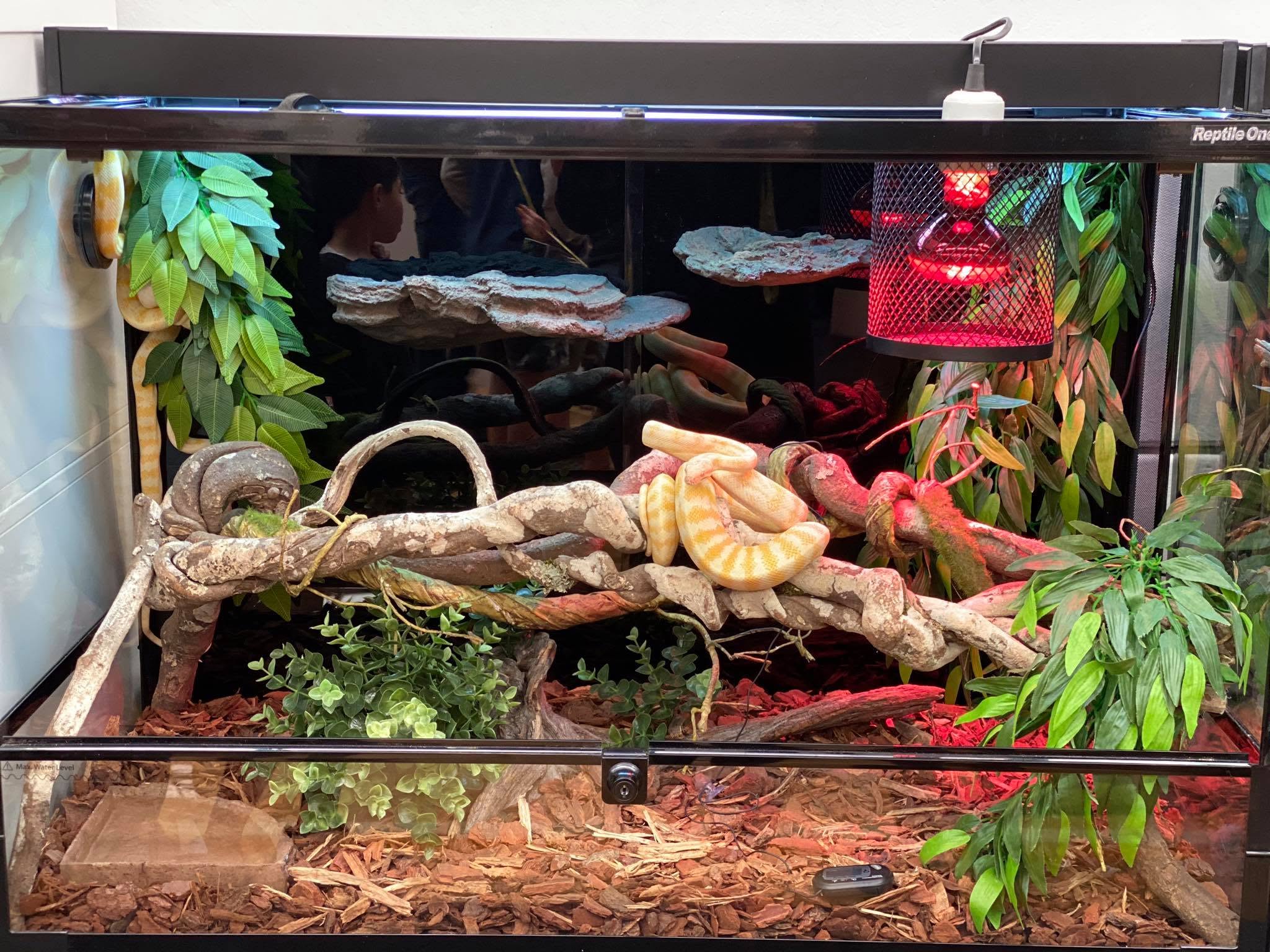
Reptiles are the single largest category of inappropriate pet shop sales in the UK. They are visually striking. They are often cheap at point of sale — though the ongoing cost of appropriate husbandry is anything but cheap. They are stocked by a wide range of retailers, from specialist exotics shops to general pet shops to garden centres to market stalls. And they require levels of husbandry expertise and equipment investment that many buyers are not prepared for and are not told about at the point of purchase.
The species I see most often sold to inappropriate buyers:
Bearded dragons are probably the most commonly sold reptile in the UK that is also the most commonly surrendered. They are genuinely manageable for a prepared keeper with appropriate setup — but the appropriate setup involves a specific UVB lighting schedule, a precise temperature gradient from 38–42°C at the basking spot to 22–26°C at the cool end, correct supplementation, and a diet that changes significantly as the animal matures. None of this is communicated adequately in most point-of-sale interactions.
Chameleons are among the most demanding reptiles available in UK pet shops and among the most frequently sold on impulse. They require high humidity, specific airflow, particular temperature ranges, a stress-free environment, and a level of careful observation to detect illness that most first-time keepers are not equipped to provide. The mortality rate in chameleons that have passed through inappropriate retail and been bought by unprepared owners is, in my view, one of the most significant animal welfare failures in the UK pet trade.
Tortoises are sold in some UK pet shops without adequate explanation of their lifespan — which can exceed one hundred years — their hibernation requirements, their dietary needs, or the space they require as they grow. A tortoise bought as a small, apparently manageable animal by a family is a multi-generational commitment that will outlive its owners. This is not something that can be covered adequately in a point-of-sale conversation that takes five minutes.
- Bearded dragons — sold widely, require substantial equipment investment and husbandry knowledge not communicated at point of sale
- Chameleons — among the most demanding reptiles available, frequently sold on impulse with minimal preparation
- Tortoises — lifespan of up to 100 years rarely adequately explained; hibernation and dietary needs complex and species-specific
- Chinese water dragons, iguanas, and other large lizards — sold small and manageable, grow to sizes and complexity levels that most buyers are not prepared for
- Ball pythons — frequently sold without adequate explanation of feeding challenges that affect a significant proportion of individuals
- Terrapins — sold as small and appealing, grow substantially, require significant water filtration and space, and live for twenty-plus years

Small Mammals — The Impulse Purchase Problem
Small mammals — hamsters, gerbils, mice, and to a lesser extent rabbits and guinea pigs — represent a different version of the same problem. The issue here is less about complex husbandry and more about what I call the impulse purchase cycle: animals bought on impulse, inadequately set up, not properly considered, and surrendered or neglected within weeks or months.
The hamster is the clearest example. The hamster is the most commonly bought small pet in the UK. It is also, in my view, the most commonly mistreated — not through deliberate cruelty, but through a combination of misleading retail presentation and genuine owner ignorance about what hamsters actually need.
The standard hamster cage sold in most UK pet shops is too small. Hamsters in the wild run up to eight miles a night. PDSA’s hamster guide cites a minimum floor area of 100cm by 50cm and recommends providing more space where possible. What is on the shelf is a range of colourful, compartmentalised cages that are visually appealing, inexpensive, and inadequate.
The staff at point of sale do not typically tell buyers that the cage they are about to buy alongside the hamster does not meet minimum welfare standards. The regulatory framework does not require them to do so. The sale happens. The hamster lives in a cage that is too small. The wheel — if provided — is typically too small as well, causing spinal curvature over time. The animal is stressed, nocturnal, often hidden, and frequently described by owners as boring — because a stressed animal in an inadequate environment does not display natural behaviour.
- Hamsters sold in cages that do not meet minimum welfare standards — the standard retail cage is significantly below recommended minimum floor space
- Rabbits sold without adequate explanation of social needs — rabbits are social animals that should be kept in bonded pairs, not alone
- Guinea pigs sold singly despite being highly social animals that suffer demonstrably in isolation
- The impulse purchase cycle — small mammals bought impulsively, inadequately set up, and surrendered or neglected within months — is driven by retail environments that prioritise accessibility over preparation
- Inadequate information about lifespan — a rabbit can live eight to twelve years, a commitment that is not always communicated at point of sale
Fish — The Species Nobody Takes Seriously Enough
Fish welfare is the most consistently undervalued animal welfare issue in UK pet retail — partly because fish are not charismatic in the way that mammals and reptiles are, partly because the signs of stress and suffering in fish are less visible and less legible to most owners, and partly because the industry has not been held to the same standard of scrutiny on fish welfare that it has on other species.
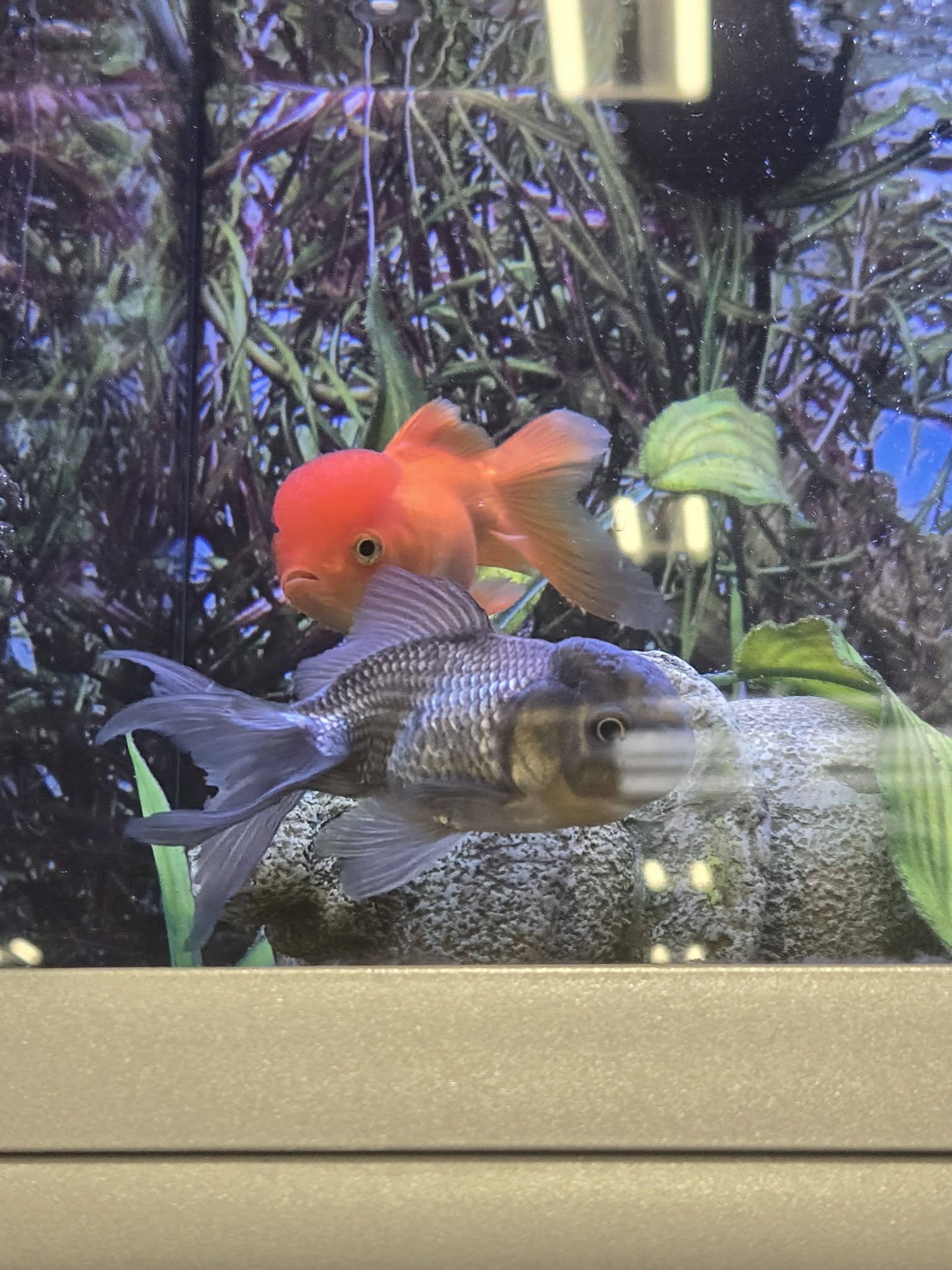
The goldfish in a bowl is the most persistent example of normalised fish mistreatment in the UK. Goldfish are sold in small quantities of water — in bags, in tanks — with the implicit or explicit suggestion that they are suitable for bowls, small tanks, or fairground prizes. They are not. A goldfish can live for twenty-five years. It can reach thirty centimetres in length. It produces significant waste that requires substantial filtration. The bowl is not adequate. It never was. The continued sale of goldfish in contexts where the buyer will keep them in a bowl is a welfare failure that the industry has tolerated for generations.
Tropical fish are sold in combinations that are often incompatible — species that will predate each other, compete for territory, or have completely incompatible water chemistry requirements, sold in the same transaction by staff who either do not know or do not say.
- Goldfish sold with the implicit suggestion that bowls or small tanks are adequate — they are not, for a species that can live 25 years and reach 30cm
- Tropical fish sold in incompatible combinations — predatory and prey species, species with different water chemistry needs, territorial species in insufficient space
- Fish sold without adequate explanation of filtration, cycling, and water chemistry requirements
- The cycle of fish death normalised — “fish die, that’s what fish do” — when in adequate conditions with appropriate husbandry, most aquarium fish are long-lived
- Fairground fish — the practice of giving goldfish as prizes — is still legal in some contexts in the UK despite longstanding welfare concerns
Why It Keeps Happening — The Commercial and Regulatory Reality
Understanding why this continues requires understanding the specific pressures that produce it. The problem is not that the pet retail industry is staffed by people who do not care about animals. In my experience, most people who work in pet shops do care about animals. The problem is structural — the incentives, the regulatory framework, and the commercial realities that shape decision-making at every level.
The commercial pressure is real and consistent
A live animal in a retail display is a cost centre until it is sold. It consumes food, heat, electricity, and staff time. An exotic animal that is not selling is a loss accumulating daily. The pressure to sell it — to someone, at some price, with whatever level of information exchange is necessary to complete the transaction — is genuine and consistent. I feel this pressure myself. The difference is what I decide to do with it.
Some retailers decide that selling the animal is more important than ensuring the buyer is adequately prepared. They minimise the husbandry information. They do not raise concerns about buyer suitability. They facilitate the impulse purchase rather than slowing it down with questions and caveats. The animal is sold. The cost is transferred to the buyer and ultimately borne by the animal.
The regulatory framework is insufficient and inconsistently enforced
The Animal Welfare Act 2006 requires that anyone responsible for an animal must take reasonable steps to ensure its needs are met. In theory, this applies to retailers during the period the animal is in their care and arguably extends to the information they provide to buyers. In practice, the enforcement of these provisions in retail contexts is inconsistent to the point of being negligible.
Local authorities are responsible for licensing and inspecting pet shops. The resource available to local authority animal welfare teams has been significantly reduced by austerity measures over the past fifteen years. Inspections are infrequent. The standards applied are variable. A pet shop that is meeting the minimum threshold — animals alive, water present, food available — will pass an inspection even if the broader welfare picture is poor.
The Animal Activities Licensing regime introduced in 2018 improved the framework for dog and cat breeders significantly. Its impact on exotic animal retail has been more limited. The specific welfare codes for exotic species vary in quality and in how they are applied. There is no requirement for staff to demonstrate species-specific knowledge before selling species with complex husbandry needs.
Staff knowledge is variable and sometimes inadequate
Running a pet shop that sells a wide range of species — fish, small mammals, birds, reptiles — requires a breadth of specialist knowledge that is genuinely difficult to maintain across a retail team. A staff member who is excellent on fish may have limited knowledge of reptile husbandry. A staff member who knows birds well may not know enough about hamster welfare to advise accurately on enclosure size.
There is no mandatory qualification for pet shop staff in the UK. There is no requirement to demonstrate species-specific competence before being responsible for the sale of a species with complex needs. The quality of advice that a buyer receives at point of sale depends almost entirely on the individual staff member they encounter and the training their employer has chosen to provide.
- Commercial pressure to sell live stock quickly creates incentives that work against welfare-centred sales practices
- The Animal Welfare Act 2006 provides a theoretical framework but enforcement in retail contexts is inconsistent and under-resourced
- Local authority inspection regimes are under-resourced and apply variable standards
- No mandatory qualification exists for pet shop staff selling species with complex welfare needs
- The Animal Activities Licensing regime has improved some areas but has had limited impact on exotic retail specifically
- The industry’s self-regulatory body — the Pet Industry Federation — has codes of practice that member shops are supposed to follow, but membership is voluntary and enforcement is limited
What Good Practice Actually Looks Like — And Why It Is Possible
I want to be clear that good practice exists in UK pet retail. There are shops — including, I hope, this one — that do things differently. The point of describing what the problem looks like is not to suggest the problem is universal. It is to make clear that the alternative is possible, that it is commercially viable, and that the gap between what the worst practice looks like and what the best practice looks like is a choice.
Here is what responsible practice looks like at point of sale for a species with complex needs:
- Honest pre-sale conversation about the animal’s actual needs — not a minimised version designed to avoid deterring the buyer
- Assessment of the buyer’s experience, setup, and expectations before completing the sale — and the willingness to decline a sale if the assessment is negative
- Written care information provided at point of sale that covers the essentials of husbandry for the specific species
- Equipment recommendations that reflect what the animal actually needs — not what is cheapest or most immediately accessible
- Willingness to hold an animal for a buyer who needs time to prepare adequately — rather than selling to the impulse and hoping for the best
- Staff training to species-specific level for every species stocked — staff who sell chameleons should know chameleon husbandry in detail, not in outline
All of these practices reduce sales in the short term. Some buyers walk away when told what a species actually needs. Some sales are declined that would have been completed. The short-term commercial cost is real.
The long-term commercial reality is different. Buyers who have been properly prepared come back. They buy equipment. They buy food. They ask questions and trust the answers. They recommend the shop to other people. A reputation for honest, welfare-centred advice is commercially valuable in a way that a reputation for selling animals to anyone who will pay for them is not.
What Needs to Change — The Honest View
After thirty-five years in this industry, here is what I think needs to change — and what I think is realistic.
Mandatory species-specific competence requirements for retail staff would make the biggest single difference. If a shop cannot demonstrate that its staff have adequate knowledge of the species it stocks, it should not be permitted to stock that species. This is not a radical position. It is the standard applied in other regulated industries. There is no reason it should not apply in pet retail.
Stronger and better-resourced local authority inspection would address the enforcement gap that currently allows inadequate welfare standards to persist unchallenged. Inspections that assess animal welfare in a meaningful sense — not just the presence of food and water — would raise the floor significantly.
Mandatory point-of-sale information — a welfare checklist for each species, provided to every buyer — would ensure that buyers receive minimum information regardless of how the staff member at the counter chooses to frame the interaction.
A restriction on the species that can be sold through general pet retail — reserving genuinely complex species for specialist retailers who can demonstrate adequate knowledge and husbandry — would reduce the number of complex animals sold to unprepared buyers in environments that cannot adequately hold them.
None of these changes would end the problem. All of them would reduce it.
Frequently Asked Questions
How do I know if a pet shop is selling responsibly?
Several indicators are worth looking for. Does the staff member selling you the animal ask questions about your experience and setup before completing the sale? Do they volunteer information about the animal’s needs without being asked, including information that might make the purchase seem more complex? Are the animals in store being kept in conditions that reflect adequate welfare — appropriate space, temperature, lighting, enrichment — rather than the minimum that prevents visible distress? Does the shop stock appropriate equipment for the species it sells, and does it recommend it? A shop that passes these tests is operating differently from one that does not.
Is it legal for any pet shop to sell any animal in the UK?
The legal framework is more complex than a simple yes or no. All pet shops in England require a licence from their local authority under the Animal Activities Licensing regulations. There are specific welfare standards that apply to licensed premises. Some species require additional permits — certain exotic species are covered by CITES regulations requiring documentation of legal origin. However, the framework does not restrict which species can be sold by licensed premises, and the welfare standards applied in licensing are a floor rather than a ceiling.
What should I do if I see an animal being kept in inadequate conditions in a pet shop?
Report it to the local authority — specifically the licensing or animal welfare team — with as much specific detail as possible. You can also report it to the RSPCA, who can investigate welfare concerns independently of the licensing authority. Take photographs if you can do so without causing additional distress to the animals. A single complaint may not produce immediate action, but patterns of complaint against a specific retailer do.
Are online sales of exotic animals better or worse than pet shop sales?
In my view, worse — for the simple reason that the point-of-sale interaction that at least offers an opportunity for welfare assessment and information exchange does not exist. An animal bought online, delivered in a box, with no face-to-face conversation about what it needs, to a buyer who may have done minimal research, represents a higher welfare risk than the same animal bought in a shop where at least some information exchange is possible. The growth of online exotic animal sales is a genuine welfare concern that the regulatory framework has not yet adequately addressed.
Does Paradise Pets sell exotic reptiles or complex animals?
We stock a range of cage birds, small animals, and fish. We do not stock complex exotic reptiles — a decision I have made deliberately based on my assessment of the welfare standards I can maintain in store and the information I can adequately provide to buyers. Come in and talk to us about what we do stock and what we honestly think about the species we sell. We would rather talk you out of a purchase that is not right for you than complete a sale that ends badly for the animal.
One Last Thing From Me
The woman with the Chinese water dragon came back a week after the animal died. She was upset and she was angry — not entirely at the shop that sold it to her, but at herself for buying it without knowing what she was taking on.
“They made it sound so straightforward,” she said. “They didn’t tell me any of this.”
That is the sentence I have heard more times than I can count over thirty-five years. Not from negligent people. Not from people who did not care. From people who trusted the person selling them an animal to give them accurate information — and were let down.
The pet retail industry is not uniformly bad. There are excellent shops doing excellent work. There are staff who know their species deeply and advise honestly. There are retailers who decline sales they could make because they have assessed the buyer and concluded the animal would not be well kept.
But there are also shops making decisions that they know are not in the animal’s interest — and a regulatory framework that does not adequately stop them. That gap has cost animals their lives for as long as I have been in this industry. It will continue to cost them until something structural changes.
Writing this is not comfortable for someone who has been in pet retail for thirty-five years. But I think it needs to be said, clearly and from inside the industry rather than from outside it. The animals cannot say it themselves.
Questions About Any Animal Before You Buy? Come In and Ask Honestly
We have been selling animals and giving advice for over 35 years. If you are considering buying any animal — from us or from anywhere else — come in and talk to us first. We will give you an honest assessment of what it needs, whether you are in a position to provide it, and whether we think it is the right choice. We would rather talk you out of a purchase than sell you something that ends badly. Free advice, no obligation. That is how we have always done things.