


Neil has kept, bred, and sold budgerigars at Paradise Pets Swindon since 1988 — over 35 years of first-hand experience with these birds. A budgie that refuses to leave its cage is one of the most common concerns new owners bring to the counter. In most cases the cause is straightforward, predictable, and entirely fixable with the right approach. In a small number of cases it signals something else. This guide explains how to read the difference — and what to do about it.
I hear this one regularly. The owner opens the cage door, steps back, waits — and the budgie does not move. Or it edges toward the opening, looks out, and retreats. Or it has come out before but has recently stopped. They want to know if something is wrong with it, or if they are doing something wrong themselves.
The honest answer is usually both — and neither. A budgie that will not leave its cage is not being difficult. It is not stubborn. It is not stupid. It is doing exactly what a prey animal with highly developed threat-assessment instincts does when the outside of its cage does not yet feel safe enough to enter voluntarily.
Understanding that single point — that the cage is not a prison the budgie is trying to escape, but a territory it has claimed and feels safe in — changes how you approach the whole situation. Most of the mistakes owners make when trying to get a budgie out come from treating it like a problem to be solved rather than a relationship to be built.
I have been having this conversation at the counter for thirty-five years. Here is what I have learned.
The Most Common Reason — The Bird Is Still New
This is the cause behind the majority of cases I hear, and it is the one that requires the most patience from owners because there is no shortcut through it.
A budgie that has recently arrived in a new home is in a state of active threat assessment. Everything is unfamiliar — the sounds, the smells, the light, the layout of the room, the humans moving around in it. The cage is the one fixed point in an uncertain environment. It has mapped the cage. It knows where the food is, where the perches are, where it can sit with its back protected. The outside of the cage is an unknown.
New budgies should not be pressured to come out at all in the first week. The priority for the first several days is settling — letting the bird establish its routine, begin eating and drinking normally, start responding to your presence near the cage without retreating to the far corner. A bird that is not yet doing those things consistently inside the cage is not ready to think about what is outside it.
Once the bird is settled — eating well, moving around the cage freely, not alarmed by your approach — the process of encouraging it out can begin. But the timeline is the bird’s, not yours. Some budgies will come out within two weeks of arriving. Others take two months. Both are within the range of normal, and trying to accelerate the process by forcing it almost always sets it back.
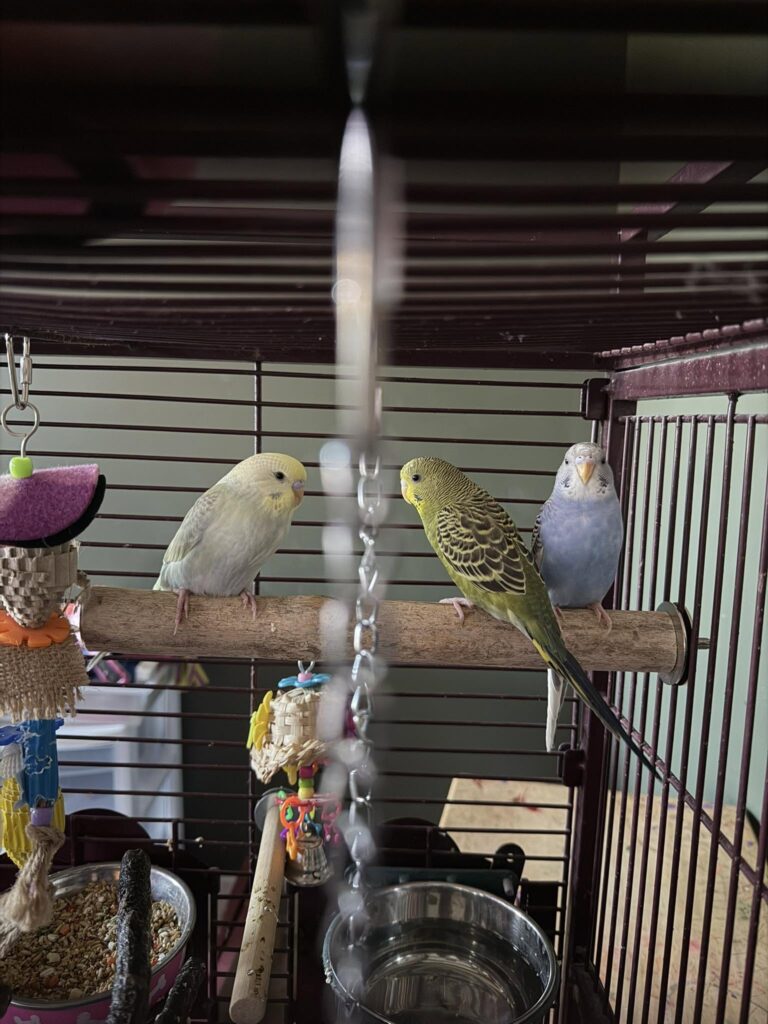
Fear of the Open Space — Why the Room Itself Is the Problem
Some budgies that are well-settled in their cage and comfortable with their owner still hesitate at the door because the room beyond it feels too large, too exposed, or too unpredictable.
Budgies in the wild spend their lives in dense scrub and woodland — environments with structure, with cover, with places to land and retreat. A modern living room is the opposite of that. It is open, high-ceilinged, with reflective surfaces, unpredictable sounds from televisions and phones, and no obvious cover between one end and the other. To a small prey animal that is considering whether to leave the one place it has fully mapped, that room can look genuinely intimidating.
The practical response to this is to make the room feel smaller and more structured before you start encouraging the bird out. Bring a second perch or play stand close to the cage — within a short, manageable flight distance. Place it at the same height as the cage perches so it feels familiar. Put a piece of food on it. Now the bird is not being asked to venture into an open room. It is being asked to fly a short distance to something that looks and feels similar to where it already is.
This incremental approach — reducing the perceived distance and risk of that first flight out — works dramatically better than simply opening the door and hoping. The bird needs a reason to come out that outweighs the reason to stay in. Give it one it can manage.
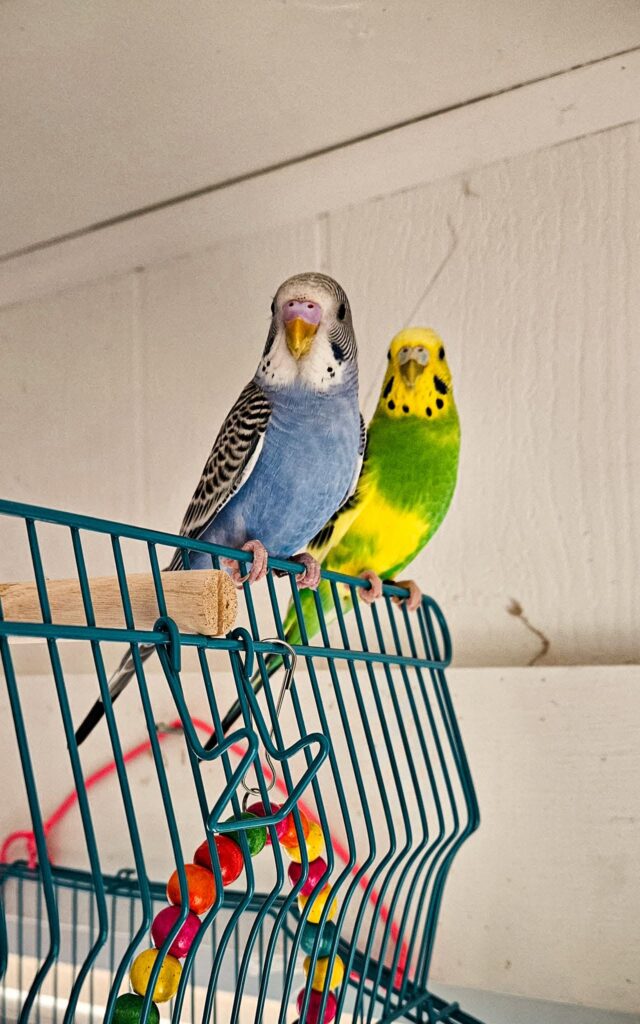
A Bad Experience — When the Bird Has Learned to Be Cautious
A budgie that has previously come out of its cage willingly and has since stopped is a different situation from a bird that has never come out. The change in behaviour is significant. Something has happened that made the outside of the cage less safe in the bird’s assessment — and that something needs to be identified.
The most common histories behind a sudden reluctance to leave the cage:
A fright outside the cage. A predator seen through the window — a cat, a sparrowhawk, even a large dog passing the glass — can be enough. The budgie does not reason about glass. It saw something that its instincts categorised as an immediate threat, and it now associates the space where that happened with danger.
A collision or fall. A bird that has flown into a window, a mirror, or a wall while out of the cage and been stunned or frightened by the impact may be reluctant to repeat the experience. Check the room for reflective surfaces that the bird might not be able to read as solid obstacles. Window stickers or frosting, and removing or angling mirrors, reduces collision risk significantly.
Rough handling during a previous out-of-cage session. If the bird was chased, grabbed, or had difficulty being returned to the cage — a stressful experience for any budgie — it may have concluded that coming out leads to something unpleasant. The lesson it took from that experience is the lesson you now need to undo.
In all of these cases, the approach is the same: rebuild the association between the outside of the cage and positive, safe experiences. Go back to basics — treats at the door, patient waiting, short sessions with no pressure, no chasing, no grabbing. The trust has been damaged, not destroyed. It can be rebuilt, but only with time and consistency.
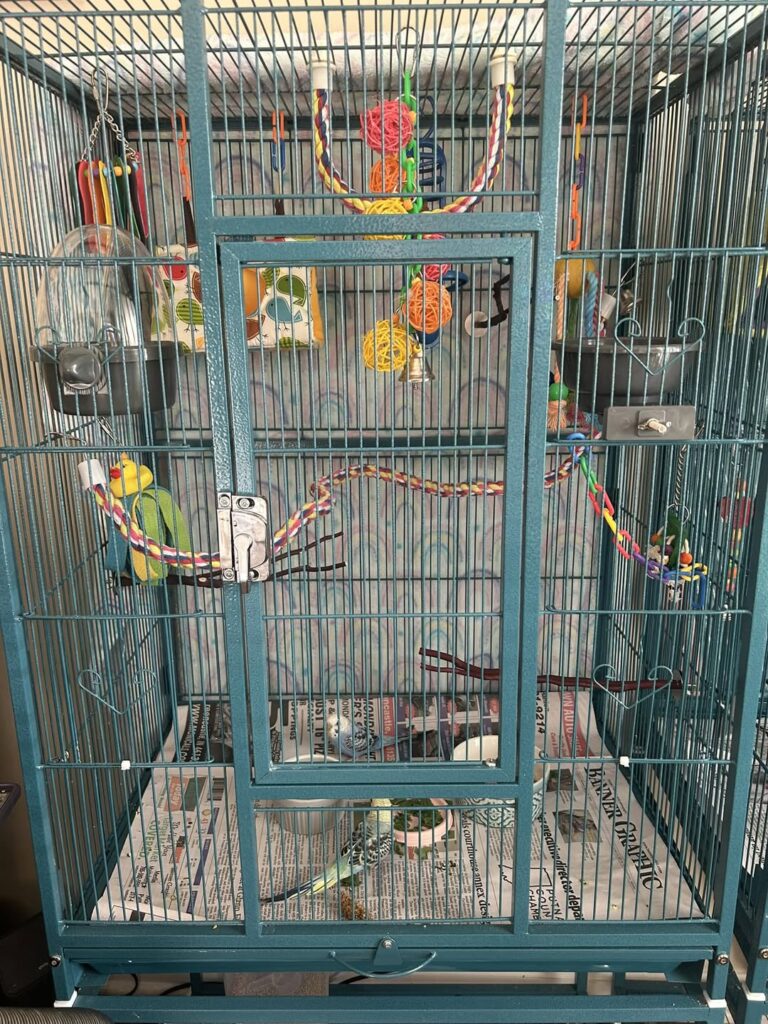
The Cage Is Too Comfortable — When the Setup Works Against You
This one surprises people when I mention it, but it is worth understanding.
A cage that has everything the bird needs — food, water, entertainment, perches at every level, toys, mirrors, a companion bird — gives the bird very little reason to want to leave. Why venture into the uncertainty of the room when everything required is already available inside?
This is not a criticism of providing a well-equipped cage. It is a practical observation: if you want the bird to come out, it needs a reason that the cage cannot provide. That reason is usually you — your attention, your interaction, the treat you are holding just outside the door.
A single mirror inside the cage is also worth reconsidering if you are having difficulty encouraging out-of-cage time. A budgie that has bonded strongly to its own reflection has, in a functional sense, already got a companion that never requires leaving the cage to interact with. Removing the mirror redirects the bird’s social need outward — toward you, toward the room, toward the activity that is available outside the cage rather than inside it.
A Solo Bird Versus a Paired Bird — How Company Changes the Dynamic
A single budgie that is closely bonded to its owner will often come out more readily than a paired bird, because the owner is the flock and the interaction available outside the cage is with the one thing it is most motivated to be near.
A paired bird — one that has a companion in the cage — has its primary social need already met. The companion is there, the social interaction is happening, and the motivation to come out is reduced by comparison. Paired birds can absolutely be trained to come out and interact outside the cage, but the process typically takes longer and requires more consistent effort because the competing attraction inside the cage is significant.
If you have two budgies and you want both to come out regularly, the most effective approach is usually to work with them together rather than trying to bring one out without the other. Separating bonded birds — even briefly — causes stress that works directly against the calm, positive association you are trying to build. Open the door when both birds are at ease, position the out-of-cage perch where both can access it, and let them discover it at their own pace as a pair.
Health and Age — When Reluctance Is a Physical Sign
Not every case of a budgie not coming out is a behaviour or confidence issue. In a small number of cases, reluctance to leave the cage is a physical sign — the bird is not coming out because it does not have the energy or the physical capacity to do so comfortably.
An older bird that has gradually become less active over time, or a bird that has quietly been unwell, may retreat to staying on familiar perches close to food and water rather than venturing out. The change tends to be gradual rather than sudden, which is why it is sometimes attributed to the bird simply becoming less interested in out-of-cage time rather than being recognised as the health change it may actually be.
The signs to look for alongside reduced out-of-cage willingness: less movement within the cage itself, more time spent fluffed or resting, changes in appetite, weight loss, or any of the other signs of illness described in other guides on this site.
If your budgie has become gradually less engaged and less interested in coming out over a period of weeks or months — and particularly if the bird is older than three or four years — a vet visit to rule out an underlying physical cause is the right step before assuming it is simply a confidence issue.
What Not to Do — The Approaches That Make It Worse
After thirty-five years of these conversations, there is a consistent list of things owners try that reliably set the process back rather than moving it forward. I mention them not to criticise — they are natural instincts when you want to help — but because knowing what not to do is as important as knowing what to do.
Do not reach into the cage and physically remove the bird. A budgie that is grabbed and carried out against its will has had its one safe space violated by the person it was beginning to trust. The immediate result is a more frightened bird. The longer-term result is a bird that is now cautious about hands inside the cage as well as outside it. The damage to the process can take weeks to repair.
Do not leave the cage door open and wait indefinitely while staring at the bird. The sustained attention of a large creature looking directly at a small prey animal is not a reassuring experience. Open the door, place a treat just outside, and then go about your business in the room without directing your attention at the cage. The bird is more likely to investigate when it does not feel watched.
Do not chase the bird back into the cage at the end of an out-of-cage session. Teaching the bird to return to the cage voluntarily — by placing food inside, by offering a treat at the door, by making return as positive as coming out — is part of the same process. A bird that learns that coming out ends with being chased has learned to avoid coming out.
Do not let out-of-cage sessions run so long that the bird becomes stressed, fatigued, or difficult to return. Short, successful sessions that end calmly build confidence. Long sessions that end in difficulty undermine it.
The Right Approach — Step by Step
The practical sequence that works for the majority of budgies, applied consistently over time.
Start with the treat at the door. Whatever food your budgie is most motivated by — a millet spray, a specific seed, a small piece of fruit — offer it at the cage door opening before any attempt to encourage the bird further out. Let the bird take the treat from the opening without any pressure to come further. Do this every day at the same time. The bird is learning that the door opening means something good is available there.
Once the bird is reliably coming to the door to take the treat, move the treat just outside the door — far enough that the bird has to step out to reach it, but close enough that the step feels manageable. Do not hold the treat. Place it on a surface at perch height just outside the opening. Let the bird decide.
When the bird is stepping out to take the treat, introduce the out-of-cage perch — a stand positioned within a short hop or flutter of the cage door. Place the treat on the perch. The bird’s first real out-of-cage experience should be brief, positive, and end with it returning to the cage on its own terms.
From there, extend the sessions gradually — not by forcing more distance, but by being present and calm in the room, by talking to the bird, by offering interaction at whatever level the bird is comfortable with. The relationship between you and the bird is what makes the room worth being in. Build that relationship and the out-of-cage time follows naturally.
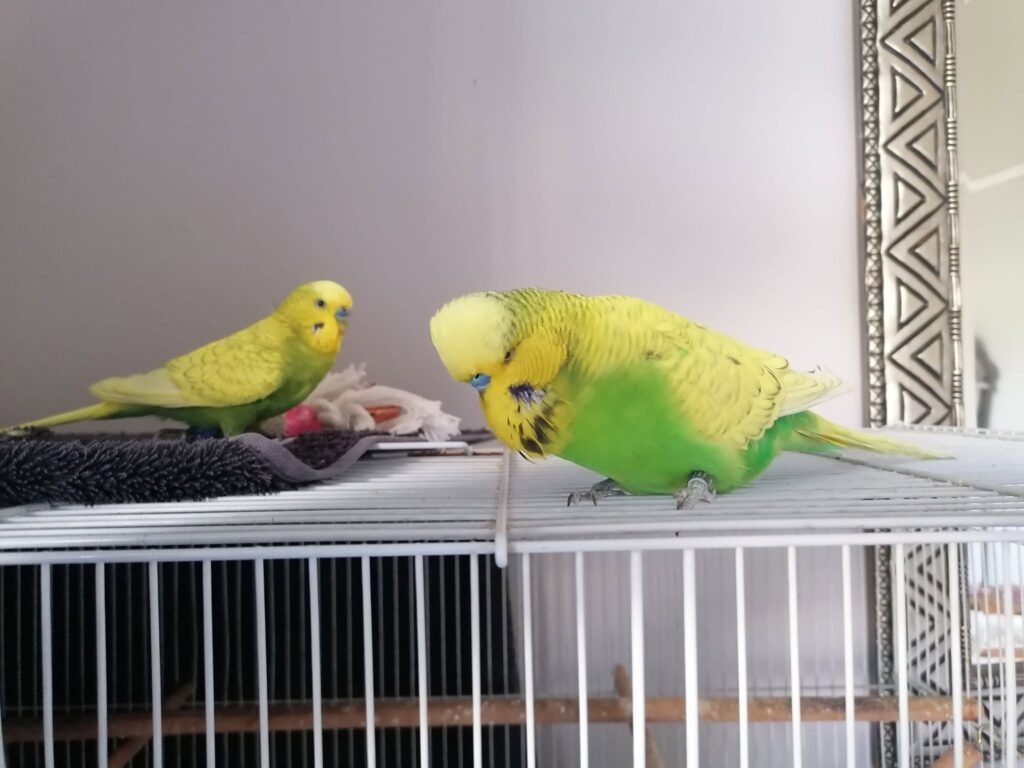
What I Tell Budgie Owners at the Counter
When someone comes in about a budgie that will not leave its cage, the first question I ask is how long they have had the bird. If it is less than a month, the conversation is usually brief: give it more time, stop trying so hard, let the bird settle properly, and come back if it is still not coming out in another four weeks.
If it is a bird that was coming out and has stopped, the conversation goes in a different direction — looking for the event or change that shifted the bird’s assessment of the outside of the cage from safe to uncertain.
The message I want every budgie owner to leave with is this: a budgie that will not come out of its cage is not failing. It is being a budgie. It is assessing risk the way a small prey animal assesses risk, and it will make a different assessment when the evidence available to it changes. Your job is to change the evidence — consistently, patiently, without pressure — until the outside of the cage is as familiar and as safe as the inside.
It takes longer than most people expect. It works almost every time, if you do not rush it.
Come in if you want to talk through your specific situation. We are at Manor Garden Centre, Cheney Manor Industrial Estate, Swindon, SN2 2QJ — open every day. Or call us on 01793 512400. Tell us about the bird and we will help you work out what needs to change.
- “It came out at the pet shop so it should come out here” — A budgie that came out in a familiar, established environment is not the same bird in a completely new one. The cage at the shop was known territory. The cage in your home is not — yet. The comparison is not useful and the expectation it creates works against the patience the situation requires.
- “I just need to leave the door open and eventually it’ll come out on its own” — Some birds will. Many will not — particularly birds that are less confident, less experienced with out-of-cage time, or in an environment that does not feel safe. Passive waiting without active positive reinforcement is a slow and unreliable strategy. Treats, consistent routine, and a visible reason to come out work faster.
- “It’s been months — it must just be that kind of bird” — Individual budgies vary significantly in confidence and temperament, and some genuinely do take longer than others. But months without any progress, in a bird that is otherwise healthy, usually indicates that something specific in the approach needs to change — not that the bird is constitutionally unable to come out. Come in and talk through the specifics.
- “I put another bird in the cage and now neither of them will come out” — Introducing a second bird changes the social dynamic significantly. Two birds that are bonded to each other have less need for out-of-cage interaction with the owner. This does not mean it cannot be achieved, but the approach needs to account for the pair dynamic rather than treating each bird individually.
- “I cover the cage at night and uncover it in the morning — that’s probably confusing it” — A consistent covering routine does not confuse budgies. It is part of the predictable pattern that makes them feel settled. The covering is not the issue. If the bird is not coming out, the cause lies elsewhere.
- Bird is new to the home, arrived within the last four weeks, not yet coming out at all.
Normal settling behaviour — do not attempt to force out-of-cage time yet. Focus on building routine and trust inside the cage first. Revisit in another two to four weeks. - Bird was coming out, has recently stopped, no obvious trigger identified.
Something has shifted the bird’s assessment of outside safety. Review the room for new threats — windows, mirrors, new pets, changes in routine. Go back to treat-at-the-door basics and rebuild from there. - Bird approaches the door but retreats every time, has been doing so for weeks.
Confidence issue — the outside feels too open or unpredictable. Add a perch or play stand close to the cage door. Reduce the perceived distance of that first step. Use consistent positive reinforcement. - Paired birds — one or both reluctant to come out.
Work with both birds together rather than separately. Position the out-of-cage perch so both can access it simultaneously. Do not separate bonded birds to try to bring one out alone. - Bird gradually becoming less interested in coming out over weeks or months, also less active generally.
Possible health or age-related cause — vet visit to rule out physical causes before treating as a confidence issue. Gradual withdrawal is not the same as slow confidence-building. - No progress despite weeks of consistent correct approach.
Come in and talk to us. There may be something specific about the setup or approach that needs adjusting. We would rather help you work through it than have the situation remain stuck indefinitely.
Visit Us at Paradise Pets Swindon
We stock budgerigars year-round alongside a full range of cage and aviary birds — all UK-sourced, kept in proper conditions before going to a new home. If you have a question about your budgie’s behaviour, or you are thinking about getting your first bird and want to understand what to expect, come in and talk to us. We are always happy to help.
We also stock gerbils and hamsters, guinea pigs, and rabbits.