
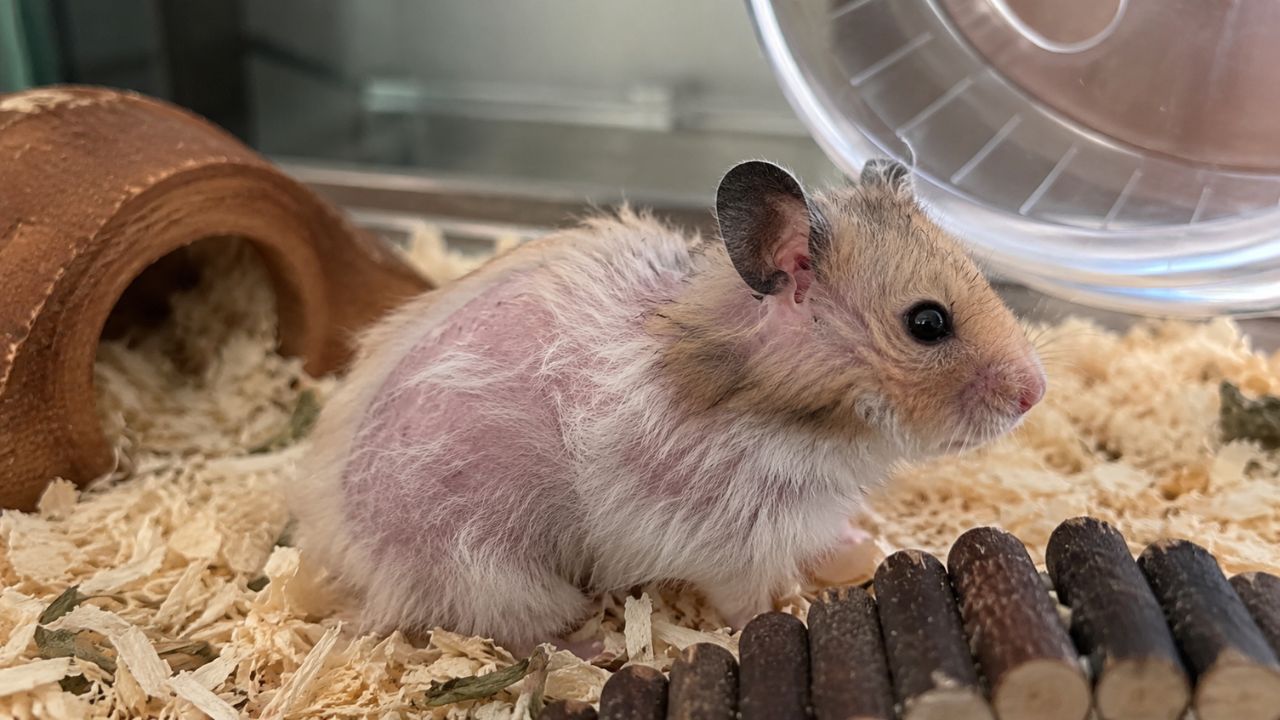

Neil has kept, bred, and sold hamsters at Paradise Pets Swindon since 1988 — over 35 years of first-hand experience with these animals. Hair loss is one of the most common health concerns he is asked about. In most cases, the cause is simpler — and more fixable — than owners assume. This guide covers every cause he has seen, in order of how often he actually sees them.
It happens at least once a week. An owner comes in — sometimes anxious, sometimes already convinced the hamster is dying — and says: “Its fur has started going patchy. I don’t know what I’ve done wrong.”
In most cases, they haven’t done anything wrong. But the answer is almost never “don’t worry, it’s fine” — because there are real differences between hair loss that is natural, hair loss that needs a simple fix, and hair loss that needs a vet. Getting those categories right matters.
I have been selling and advising on hamsters for thirty-five years. I have had this conversation more times than I can count. Here is what I actually tell people when they ask me.
The First Question I Always Ask
Before anything else, I ask how old the hamster is.
This is not a throwaway question. It is the single most important piece of information in this conversation.
Hamsters have short lives. A Syrian hamster that reaches two years old is already middle-aged. At two and a half, it is old. At three — if it gets there — it is genuinely elderly. And elderly hamsters lose hair. Not from illness. Not from anything you have done. Simply from age.
The thinning usually starts around the lower back and hindquarters. It can look alarming if you are not expecting it. But the skin underneath is typically normal — pink and clean, not red, not flaky, not sore. The hamster is still eating, still moving around, still going on its wheel at night. It just has less fur than it used to.
This is natural. It is going to happen to every hamster eventually. There is no treatment for it, and it does not need one.
If your hamster is two years old or older and losing hair around its back end with no other symptoms — that is almost certainly what you are dealing with. Keep it comfortable, keep it warm, keep feeding it well, and let it live its days as it always has.
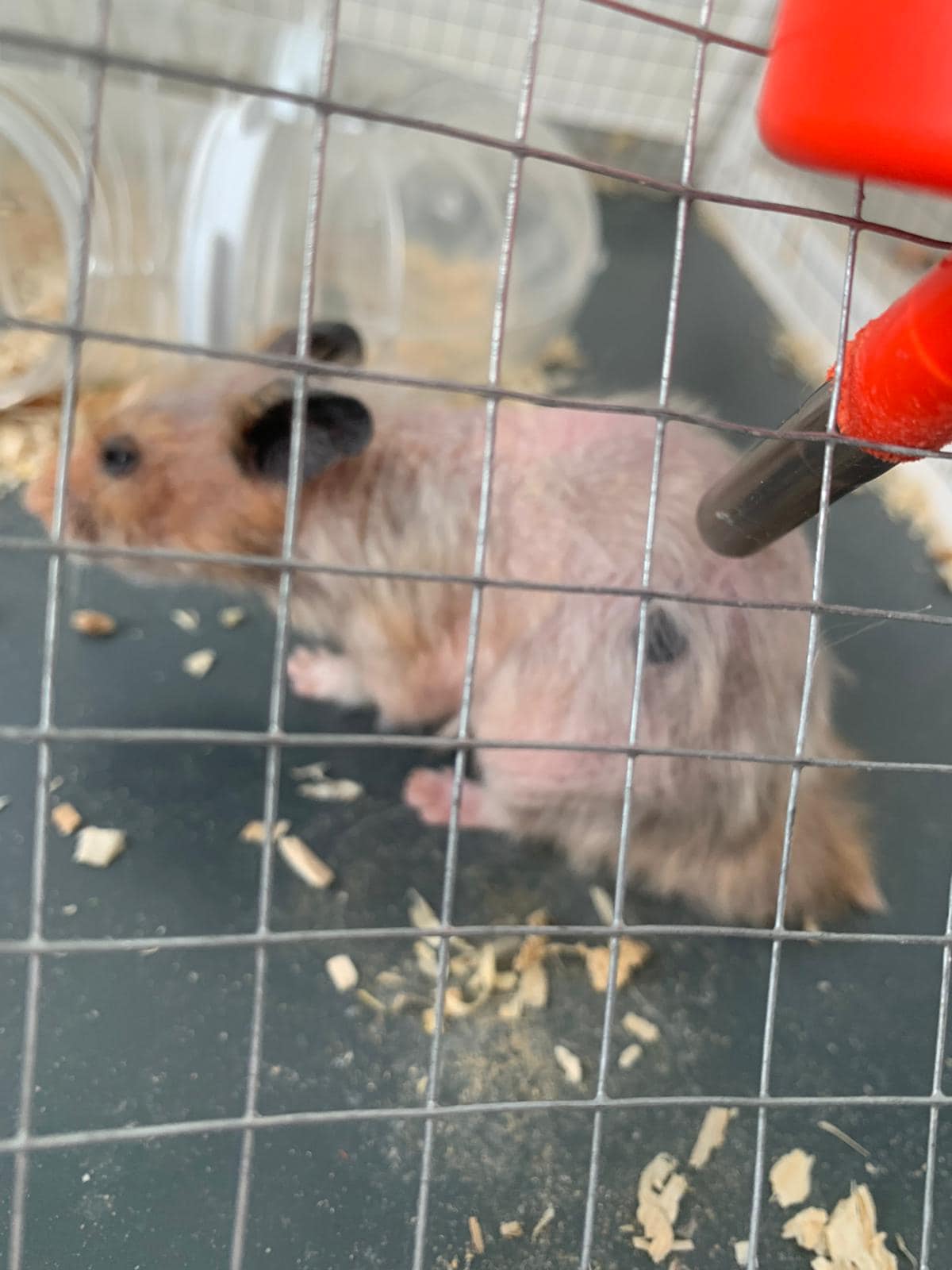
Check Your Bedding Before Anything Else
This is the one people overlook most often, and it is the most easily fixed.
Cedar and pine shavings — the cheap, widely available wood shavings you will find in many pet shops and supermarkets — contain aromatic oils that are irritating to small animals. Hamsters are particularly sensitive to them. The reaction shows up as patchy hair loss, usually around the face, belly, and sides. The skin may look slightly pink or irritated around the edges of the bald area.
If you are using cedar or pine bedding, stop. Switch immediately to paper-based bedding or aspen shavings. Then watch what happens over the next two to three weeks.
In many cases — genuinely more cases than you would expect — the hair grows back on its own once the irritant is removed. The hamster was not ill. The bedding was wrong. I have told this to people who had already booked vet appointments. A few of them cancelled those appointments after the fur started coming back.
It sounds like a small thing. In terms of the hamster’s wellbeing, it is not small at all. An animal sitting in irritant bedding is uncomfortable every hour of every day. Getting this right is one of the most important decisions you make when setting up a hamster’s home.
At Paradise Pets we do not stock cedar or pine shavings for exactly this reason. We are always happy to advise on appropriate bedding when you visit.
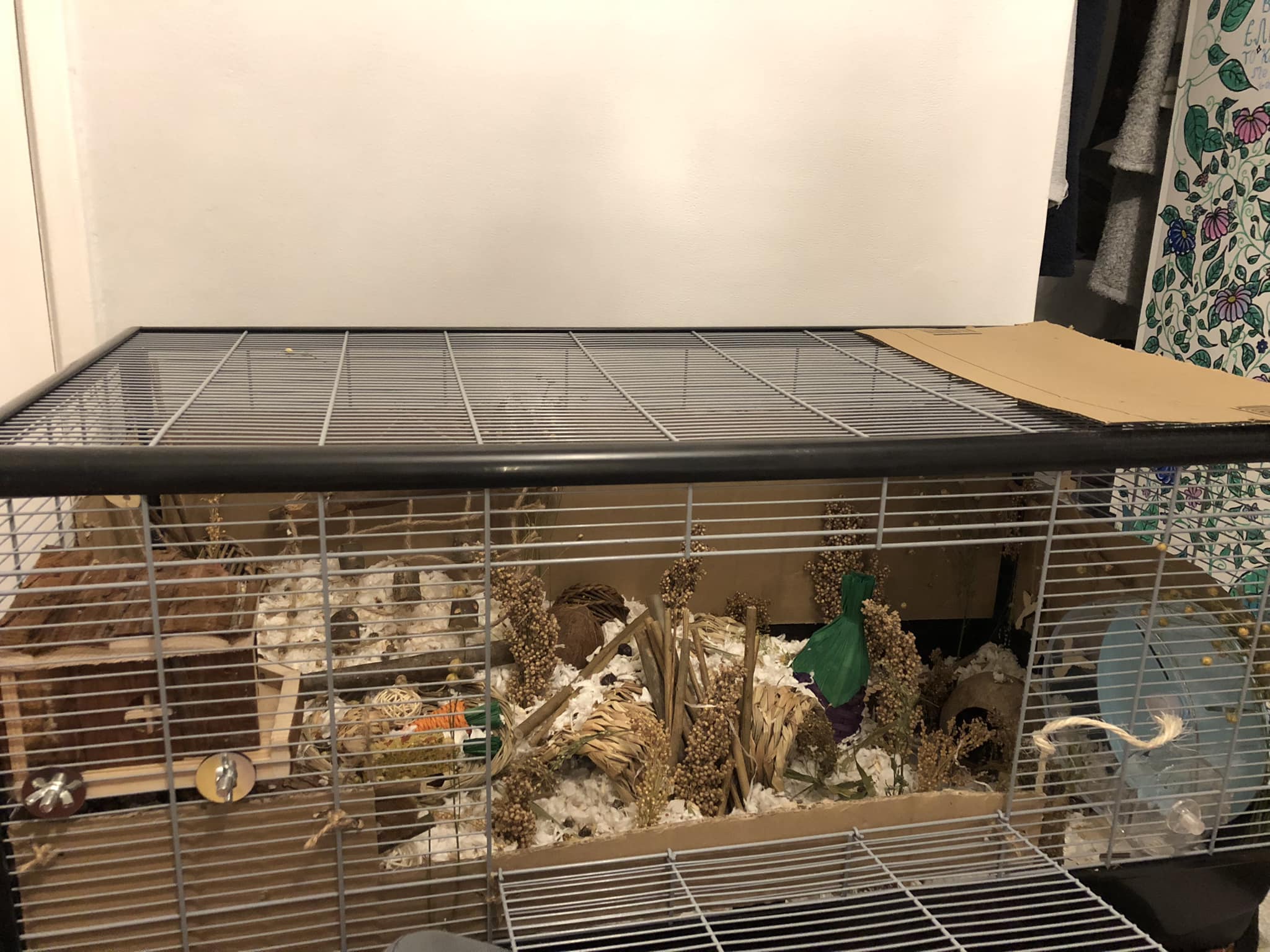
Mites — The Cause Nobody Can See
Mites are very common in hamsters. They are also very easy to miss, because you cannot see them with the naked eye.
A hamster with mites will scratch — persistently, always in the same spots. The scratching leads to hair loss that is patchy and uneven. You may also notice the skin looks slightly thickened or flaky in the areas where fur has gone. If the infestation has been going on for a while, you may see small scabs where the hamster has scratched hard enough to break the skin.
What you will not see is the mites themselves.
This one needs a vet. A vet will confirm mites through examination and prescribe an appropriate antiparasitic treatment — usually administered in drops. It is straightforward to treat once confirmed, and hamsters generally recover well.
The thing to be aware of: mites can be picked up from new bedding or substrate, even from sealed bags. It is not a sign that your setup is dirty or that you have done anything wrong. It happens to careful owners just as easily as careless ones. The difference is catching it promptly.
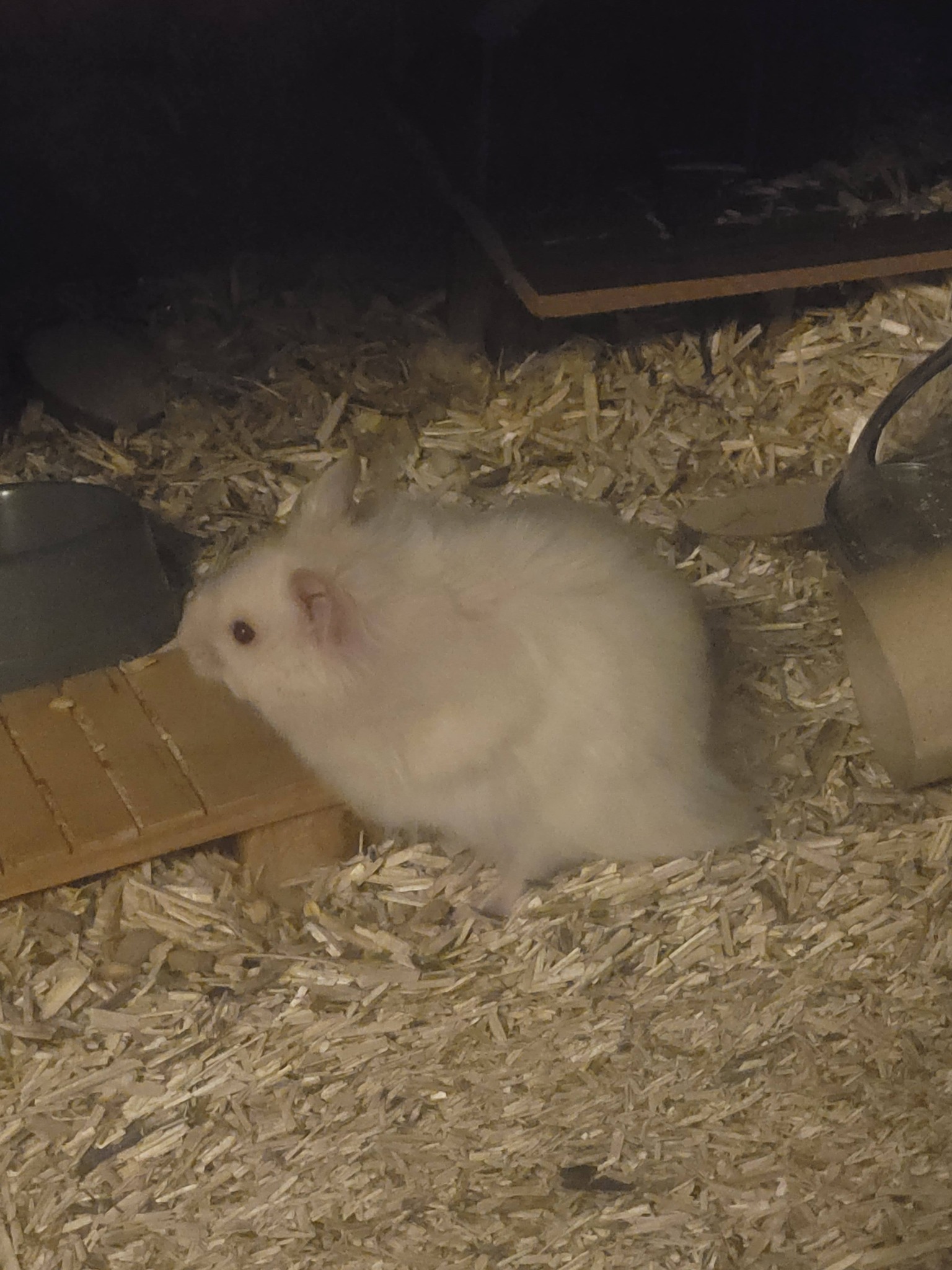
Ringworm — Which Is Not Actually a Worm
The name is misleading. Ringworm is a fungal infection — not a parasitic worm at all. It causes circular patches of hair loss, often with a slightly raised or scaly border around the edge of the bald patch.
It is less common than mites, but it does occur, and it is worth knowing one important thing: ringworm is zoonotic. It can spread from your hamster to you. If you are seeing ring-shaped bald patches with a defined edge on your hamster, wear gloves when handling it and see a vet promptly.
Treatment is antifungal — topical or oral depending on how severe it is — and it clears up well with the right medication.
The shape is the giveaway. Patchy, irregular hair loss is more likely to be mites or bedding irritation. A clearly defined, ring-shaped bald patch is ringworm until proven otherwise. If it looks like a ring — act on it.
Friction and Bar Rubbing — The One Nobody Thinks Of
This one surprises people every time. But in thirty-five years, it is one of the causes I see most consistently.
Hamsters rub. Against the bars of their cage, against the edge of their wheel, against the sides of their hideout. They rub to scent-mark, they rub out of habit, and they rub because the cage is too small and they have run out of other things to do.
The result of persistent rubbing is bald patches — usually on the nose and face, along the sides of the body, or around the hips if the cage is narrow. The skin underneath looks entirely normal. No redness, no scaling, no scratching. Just a bald spot in a location that makes sense once you think about what the hamster spends its time doing.
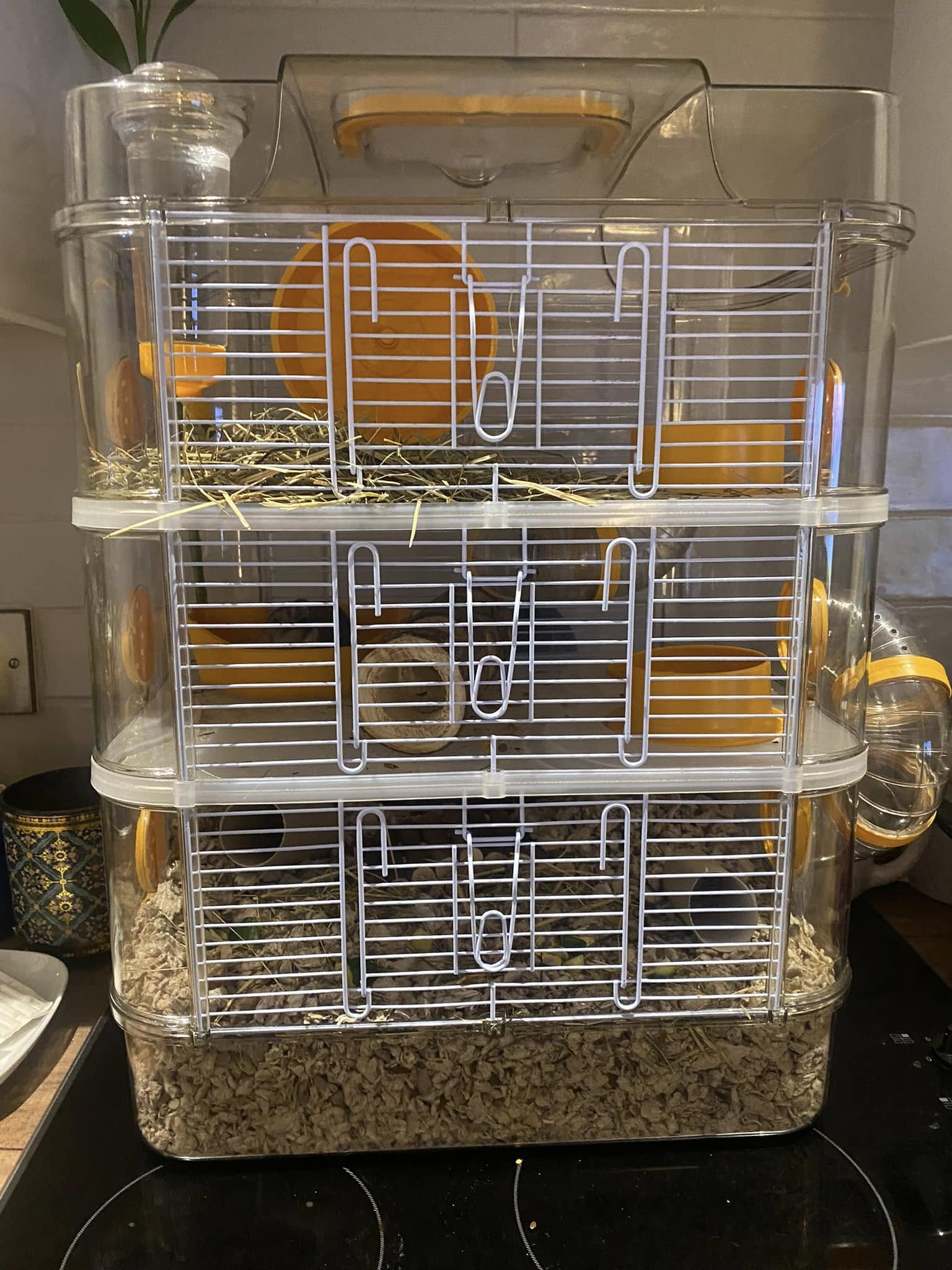
The fix is almost always a bigger cage with more enrichment.
The minimum floor space I recommend for a Syrian hamster is 80 by 50 centimetres — and that is a minimum, not a target. Many of the cages sold as hamster cages in mainstream pet shops are significantly smaller than this. A hamster in an undersized cage will pace, bar-chew, and rub — and the fur loss follows. Move it to an appropriate space and the behaviour, and the hair loss, usually resolves.
Barred cages also allow hamsters to grip and gnaw the bars themselves. If hair loss is concentrated around the nose and face, bar-rubbing is almost certainly the cause. A tank-style enclosure with a ventilated lid, or a cage with solid sides, often solves this completely.
Cushing’s Disease — When It Is Something More Serious
This is the one that needs a vet, without exception.
Cushing’s disease — technically hyperadrenocorticism — occurs when the adrenal glands produce too much cortisol. In hamsters, it presents as symmetrical hair loss along both flanks and the belly, usually combined with a pot-bellied appearance. The hamster may drink and urinate more than usual. It may seem lethargic, or eat more than it normally does.
It is not the most common cause of hair loss. But it is the one with the most serious implications, and it is the one most likely to be missed because the early signs are subtle.
The symmetry is the clue. If the hair loss is even on both sides of the body — same patches, roughly mirrored — and the belly looks distended, you need a vet. Ask specifically for one who sees small animals or exotics regularly. Not all general practices have the same level of experience with this, and the difference matters.
Cushing’s can be managed in hamsters, though treatment is less straightforward than in dogs or cats. The earlier it is caught, the more options there are.
Nutritional Deficiency — A Gradual Problem
A hamster on a poor diet can develop a dull, thinning coat over time. This is not the same as sudden patchy hair loss — it is a gradual, general deterioration in coat condition across the whole body.
If you are feeding exclusively on a seed mix — particularly a cheap one — your hamster is almost certainly selectively eating its favourite bits and leaving the rest. This is extremely common. The result is a diet high in fat and sunflower seeds, and low in the protein and vitamins needed to maintain a healthy coat.
A good quality pelleted diet, supplemented with small amounts of fresh vegetables a few times a week and an occasional protein source — a sliver of plain cooked chicken, a mealworm — covers most nutritional bases. Fresh water, always, changed daily.
Coat condition improves with diet, but it takes time. Give it six to eight weeks before deciding whether diet was the issue. You will usually see a visible difference in coat quality within that window.
- “It must be stressed — it’s losing hair because of stress” — Stress does not directly cause hair loss in hamsters in the way it is often described. What stress causes is a suppressed immune system, which makes a hamster more vulnerable to mites, fungal infection, and illness. Treat the underlying cause, not the stress as a standalone problem.
- “It’s moulting — hamsters moult like dogs” — Hamsters do not moult seasonally in the way larger animals do. Coat changes can occur, but significant visible hair loss is not normal seasonal shedding. If patches are appearing, there is a reason worth investigating.
- “The vet said it’s fine — all hamsters lose a bit of hair” — Some vets have less experience with small animals than others. If you have been told hair loss is nothing to worry about but something still does not seem right, get a second opinion from a vet who specialises in exotics or small animals.
- “Cedar bedding is fine — we used it for years” — The aromatic oils in cedar cause cumulative irritation. Some hamsters show a reaction quickly, others take longer. The absence of visible symptoms for a period does not mean the bedding is appropriate — it means the reaction has not surfaced yet, or has been attributed to something else.
- “It just needs vitamins — I’ve seen it work for other people” — Vitamins added to water degrade quickly, are impossible to dose accurately, and do not address the specific deficiency causing the problem. If nutrition is the issue, fix the diet. Vitamin drops are not the solution.
- “It will grow back on its own” — Sometimes it will. Sometimes it will not, and waiting costs the hamster weeks of discomfort. Identify the cause first, then you will know whether watchful waiting is appropriate or whether action is needed.
When to See a Vet — The Honest Summary
People ask me this directly, and I give them a straight answer. Here it is.
- Your hamster is over two years old, losing hair around the lower back and hindquarters, and otherwise behaving normally.
This is almost certainly age-related thinning. No vet needed. Monitor comfort, keep the animal warm, continue normal care. This is a normal part of a hamster’s later life. - You have recently switched to or are currently using cedar or pine shavings.
Change the bedding immediately to paper-based or aspen. Watch for two to three weeks. If fur begins to return and the skin settles, bedding was the cause. No vet needed unless the skin looks infected or the hamster is in visible distress. - The hamster is scratching persistently in the same spots, and the skin looks thickened, flaky, or scabbed.
This is mites. Go to a vet who sees small animals. Do not wait — mites cause real ongoing discomfort and do not resolve without treatment. - The bald patches are circular and clearly defined, with a slightly raised or crusty edge.
This is ringworm until proven otherwise. Wear gloves when handling, see a vet promptly. It is treatable. It is also transmissible to humans. - The hair loss is symmetrical on both flanks, the belly looks distended, and the hamster is drinking or urinating more than usual.
This needs a vet with small animal experience, soon. These are the hallmark signs of Cushing’s disease and should not be left. - Any hair loss accompanied by weight loss, lethargy, or a hamster that has stopped eating.
Vet, same day if possible. A hamster that has stopped eating is a hamster in serious decline. Small animals deteriorate faster than larger pets — do not wait to see if it improves.
What We See Most Often at Paradise Pets
In thirty-five years, the causes I see most often are three: old age, wrong bedding, and a cage that is too small.
Old age you cannot change. Wrong bedding and an undersized cage — those are both fixable today, and fixing them costs nothing compared to the difference it makes to the animal.
If you have bought a hamster from us and something does not seem right, come back in and talk to us. We are not going to brush you off with “it’s probably fine.” We will look at what you describe, ask the right questions, and tell you honestly what we think is going on — and whether it needs a vet.
We only stock hamsters from UK breeders — animals that have been handled, kept well, and come with a known background. That does not mean they will never have health issues. All animals do. But it means you are starting from the best possible position.
If you are worried about your hamster and want a second opinion before heading to the vet, come and see us. Get in touch first if you want to check we are in, or simply come to Manor Garden Centre, Cheney Manor Industrial Estate, Swindon, SN2 2QJ. We are open every day.
Visit Us at Paradise Pets Swindon
We stock Syrian and dwarf hamsters year-round — all UK-bred, all handled from a young age. If you have a question about your hamster’s health, housing, or diet, come in and ask us. Thirty-five years of experience means we have seen almost everything, and we would rather you ask than worry.
We also stock a full range of gerbils, rabbits, guinea pigs, and an extensive selection of cage and aviary birds.
⭐ Customer Reviews
Amazing Bird Selection
Had a lovley visit today,staff were very friendly and very helpful,such a great petshop,their selection of birds is incredible,really impressed,thank so much to the staff at Paradise Pets

Friendly Helpful Staff
I have been coming to this place for years and they have a great stock of food for all types of pets. Have a great selection of small mammals and a lot of birds. Staff are friendly and helpful.

Great Quality Hutch
Bought a guinea pigs hutch and run combo, very happy with the service, the hutch was put in my car for me without even asking for help. The wood quality is very good, the instructions easy to follow and we are extremely happy with the fully built hutch. A good size for 2 guinea pigs

Response from Paradise Pets | Wiltshire
Thank you Melanie Latus Nice to provide services to you.
Best Bird Shop Around
It’s the best pet shop in and around Swindon. They always have an amazing selection of birds and all you need to keep them happy. I keep birds myself and the guys there are happy to answer questions and really know their stuff. I have seen budgies etc. in chain pet shops in the area looking really unhealthy and ill – I wouldn’t go anywhere else than Paradise Pets for animals.

Highly Recommended Bird Shop
I could not praise this shop enough. Really helped my Grandson buy his first bird and he’s loving it. Travelled from Somerset and was welcomed with open arms.

Great Shop with Competitive Prices
Great shop with amazing selection for small animals, hamsters, mice ect, highly recommend!
Also has a great selection for dogs & cats too & very competitive prices! 💖

