
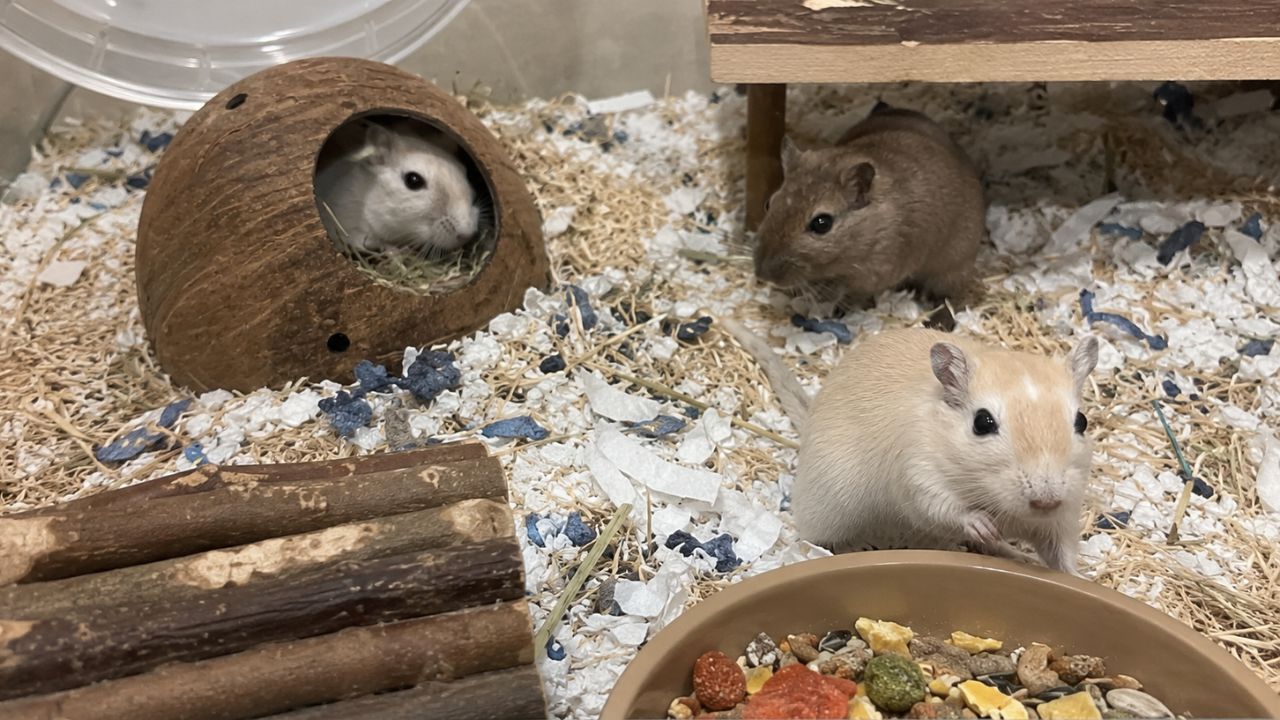

Neil has kept, bred, and sold gerbils at Paradise Pets Swindon since 1988 — over 35 years of first-hand experience with these animals. In that time, he has watched the same misunderstanding cost gerbils their wellbeing again and again. This article is his attempt to fix that.
It happens regularly. A family comes in, they have already decided they want a small furry pet, and they have narrowed it down to two options. They ask me: hamster or gerbil? I give them the honest answer — which depends entirely on their household and what they are actually looking for. Some of them leave with a hamster. Some of them leave with gerbils.
The ones who leave with gerbils sometimes come back a few weeks later. Not always — but sometimes. And when they do, the conversation usually starts the same way: “We thought gerbils would be like hamsters, just a bit more active.”
They are not like hamsters. Not in the ways that matter. And finding that out after you have bought them, rather than before, is a problem that affects the animal far more than it affects the owner.
This article is my attempt to make sure that conversation happens before the purchase, not after.
What Gerbils Actually Are — And Why It Matters
Gerbils are native to the dry, semi-arid grasslands and deserts of Mongolia and northern China. In the wild, they live in family groups — complex social structures built around a breeding pair and their offspring. They are active during the day, active at night, active at dawn and dusk. They dig. They forage. They communicate constantly with each other through scent marking, posture, and sound. They are curious, intelligent, and relentlessly busy animals.
That is what a gerbil is. And it changes almost everything about how you need to keep one.
Hamsters, by contrast, are solitary and nocturnal. One hamster, alone, in a cage, sleeping through the day — that is appropriate for a hamster. It is completely inappropriate for a gerbil. A gerbil kept alone is not living a slightly reduced version of a gerbil’s life. It is living a genuinely impoverished one.

The Biggest Difference — Gerbils Are Social Animals
This is the one that matters most, and the one that most often gets missed.
Gerbils must be kept with other gerbils. This is not a preference. It is a biological requirement. A gerbil kept alone will — in most cases — become stressed, anxious, and eventually unwell. I have seen it happen more times than I can count. A lone gerbil that seemed fine in the first week becomes quieter, less active, and less interested in interacting with its owner as the weeks go on. By the time the owner realises something is wrong, the animal has often been in distress for months.
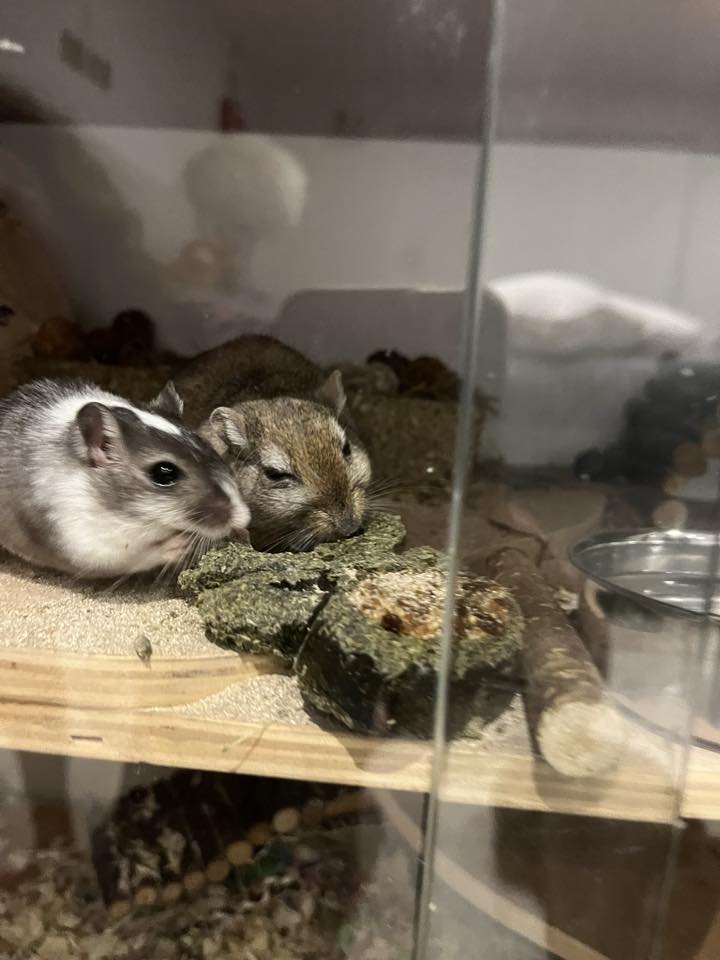
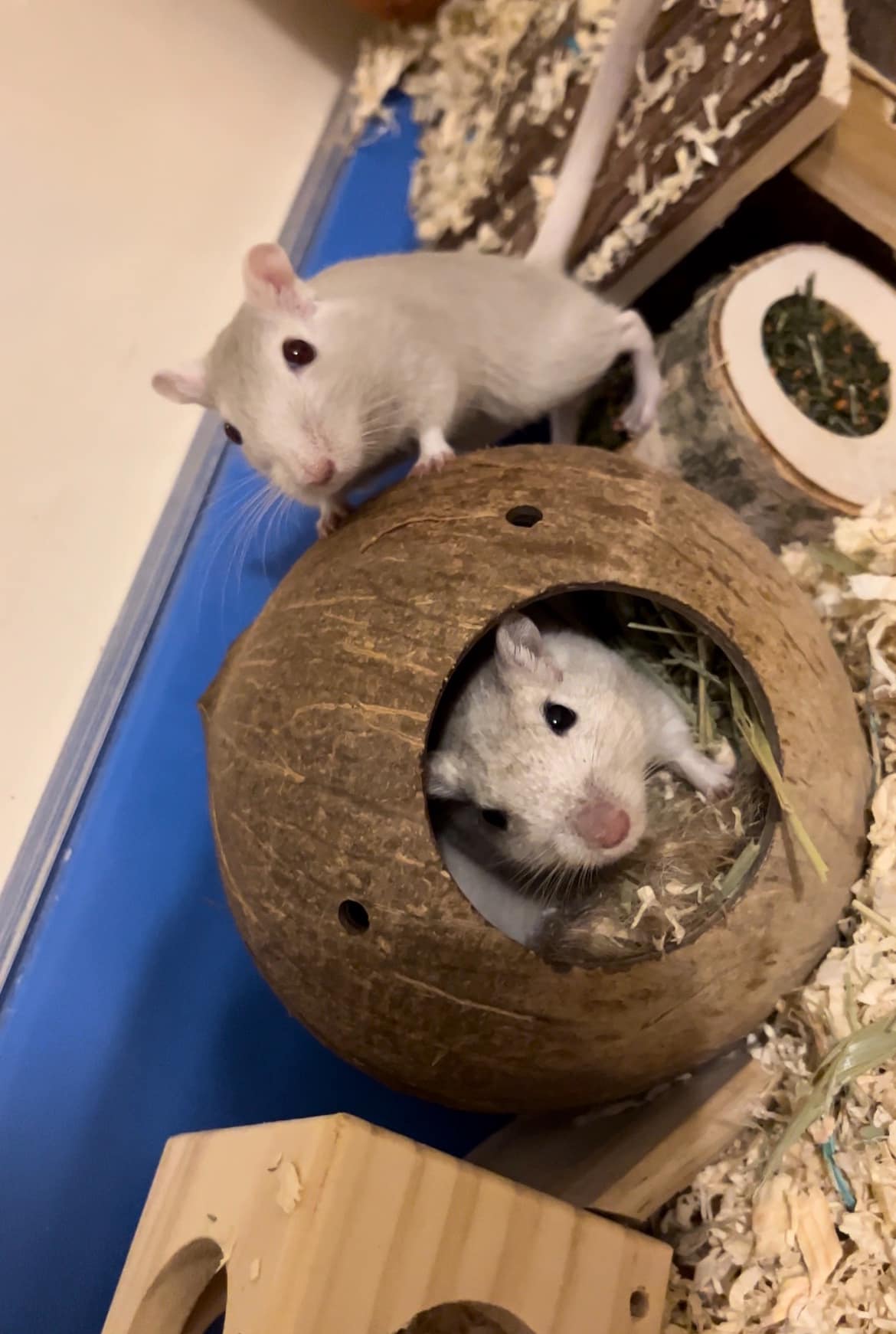
The minimum I recommend is a same-sex pair. Two gerbils that have been raised together, or introduced correctly at a young age, will live in a state of almost constant companionship — sleeping curled together, grooming each other, investigating everything in their enclosure side by side. That is a gerbil living appropriately. That is also, incidentally, a far more entertaining and engaging animal to observe than a lone gerbil sitting in a corner.
What about introducing adult gerbils?
Introducing unfamiliar adult gerbils to each other is a complicated process — gerbils are territorial and can fight seriously when introduced incorrectly. The split-cage method works, but it requires patience and careful management. If you already have a lone gerbil and want to introduce a companion, come and talk to us before you buy a second animal. We will walk you through the right way to do it rather than having you find out the hard way that gerbils introduced directly into the same cage will often fight.
Gerbils Are Active During the Day — This Is Not a Small Thing
I mention this to almost every new gerbil buyer, because it surprises people more than anything else about these animals.
Hamsters are nocturnal. You buy a hamster, you put it in a cage in the living room, and during the day it is mostly asleep. Children who want to interact with it in the afternoon after school are dealing with a sleeping animal — which is one of the most common sources of disappointment for families who buy hamsters without understanding this.
Gerbils do not have this problem. Gerbils have a polyphasic activity pattern — they are active in short bursts throughout the day and night. At two in the afternoon, when your child comes home from school, there is a reasonable chance the gerbils will be awake, digging, foraging, and entirely available for interaction. That is a meaningful difference if interaction is part of what you are looking for in a pet.
It also means the wheel noise at two in the morning is less of an issue than with hamsters — gerbils do use wheels, but their activity is more spread through the day rather than concentrated at night. This makes gerbils, for many families, a more practical daytime pet than the alternative.
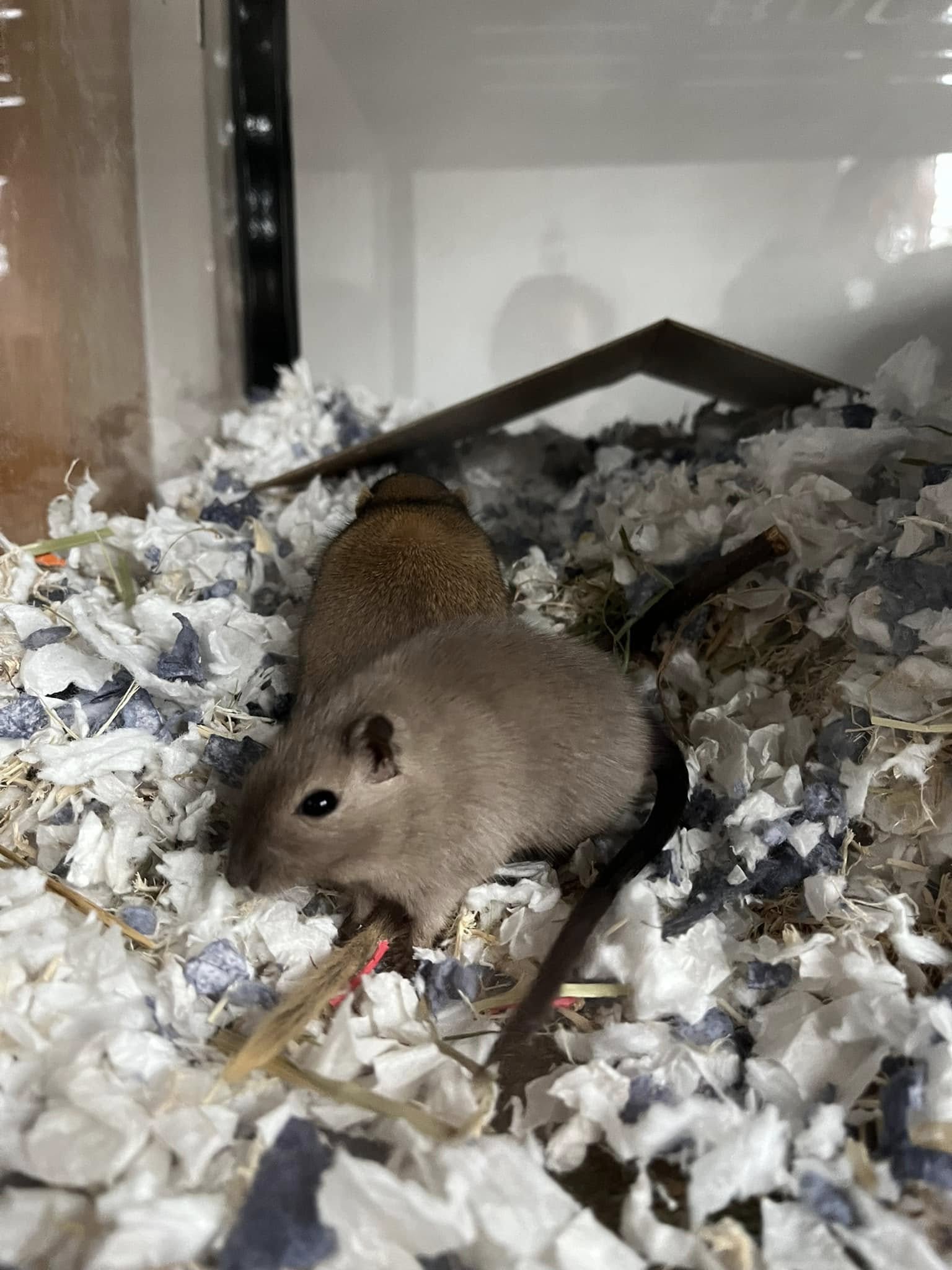
- “One gerbil will be fine — it can bond with us instead” — It will not be fine. Human interaction, however loving, does not replace gerbil companionship. A lone gerbil is a stressed gerbil.
- “Gerbils are the same as hamsters, just more active” — They have different social needs, different activity patterns, different dietary requirements, and different housing needs. The only real similarity is the size.
- “The plastic tube cage from the pet shop is perfect for gerbils” — Those cages are usually too small and often chewed through within weeks. Gerbils need space to dig and a tank or deep enclosure that cannot be chewed.
- “Gerbils don’t need much bedding” — They need deep bedding — at least 15 to 20 centimetres — to burrow properly. A shallow layer on the bottom of a tank is not appropriate.
- “Gerbils bite” — Well-handled gerbils from a young age are generally very tame and rarely bite. A gerbil that bites has usually been handled incorrectly, startled, or is frightened. It is not a character flaw.
- “Gerbils smell a lot” — Gerbils are actually one of the least smelly small animals. They produce very little urine compared to mice or hamsters, and a well-maintained enclosure with appropriate bedding rarely has any noticeable odour.
The Housing Situation — What Gerbils Actually Need
Gerbils are diggers. This is fundamental to their nature and one of the most important things to get right when setting up their home. In the wild, Mongolian gerbils dig extensive burrow systems — networks of tunnels and chambers that serve as their home, their shelter, and their primary environment.
This means the standard plastic cages sold in most UK pet shops are not appropriate for gerbils. Gerbils will chew through plastic, often within weeks. Wire cages without a solid base do not allow deep bedding. Small tanks without depth do not allow proper burrowing.
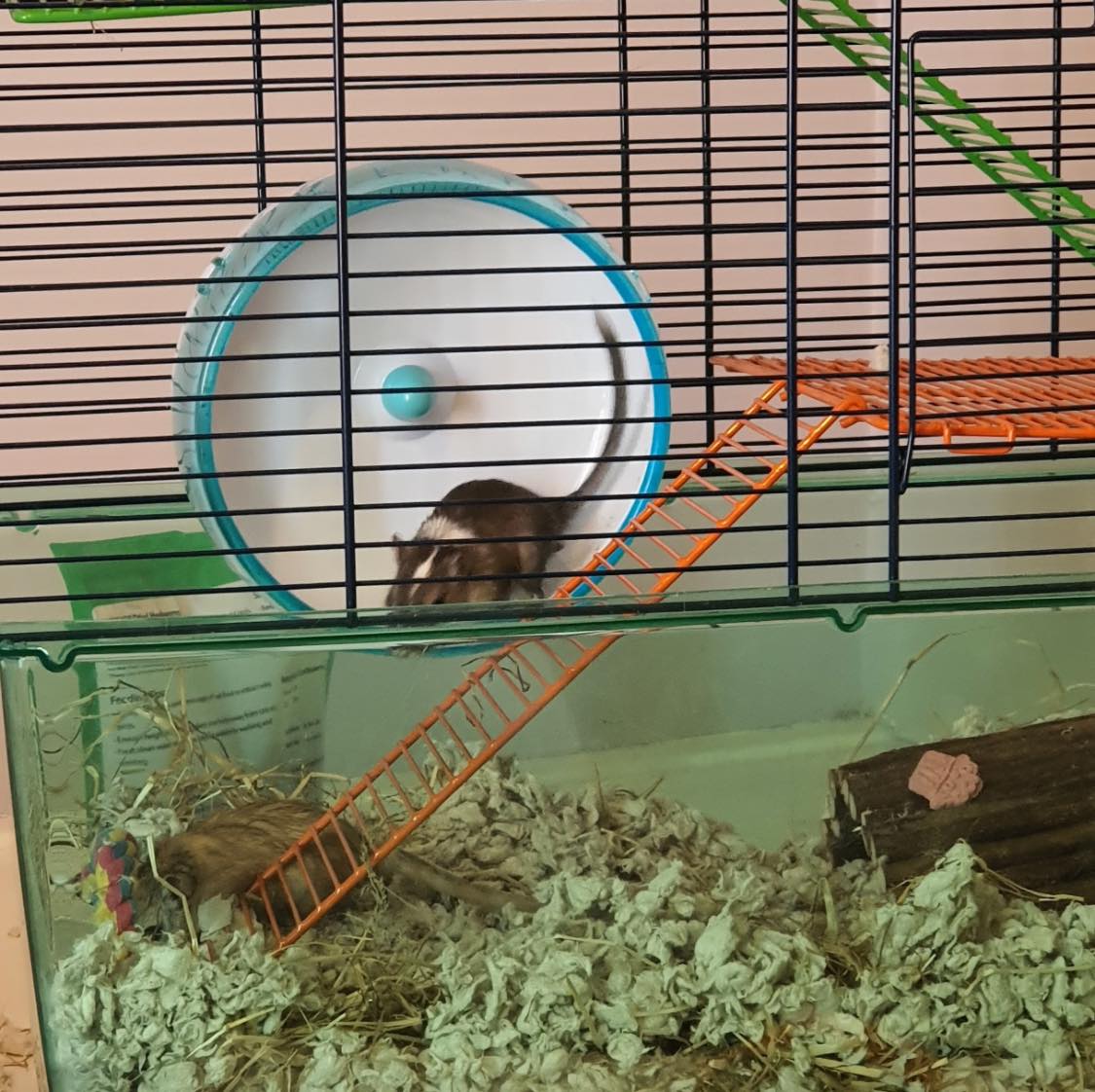
What works best for gerbils is a glass or thick plastic tank — often called a gerbilarium — that is large enough to hold at least 20 centimetres of substrate and has a secure ventilated lid. For a pair of gerbils, the minimum floor space I recommend is 70 by 40 centimetres. Larger is always better. The bedding should be a mix of paper-based substrate and hay or coconut fibre — something that holds its shape when dug and allows the gerbils to create stable tunnels.
What to put in the enclosure
Gerbils need more than bedding. They need things to do. A wooden hideout or two — which they will chew, so expect to replace these regularly. Cardboard tubes and boxes, which they will also chew enthusiastically and which cost almost nothing to replace. A wheel — solid surface, minimum 17 to 20 centimetres diameter. Some hay for foraging. Occasional additions like dried herbs, seeds hidden in the bedding, or new objects to investigate.
The chewing is not destructive behaviour. It is normal, necessary behaviour for animals whose teeth grow continuously throughout their lives. Provide appropriate things to chew and the gerbils will focus on those rather than anything else in their environment.
Diet — Simpler Than You Think
Gerbils are omnivores but their diet skews heavily towards seeds, grains, and plant matter. A good quality gerbil mix — not a hamster mix, which has different proportions — forms the base. Fresh vegetables can be offered a few times a week: small amounts of carrot, broccoli, cucumber, and leafy greens are all suitable. Fresh fruit occasionally, in very small amounts — gerbils enjoy it but it is high in sugar and should not be a daily staple.
Protein is needed in small amounts — a mealworm or two occasionally, or a small piece of plain cooked egg. This is particularly important for pregnant or nursing females.
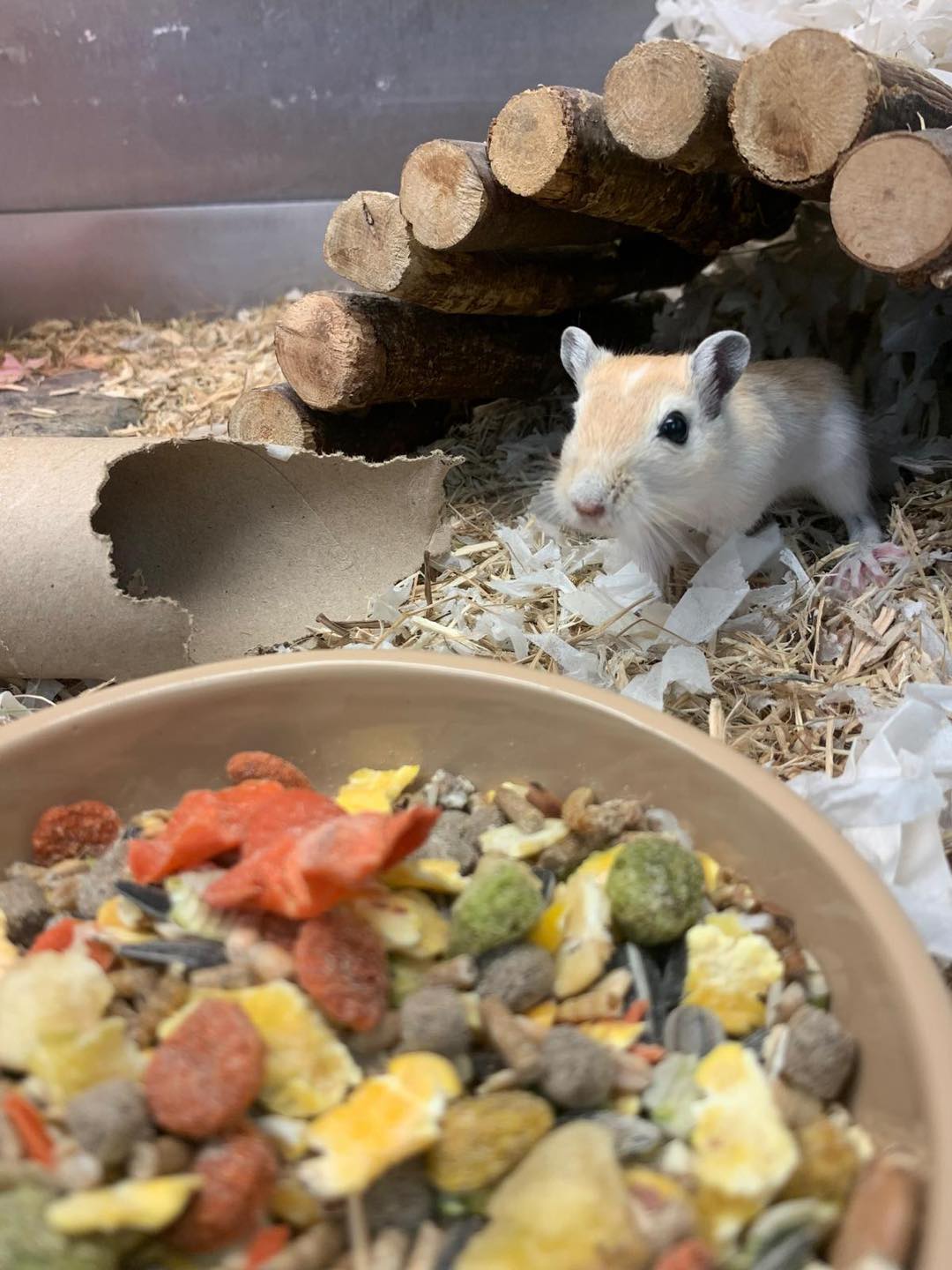
What to avoid: citrus fruit, onion, garlic, rhubarb, and anything high in water content in large quantities. Gerbils come from dry habitats and their kidneys are adapted for water conservation — watery foods in large amounts can cause digestive issues.
Fresh water should be available at all times via a sipper bottle. Change it daily. Gerbils drink less than many small animals, but they do need constant access to clean water.
Handling — Getting It Right From the Start
Gerbils that are handled correctly from a young age become remarkably tame animals. They are curious rather than fearful, and they tend to investigate hands that are offered to them rather than run from them. A pair of well-handled gerbils that have been with a family for a few months will often climb onto hands voluntarily, explore arms and shoulders with interest, and show none of the defensiveness that characterises a poorly handled small animal.
Getting there requires consistency and patience in the first few weeks. Approach the tank calmly. Let the gerbils sniff your hand before you attempt to pick them up. Pick them up with both hands, cupped, supporting the body — never by the tail, which can cause serious injury. Keep early handling sessions short — five to ten minutes — and let the animal set the pace. Do not force interaction.
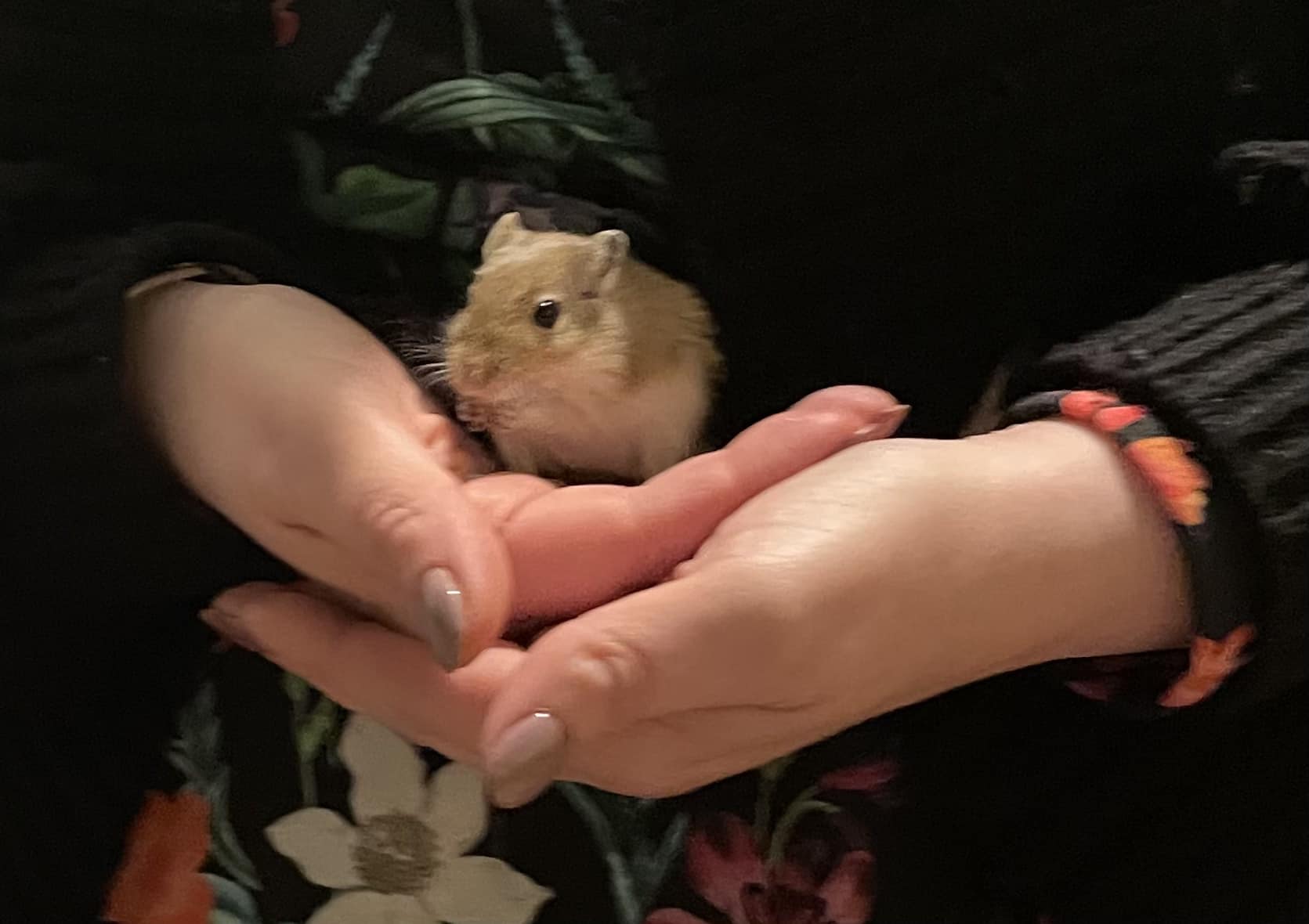 Children need to be taught this before they handle gerbils, not during. A gerbil dropped from height, startled by a sudden movement, or grabbed roughly will become defensive and harder to handle. A gerbil that is always approached calmly and handled gently will become increasingly confident and easy to manage over time.
When a Gerbil IS the Right Pet
Given everything above, here is my honest assessment of the households where gerbils genuinely thrive.
- Families who are happy to keep a pair rather than a single animal — this is non-negotiable for gerbil welfare
- Households with children aged seven or eight and above who are old enough to handle gently and understand the animal’s needs
- People who want a pet that is active and interesting during the day — gerbils are significantly more entertaining to watch during daylight hours than nocturnal animals
- Anyone who finds the idea of watching an animal dig, forage, and build genuinely interesting — gerbils are fascinating to observe when properly set up
- People who want a relatively low-odour small pet — gerbils produce far less waste than mice or rats and are among the least smelly of the small furries
- Families who have thought honestly about a three to five year commitment and are comfortable with it
What I Ask Before I Recommend Gerbils
When someone comes in seriously interested in gerbils, I ask a few things before we go and look at the animals. These conversations are short but they make a real difference to how things go.
- Do you understand they need to be kept in pairs?
This is always first. If someone is set on one gerbil for any reason, I explain clearly why that is not appropriate for the animal. In most cases, once people understand why, they are happy to keep two. Occasionally someone has a reason I cannot argue with — in which case I suggest they consider a different species. - What housing are you planning?
The answer tells me a lot. If someone describes a plastic cage with tubes, I explain why a deep tank works better and show them what we stock. Five minutes on this now saves a lot of frustration later. - How old are the children who will be handling them?
Young children and gerbils can work, but it requires realistic expectations and proper supervision. I talk through what gentle handling looks like and make sure parents understand this needs to be taught, not assumed. - Have you had small animals before?
First-time owners get more of my time at the counter. Not because gerbils are complicated — they are not — but because the setup questions are easier to get right first time than to fix later. - Are you aware they are active during the day?
Most people are surprised by this in a positive way. But it is worth confirming, because the activity pattern is one of the things that makes gerbils a better fit for some households than hamsters.
The Gerbils We Stock at Paradise Pets
We breed our own gerbils on site and source others from trusted UK breeders only. Every gerbil we sell has been born and raised in this country, handled regularly from a young age, and checked carefully before going to a new home. We do not import animals.
We typically stock Mongolian gerbils — the most common pet variety — in a range of colour varieties. Standard agouti is the natural colouring, but we also stock black, white, grey, and various patterned varieties depending on what our breeding pairs produce. If you are looking for a specific colour, it is worth calling ahead on 01793 512400 to check availability before making the trip.
| Variety | Appearance | Notes |
|---|---|---|
| Agouti (Wild Type) | Brown-grey ticking, white belly | The natural colouring. Hardy, well-established. Our most commonly available variety. |
| Black | Solid black coat | Very striking. Same temperament and care needs as agouti. |
| White / Dove | White or pale grey | Popular with families. Can be slightly more sensitive — worth discussing before buying. |
| Nutmeg | Rich golden-brown | Distinctive colouring. Often available seasonally depending on breeding. |
| Pied | White patches on base colour | No two pieds look exactly alike. Personality varies by individual. |
You can find more information on our gerbils and hamsters page, including what else we stock alongside gerbils.
Gerbils or Hamsters — The Honest Summary
People ask me this question constantly. Here is the honest answer I give at the counter, every time.
If you want a pet that is mostly solitary, most active at night, and easier to handle as a single animal — a Syrian hamster is probably the better choice. Read our hamster care guide before you decide.
If you want a pet that is active during the day, genuinely social, entertaining to watch, and that you are happy to keep in a pair — gerbils will give you a richer experience. They are more engaging, more active during hours when people are actually awake, and in my experience more consistently rewarding as a long-term pet for families.
Neither is better in absolute terms. Both are better for specific households. Come in and talk to us — we will ask you the right questions and help you make the right decision.
One Last Thing
If you take one thing away from this article, let it be the social needs. Two gerbils, not one. Same sex, raised together or introduced correctly. That single decision — made before you buy rather than after — is the difference between a gerbil that thrives and a gerbil that does not.
Everything else — the housing, the diet, the handling — is manageable and learnable. The social needs are the one thing that cannot be fixed once you have a lone gerbil sitting in a tank, getting quieter by the week.
Come and see us. We stock a full range of small animals and we are always happy to spend time helping you make the right choice — whether that is gerbils, hamsters, guinea pigs, rabbits, or something else entirely. No pressure, no rush. Thirty-five years of doing this has taught me that the right animal in the right home is worth every minute of that conversation.
Visit Us at Paradise Pets Swindon
We stock Mongolian gerbils year-round in a range of colour varieties — all UK-bred, most raised on site. Come in and see what we currently have, or call ahead if you are looking for a specific colour or pairing.
We also stock a full range of Syrian and dwarf hamsters, rabbits, guinea pigs, and an extensive selection of cage and aviary birds.