
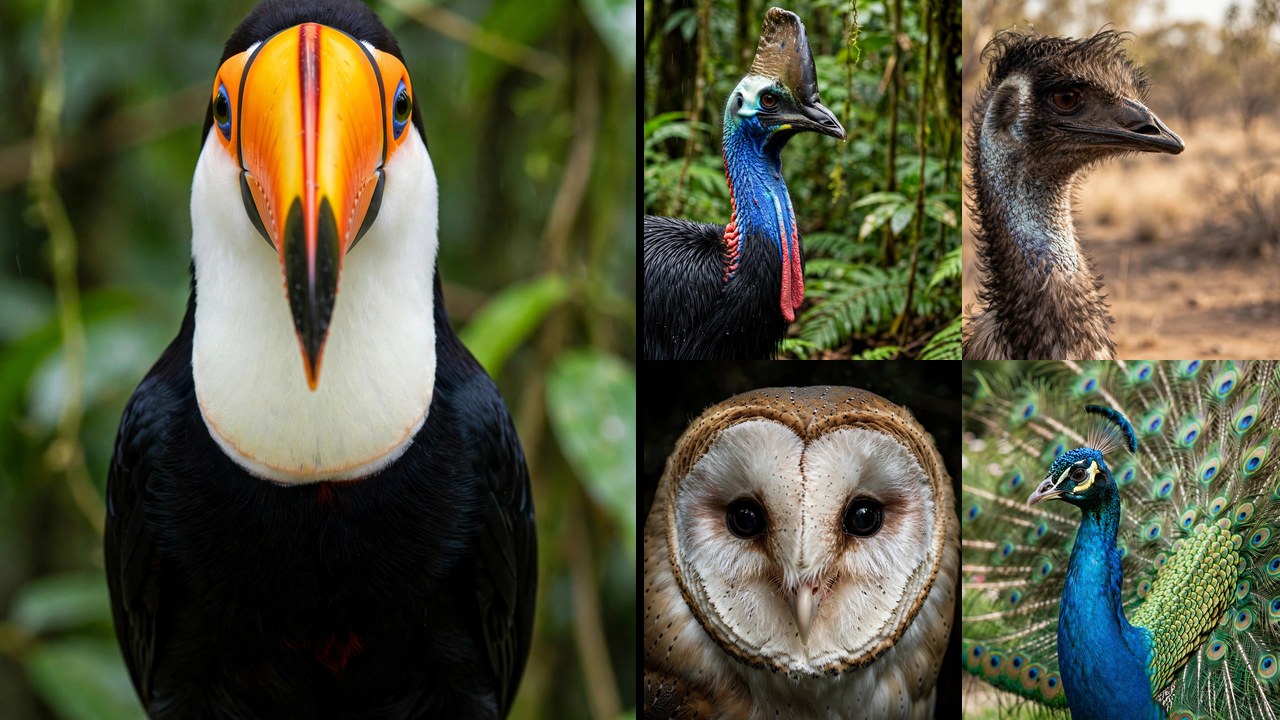

Budgies and cockatiels are the sensible choices. But venture into the exotic corners of the pet world and you’ll find people sharing their homes — and sometimes their lives at risk — with birds that seem to belong in documentaries, not living rooms.
Here are 5 of the most shocking birds people actually keep as pets, why they’re tempting, and the honest answer to whether they should be.
5 Shocking Pet Birds — Ranked by How Bad an Idea They Are
1. Cassowary — The World’s Most Dangerous Bird
Standing up to 6 feet tall with dagger-like claws up to 12 cm long, the cassowary is considered the world’s most dangerous bird — capable of disemboweling a human with a single kick. A handful of private owners (mostly in Australia, with permits) have kept them, and indigenous cultures have occasionally tamed chicks.
Should they? Absolutely not. Cassowaries are wild, unpredictable, solitary animals that need rainforest territory. They have killed people. This is a hard no — fascinating, but a no.
2. Emu — The 6-Foot Backyard Dinosaur
Emus are increasingly kept on farms and large rural properties, mostly in Australia and the US. They’re curious, can be hand-raised to tolerate humans, and their strutting dinosaur walk is undeniably entertaining. Some owners describe them as oddly affectionate.
Should they? Only with serious land and expertise. Emus need acres of fenced space, specialized diets and tall, strong fencing — and a startled emu can still kick hard enough to break bones. Fine for experienced large-property owners; absurd for suburbs.
3. Toucan — The Cartoon Come to Life
With that enormous rainbow bill, toucans look like living cartoons — and a small number of wealthy exotic-pet collectors keep them. They’re playful, intelligent and genuinely charming.
Should they? With extreme caution. Toucans need huge aviaries with tropical heat and humidity, specialized fruit-based diets (they’re prone to iron storage disease on wrong diets), and constant enrichment. They’re also messy beyond belief — they throw food everywhere. Legal only with permits in most places, and conservation concerns are real.
4. Owl — The Silent Housemate
Thanks to a certain boy wizard, owls became fantasy dream-pets. In reality, a few are kept by licensed falconers — barn owls and burrowing owls occasionally appear in private hands where legal.
Should they? Almost certainly not as a “pet.” Owls are nocturnal (awake when you sleep), need whole-prey diets (frozen mice — daily), destroy furniture with talons, and most places require falconry licenses, inspections and proven expertise. They’re wildlife, not companions.
5. Peacock — The Backyard Show-Off
The least shocking on this list, but still surprising to many: peafowl are kept as ornamental pets on estates and farms worldwide. Males are breathtaking, they’re hardy, and they eat ticks and pests.
Should they? This one’s actually reasonable — with land. Peacocks need space to roam, roost high at night, and are ear-splittingly loud in breeding season (neighbors will have opinions). But among “shocking” pet birds, they’re the only genuinely viable pet on this list.
The Honest Scorecard
| Bird | Danger Level | Space Needed | Verdict |
|---|---|---|---|
| Cassowary | Extreme — can kill | Rainforest-scale | Never a pet |
| Emu | Moderate — powerful kicks | Acres | Experts with land only |
| Toucan | Low | Large heated aviary | Permits + expertise only |
| Owl | Moderate — talons | Large aviary | Licensed falconers only |
| Peacock | Low | Large yard/farm | Viable with space |
The Bigger Question: Just Because You Can, Should You?
Exotic pet ownership sits at the intersection of conservation, animal welfare and human ego. Many of these birds are wild animals with complex needs no home can fully meet — and demand fuels illegal wildlife trade that devastates wild populations.
If a bird fascinates you, consider the alternatives: support a sanctuary, volunteer, or channel that passion into a species that genuinely thrives in human care — like a cockatiel, which will love you just as hard without the 12 cm claws.
Frequently Asked Questions
Is it legal to own a toucan?
It depends entirely on where you live. Many US states require permits, some ban them outright, and international trade is regulated under CITES. Always check local and national law before even considering it — and buy only from legal, ethical breeders.
What’s the most dangerous pet bird?
The cassowary, by a wide margin — it’s considered the most dangerous bird in the world, period. Among common pets, large macaws and cockatoos can inflict serious bites, but nothing approaches cassowary lethality.
Can emus really be affectionate?
Hand-raised emus can be curious and tolerant of familiar humans, and some owners report genuine attachment behaviors. But “affectionate” in emu terms still means a 120-pound bird that can kick through a fence panel.
Why are owls bad pets?
They’re nocturnal, need whole dead prey daily, require huge aviaries, destroy household items with talons, and are solitary by nature — the opposite of a companion animal. Most jurisdictions require falconry licensing.
Note: Laws on exotic bird ownership vary widely by country and region. Always verify legality with local authorities, and prioritize accredited sanctuaries and rescues.
