
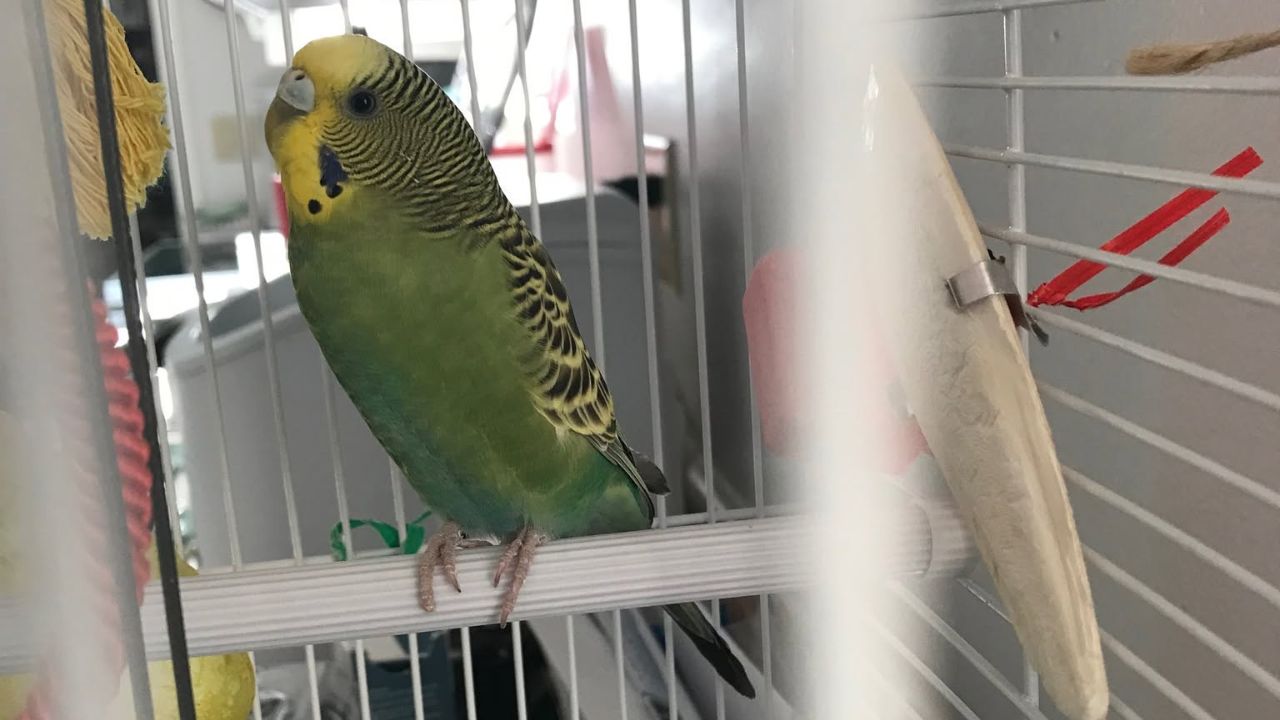

Neil has been selling cage and aviary birds at Paradise Pets Swindon since 1988. This article is not a care guide or a health article. It is something he has wanted to write for a while — an honest account of the thing he has noticed most consistently across 35 years of counter conversations, and that almost nobody in the pet industry ever says plainly.
I want to be careful about how I begin this, because what I am about to describe is something I have noticed across thousands of conversations over 35 years, and I do not want it to sound like sentiment dressed up as observation. It is not sentiment. It is the most consistent pattern I have seen in this work, and I have been thinking about how to write it down honestly for a long time.
A significant proportion of the people who come into this shop to buy a bird are lonely.
Not dramatically lonely, in most cases. Not people in crisis. Just people living with a particular kind of quietness — a house that has too little of someone else’s presence in it, or too much silence in the morning, or a routine that has narrowed in some way that has left a gap they cannot quite name. They come in for a bird. Some of them know that what they are really looking for is company. Some of them would not use that word at all, but it is clear from the conversation.
I am not qualified to comment on the psychology of loneliness and I am not going to try. What I can speak to, honestly and from experience, is what I have observed across 35 years of watching the relationship between lonely people and birds — what it produces, how it works, what the bird gives that nothing else quite does, and the one thing about this pattern that still, after all this time, surprises me.
What I Have Noticed At The Counter
This is where I want to be specific rather than general, because the specific observations are what give this meaning.
I have sold birds to people who came in two weeks after losing a spouse of forty years. I have sold birds to elderly men whose children have grown up and moved away and who find the silence of Sunday afternoons particularly difficult. I have sold birds to people who work from home and discovered that the background quiet of a house with no other presence in it produces something closer to distress than they had anticipated. I have sold birds to younger people, living alone for the first time, who could not have a dog or cat in their rental property and wanted something that would notice them.
What most of these customers have in common is not a shared demographic or circumstance. It is a shared description of what they are hoping for. Not always articulated directly. But present in the conversation, if you pay attention.
They want something that will respond.
That sounds simple. It is not. What they mean — what I have come to understand they mean, through hundreds of versions of this conversation — is that they want something that will notice when they enter a room. Something that will behave differently because they are present than it would if they were not. Something that connects their existence, specifically, to a visible response in the world around them.
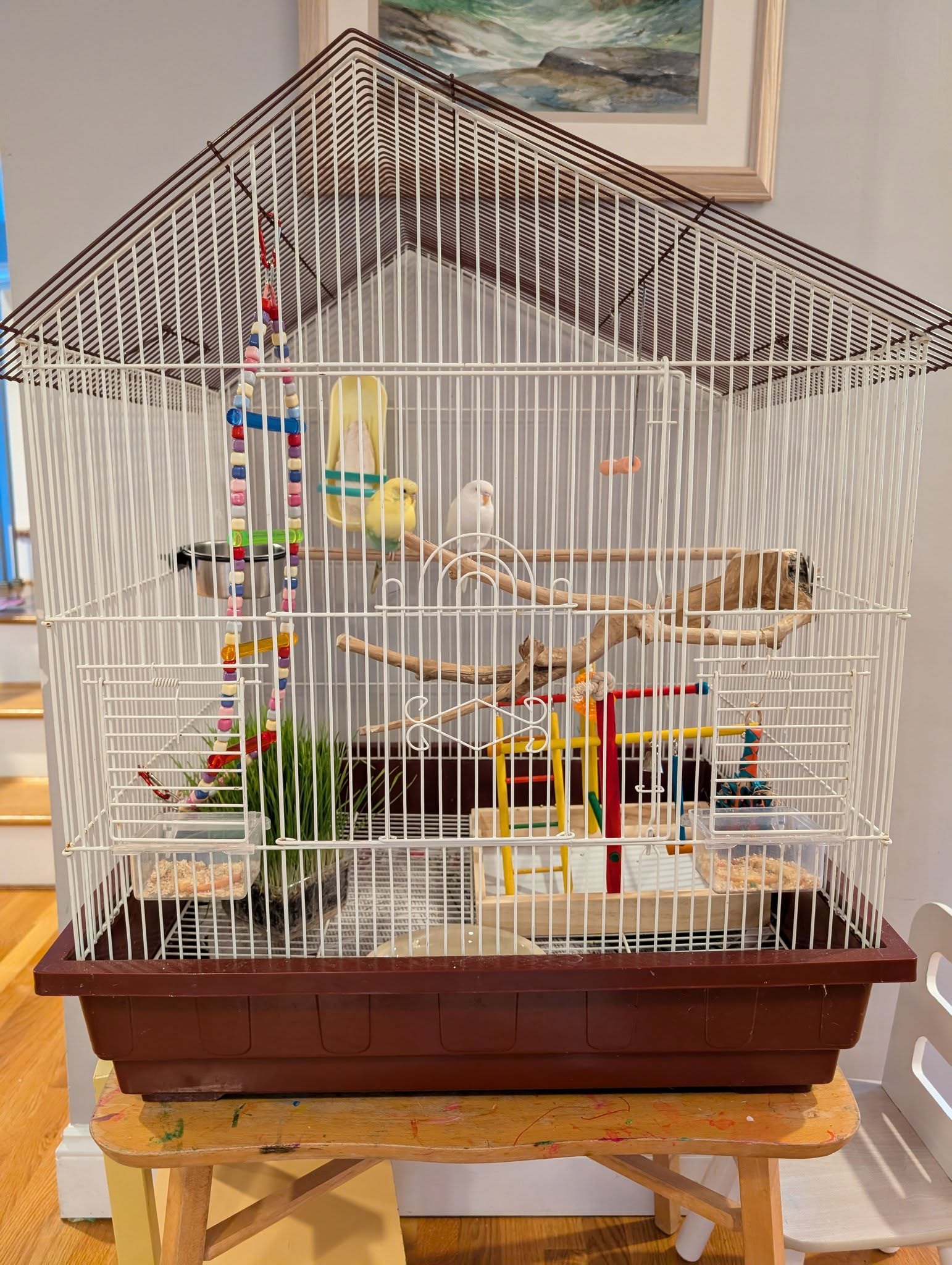
A budgie that comes to the front of the cage when it hears your footsteps and nobody else’s. A canary that sings in the morning specifically when you uncover the cage. A cockatiel that calls when you leave the room and settles when you return. These are not large things. They are not the same as human company, and I would not suggest that they are. But they are specific, consistent, daily evidence that your presence makes a difference to something living in your space. And for people living with too much silence, that specificity matters.
What The Bird Gives That Other Things Do Not
I want to think about this carefully, because I have heard various people — well-intentioned people — suggest that a pet bird for a lonely person is a poor substitute, and that the real solution is human connection, community, engagement. All of that is true. Human connection is the thing that loneliness actually calls for. I am not going to argue otherwise.
But I have noticed something specific about what a bird offers that other suggested remedies do not, and I think it is worth naming honestly.
A bird demands a routine. Every morning you uncover the cage and the bird responds to that uncovering. Every day you change the water and replenish the food. Every few days you clean the cage. None of this is demanding. All of it is daily, consistent, and non-negotiable in the mildest possible sense — the bird needs it, and so it happens. For people in whom loneliness has begun to erode routine — and it does erode routine, slowly, in ways that are difficult to notice until they are quite far advanced — this daily structure is not trivial.
The bird also gives something that is genuinely hard to find elsewhere without social risk: the experience of being responded to without having to perform for it. You do not need to be interesting, or cheerful, or well-dressed, or socially calibrated in the particular way that human interaction often requires. You can be tired and quiet and the bird still responds to you. You can have had a bad week and the bird does not notice or care. You can be precisely the version of yourself that you would not be comfortable presenting to most people, and the bird’s response does not change. There is something sustaining about that consistency, particularly for people who have lived long enough to know that human relationships, even the best ones, are not reliably consistent in this way.
The Elderly Gentleman I Think About Most
I am going to tell you about a specific person, without enough detail to identify him, because he is the conversation I return to most often when I think about this topic.
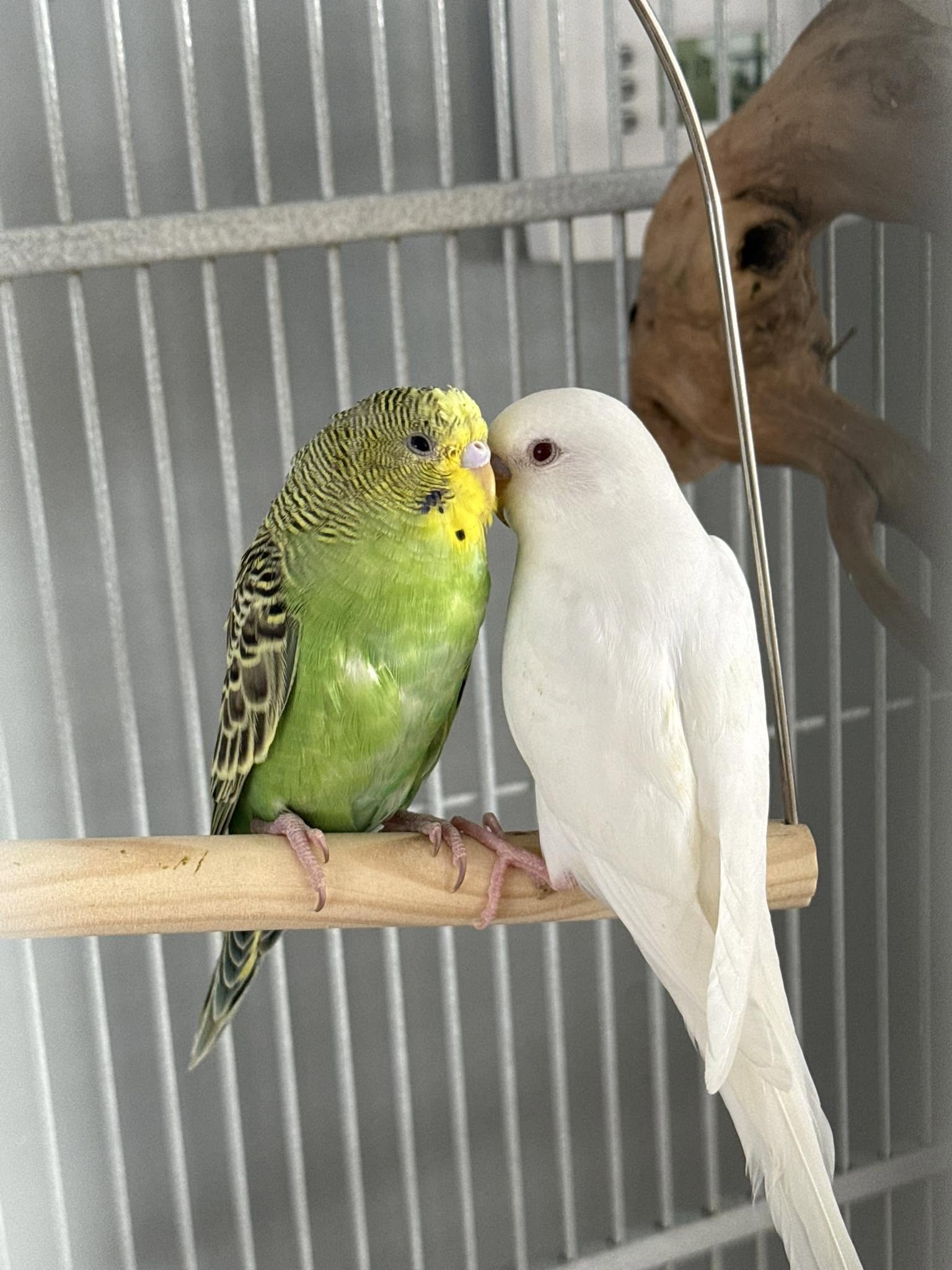
He came into the shop about fifteen years ago. He was in his late seventies, I would have guessed. He had owned budgies most of his life — had kept them since before I was born — and had lost his last one a few months before coming in. He had also, in those same few months, lost his wife. He did not say that last part directly, but it emerged across the conversation.
He was very composed. He was not, by any obvious measure, struggling. He came in with a specific idea of what he wanted — a young male, green, preferably the kind he had always kept. He knew exactly what he was looking for and exactly what he needed to do to settle the bird in. He had done it dozens of times. It was not a complicated purchase.
At the end of the conversation, just before he left, he said something that I have never forgotten.
“The house is too quiet,” he said. “That’s all, really.”
He bought the bird. He came back a few times over the following years to buy various supplies and to ask occasional questions. Each time the bird seemed, by his account, to be doing well. Each time he seemed, by my observation, to be doing better than he might otherwise have been.
I do not know what the bird’s presence gave him, exactly. I know that the house was quieter before it, and that he noticed that, and that he came to the right place for what he needed in that particular moment.
What I Have Also Noticed — The Other Side
I want to be honest about the other side of this, because an article that only talks about what birds give lonely people without talking about the risk in that dynamic is not fully honest.
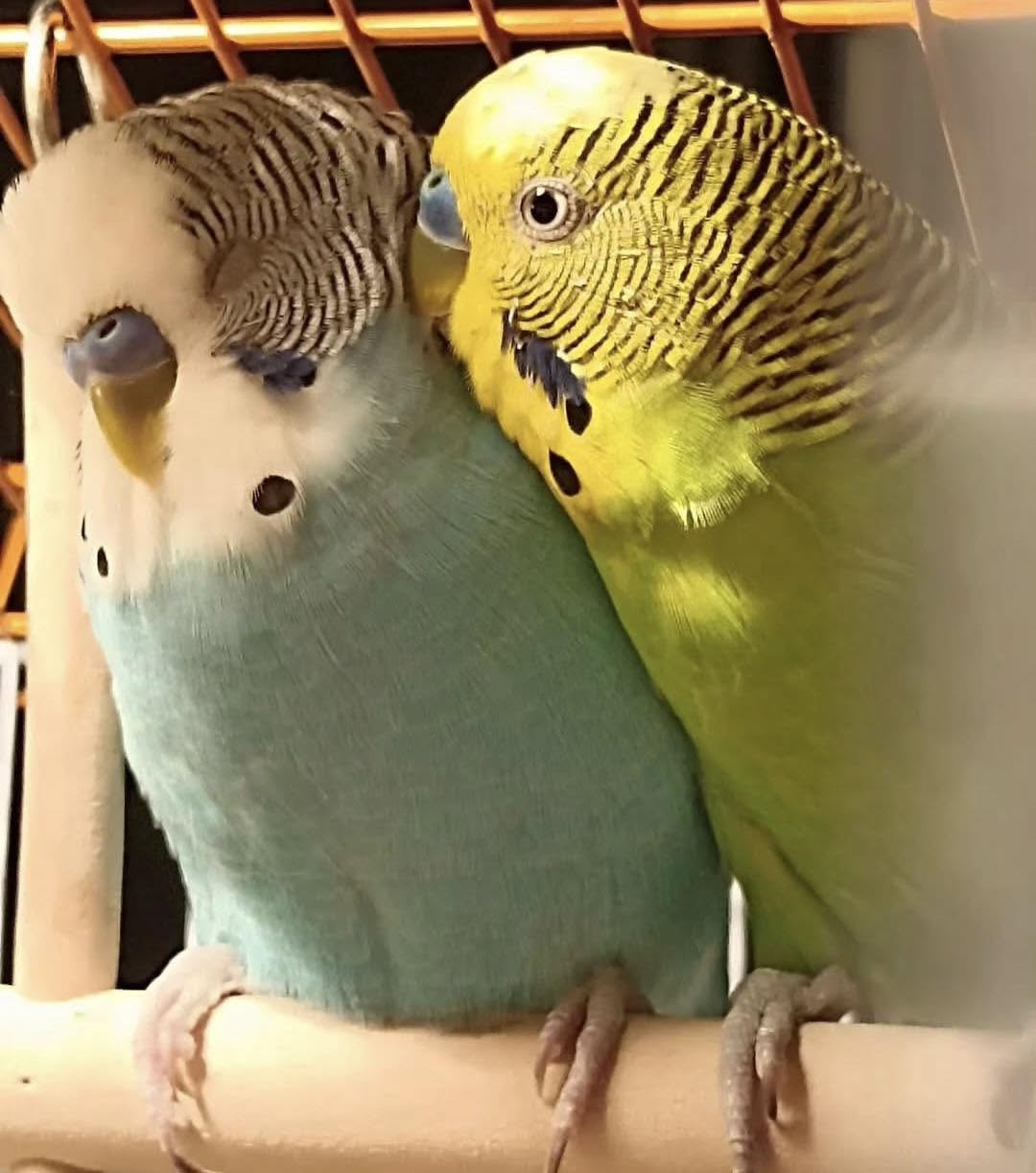
The risk is this: a bird is not a human being. It cannot ask you how you are. It cannot notice that you have not been outside in three days. It cannot suggest that perhaps it would be worth ringing your daughter, or going to the community centre, or doing any of the things that might address the underlying cause of the silence rather than simply providing company within it.
I have seen this go wrong. Not often, and not dramatically, but I have seen people for whom the bird became the reason not to solve the problem. A genuinely isolated person who, finding that the bird made the daily silence more bearable, stopped looking for the human connections that would have made it unnecessary. The bird was not a bad thing in these situations. It was a good thing in an insufficient role, and the insufficiency was doing quiet harm.
I am not saying this to suggest that lonely people should not have birds. I am saying it because I think it is honest, and because I think the people who have come into my shop over the years looking for company in a cage deserve honesty rather than uncomplicated reassurance.
A bird helps. For many people it helps significantly, and in ways that other things have not. But it is most valuable when it is one part of a life that also contains human connection, rather than when it becomes the substitute for it. Keeping that distinction clear seems to me the honest responsibility of anyone who sells birds to lonely people.
The Thing That Still Surprises Me
I said at the beginning that there is one thing about this pattern that still surprises me after 35 years. Here is what it is.
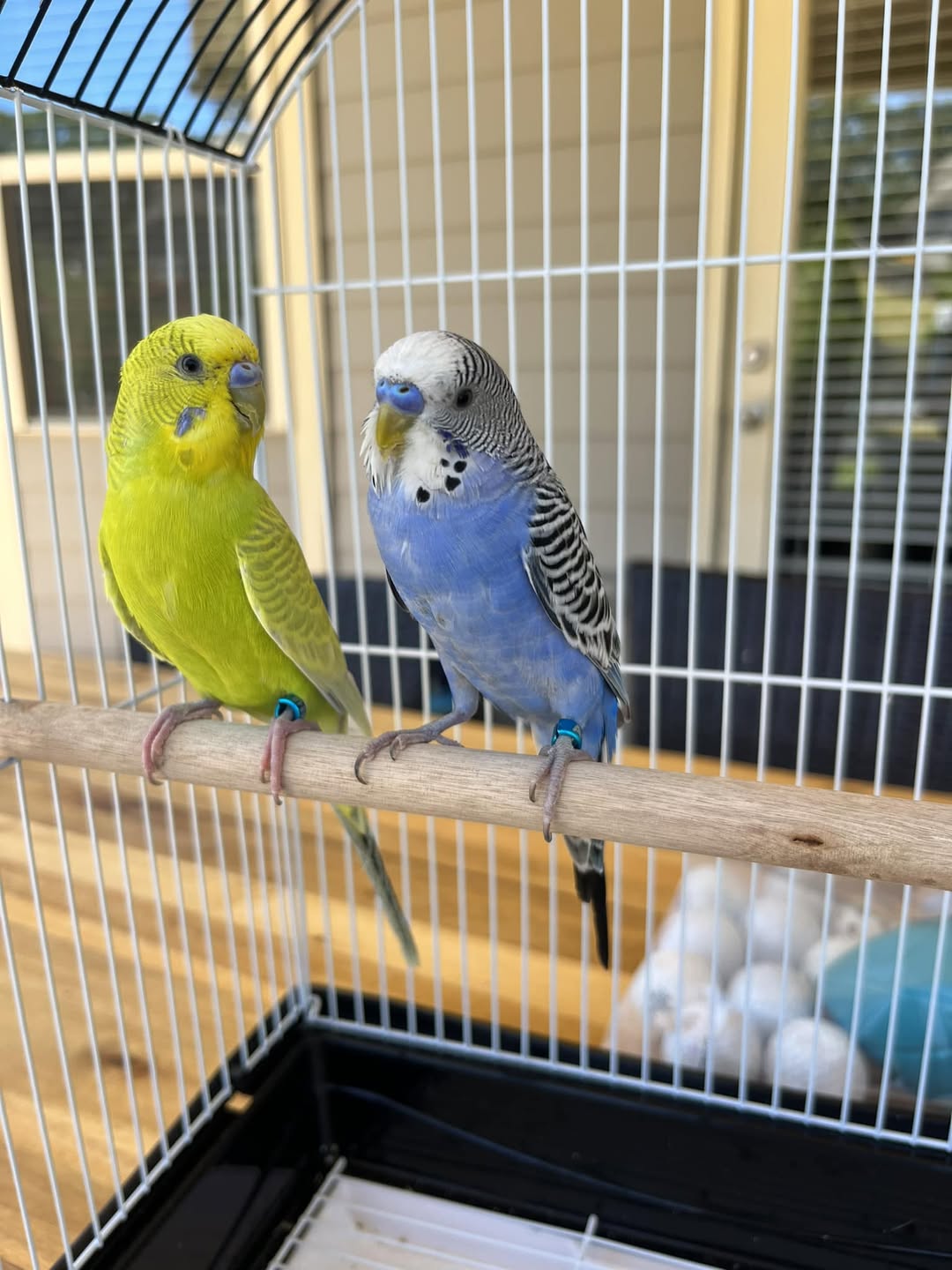
I expected, when I started thinking about this relationship between birds and lonely people, that the direction of benefit would be clear: the person is lonely, the bird provides company, the person benefits. That is true as far as it goes. But the thing that has surprised me, observed again and again across 35 years, is how clearly the bird benefits too.
Not in a philosophical or sentimental sense. In a plain, observable, behavioural sense. A bird kept by someone who is lonely — someone who is home most of the day, who talks to the bird consistently, who is attentive to its behaviour and responsive to its vocalisations — is almost always, by every measure I can apply, in better condition than a bird kept in a busier household where it receives less attention. Better feathered. More vocal. More settled. More physically healthy over the long term.
The loneliness that drives someone to give their bird an unusual amount of presence and attention turns out to be exactly the thing that budgies in particular are well-suited to receive. A budgie, kept singly, whose owner is home most of the day, talked to regularly, given consistent daily attention — that bird will usually develop tameness and engagement that a bird in a busier household may not. The attentiveness that comes from loneliness, when it is applied to a bird’s care without becoming obsessive, often produces the best-kept birds I see.
I did not expect that when I started. It still strikes me as interesting, after all this time.
What I Would Say If I Were Advising Someone Who Came In For Those Reasons
Not a care guide. Not a list of species recommendations. Something different from that.
If someone came to me and I understood — through the conversation, through listening, through 35 years of learning what the real question usually is — that they were looking for company as much as a bird, this is what I would want them to know.
The bird will notice you. It will build associations with you specifically — your voice, your footsteps, your presence — that are real and consistent. It will respond to you in ways that are not performance and are not conditional on you being at your best. The daily routine of caring for it will structure your morning in a way that turns out to matter more than it sounds like it should. When it sings in the morning, or calls when you leave the room, those are small things that are also, in the quiet of an empty house, not small at all.
It will not ask how you are. It will not notice that you are unhappy. It will not suggest that you ring someone or go somewhere or do the things that might address the larger situation. For that, you still need people.
But as something that is specifically there, specifically responsive, specifically yours — as something that makes the morning different from what it would be without it — a well-kept bird is a genuinely good companion. Not a human companion. Its own kind of companion. And after 35 years of watching what that companionship produces in the people who have it and in the birds who provide it, I think it is worth taking seriously on its own terms rather than dismissing because it does not match what we more usually mean by the word.
One Last Thing From Me
The elderly gentleman with the too-quiet house — I thought about him again recently when I was writing this. I do not know how many years he had with that last bird, or how those years went, or what the house was like in the end. People stop coming in. That is part of this work too.
What I know is that on the day he came in, the conversation he needed to have was the one he had. He needed someone to hear “the house is too quiet” as the thing it actually was, rather than as a preface to a bird purchase. And the bird he bought gave him whatever it gave him, across however many mornings, in a house that was quieter than he had been used to.
I have thought, occasionally, about what I would say if someone asked me what this work has taught me about loneliness. The honest answer would take longer than most conversations allow. The shorter version is this: that loneliness often looks, from the outside, like not wanting company. That what lonely people frequently need, and what they often have the hardest time asking for, is not a dramatic solution but a small daily evidence that their presence makes a difference to something. And that a bird, of all the things one might suggest, turns out to be better at providing that specific thing than almost anything else at a similar price of commitment.
That is what 35 years has taught me. I thought it was worth writing down.
Thinking About A Bird For Company? Come And Have A Conversation First
Not a sales pitch. A conversation about what you are actually looking for and whether a bird is the right fit. We have been having that conversation for 35 years and we are good at it. Come in, or ring us. No obligation.