

Neil has run Paradise Pets Swindon since 1988 — over 35 years of watching UK bird life change through the seasons and the decades. In recent years, the question he hears increasingly at the counter is not about budgies or cockatiels but about wild birds that owners are seeing in their gardens and local green spaces that simply were not there before. Parakeets. Egrets. Unexpected visitors from the south and east. This article is his honest account of what is actually happening, why it is happening, and what it means for the people who watch birds in Britain.
A woman came in last spring and described a bird she had seen in her garden in Swindon.
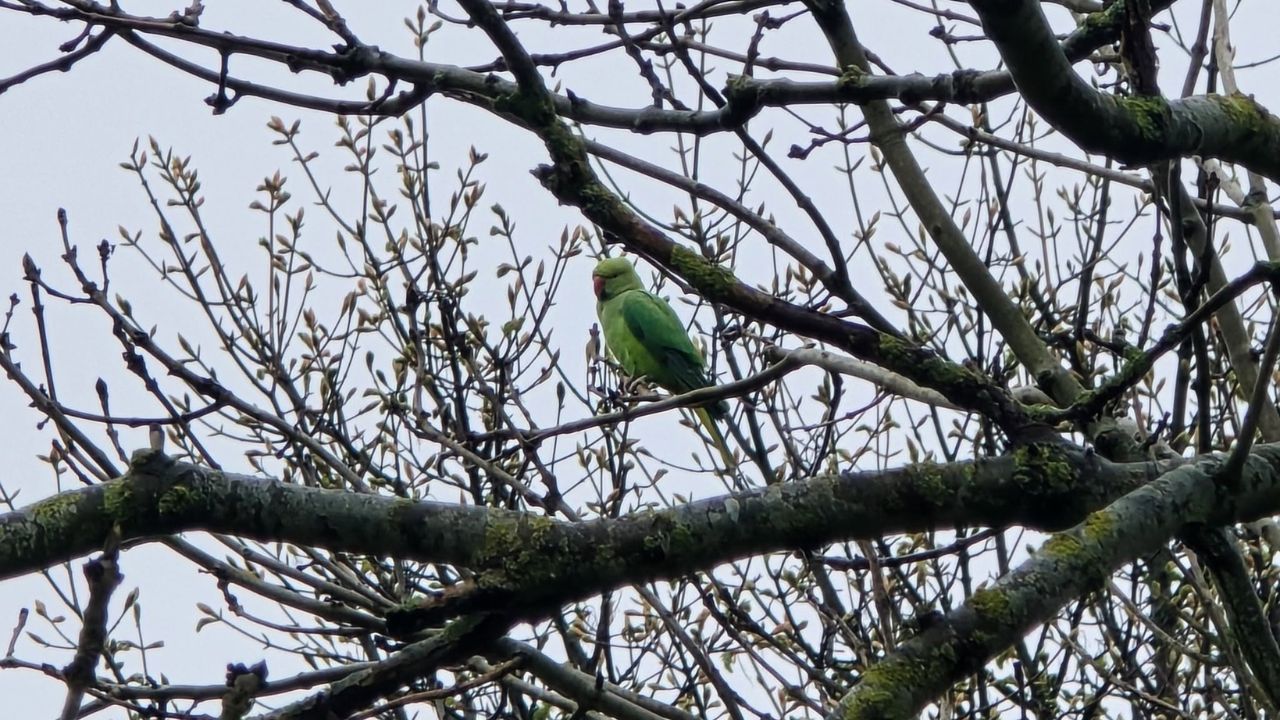
Bright green. Long tail. About the size of a starling but more slender, more purposeful in its movement. It had landed in her apple tree, sat there for a few minutes with complete confidence, and then flown off with an undulating, direct flight that she said looked nothing like any garden bird she recognised.
“I thought I was imagining it,” she said. “Then my neighbour saw one too.”
She was not imagining it. What she had seen was a ring-necked parakeet — a species that would have been extraordinary in Swindon thirty years ago, notable twenty years ago, and is now, in some parts of Britain, simply part of the landscape.
I told her what she had seen and explained a little of why she was seeing it. She was fascinated. She wanted to know more.
That conversation, and dozens like it over the past decade, is the reason I wrote this guide. Because what is happening with Britain’s bird life is genuinely interesting — a combination of climate, ecology, escaped populations, and natural range expansion that is changing what British bird watchers see in ways that would have seemed unlikely a generation ago.
First — What We Mean By Tropical Birds Appearing in Britain
The headline requires a little precision — because the story is more interesting, and more varied, than it first appears.
The tropical and warm-climate birds appearing across Britain fall into several distinct categories, and they are here for different reasons. Conflating them misses what is genuinely happening.
The first category is established feral populations — species that arrived in Britain through escaped or released captive birds, established breeding populations, and are now genuinely resident. The ring-necked parakeet is the most prominent example. These birds did not migrate here. They were brought here by humans and stayed.
The second category is natural range expansion driven by changing climate. Several southern European species — little egrets, cattle egrets, bee-eaters, hoopoes — have expanded their breeding ranges northward over the past two to three decades as temperatures have shifted. These birds are arriving on their own, finding conditions that now suit them, and in some cases beginning to breed.
The third category is increased vagrancy — birds from further south or east appearing in Britain as occasional, sometimes unprecedented visitors. Climate change alters migration patterns, pushes birds off course in new ways, and occasionally produces genuinely remarkable sightings that would have been unthinkable a generation ago.
- Established feral populations — escaped captive birds that have bred successfully in the UK for decades
- Natural range expansion — southern European species moving north as climate conditions change
- Increased vagrancy — birds appearing outside their normal range as migration patterns shift
- All three categories are contributing simultaneously — what looks like one trend is actually several overlapping ones
- The rate of change has accelerated noticeably in the past fifteen years compared to the previous thirty
The Ring-Necked Parakeet — Britain’s Most Visible Tropical Resident
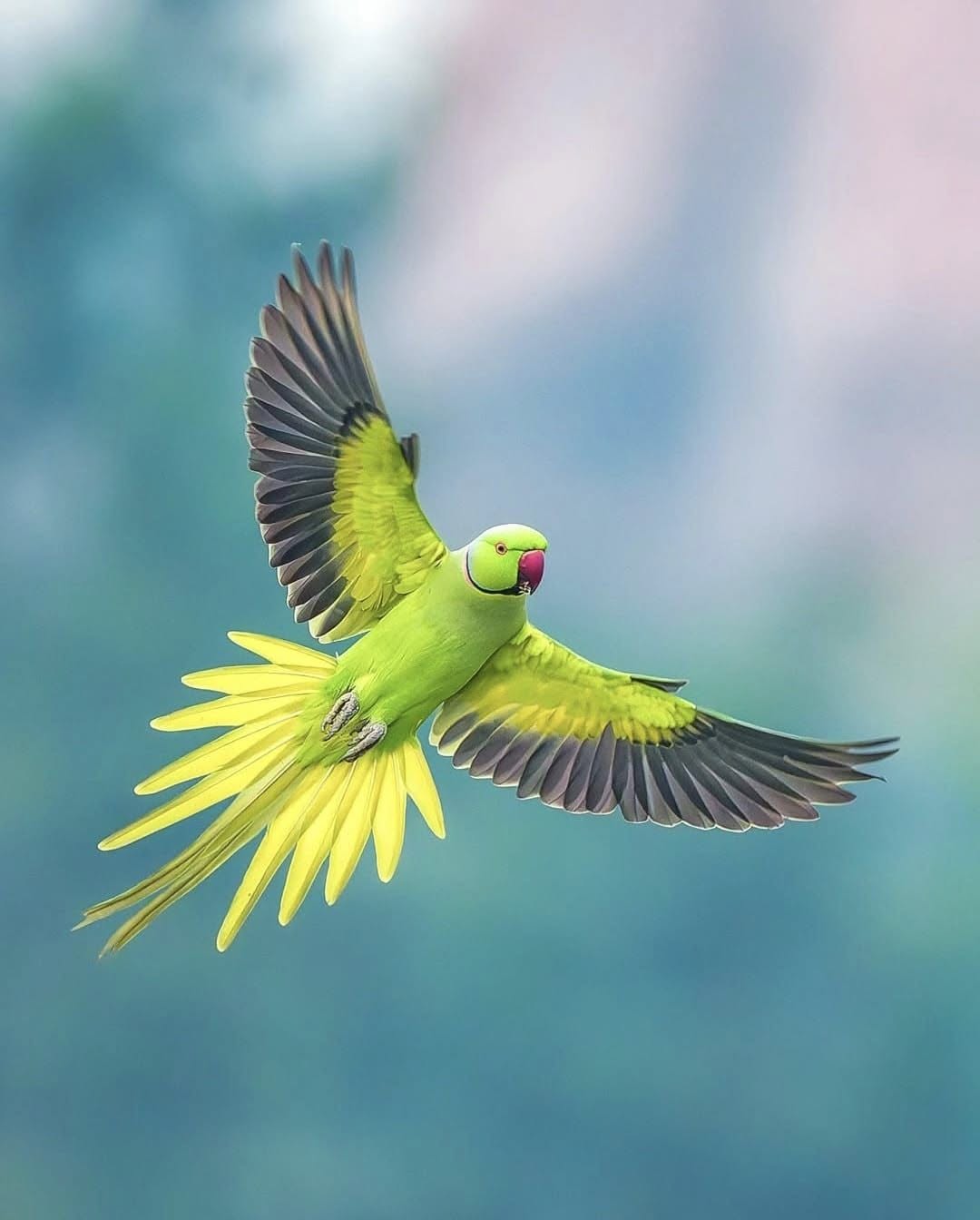
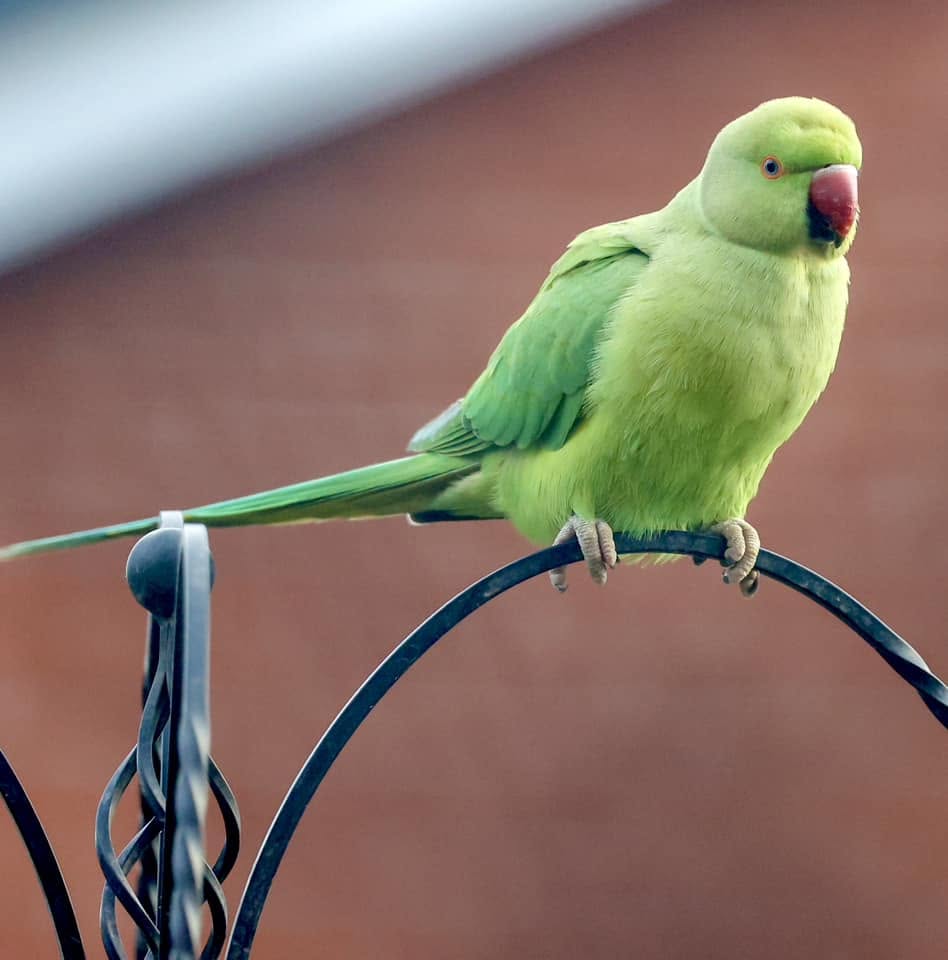
If you live in or around London, the Home Counties, or increasingly further afield, you have almost certainly seen ring-necked parakeets. They are impossible to miss — a flock of screaming bright green birds, moving fast and with purpose, utterly at odds with everything else in a British winter landscape.
The origin story of Britain’s parakeet population is genuinely contested. The most romantic version — that the original birds were released by Jimi Hendrix in Carnaby Street in the 1960s — is almost certainly not true, or at least not the whole story. What is more credibly established is that escapes and releases from the pet trade through the 1960s, 70s, and 80s — from private collections, aviaries, and film sets — produced a founding population that found the conditions of southern England surprisingly amenable.
Ring-necked parakeets are from the Indian subcontinent and sub-Saharan Africa. They are cold-tolerant beyond what most people assume — the Himalayan foothills, part of their native range, experience significant cold. A Surrey winter, it turns out, presents them with no particular challenge.
The UK population is now estimated at over 50,000 birds. The core population is in Greater London — particularly Richmond Park, Kew Gardens, and the south-west suburbs — but the range has expanded significantly. Birds are now regularly seen as far north as Edinburgh and as far west as Wales. Swindon has seen increasing parakeet sightings over the past decade, as the woman who came into the shop discovered.
- Estimated UK population now over 50,000 birds — the largest naturalised parrot population in Europe
- Core range in Greater London and the Home Counties but expanding northward and westward annually
- Cold-tolerant — UK winters present no significant barrier to further range expansion
- Highly adaptable to urban and suburban environments — garden fruit trees, park trees, and suburban green spaces are all used
- The RSPB and BTO monitor the population — it has roughly doubled in the past fifteen years
- Their impact on native species — competition for nest holes with nuthatches, starlings, and stock doves — is a genuine conservation concern being actively studied
The Little Egret — A Natural Range Expansion Success Story
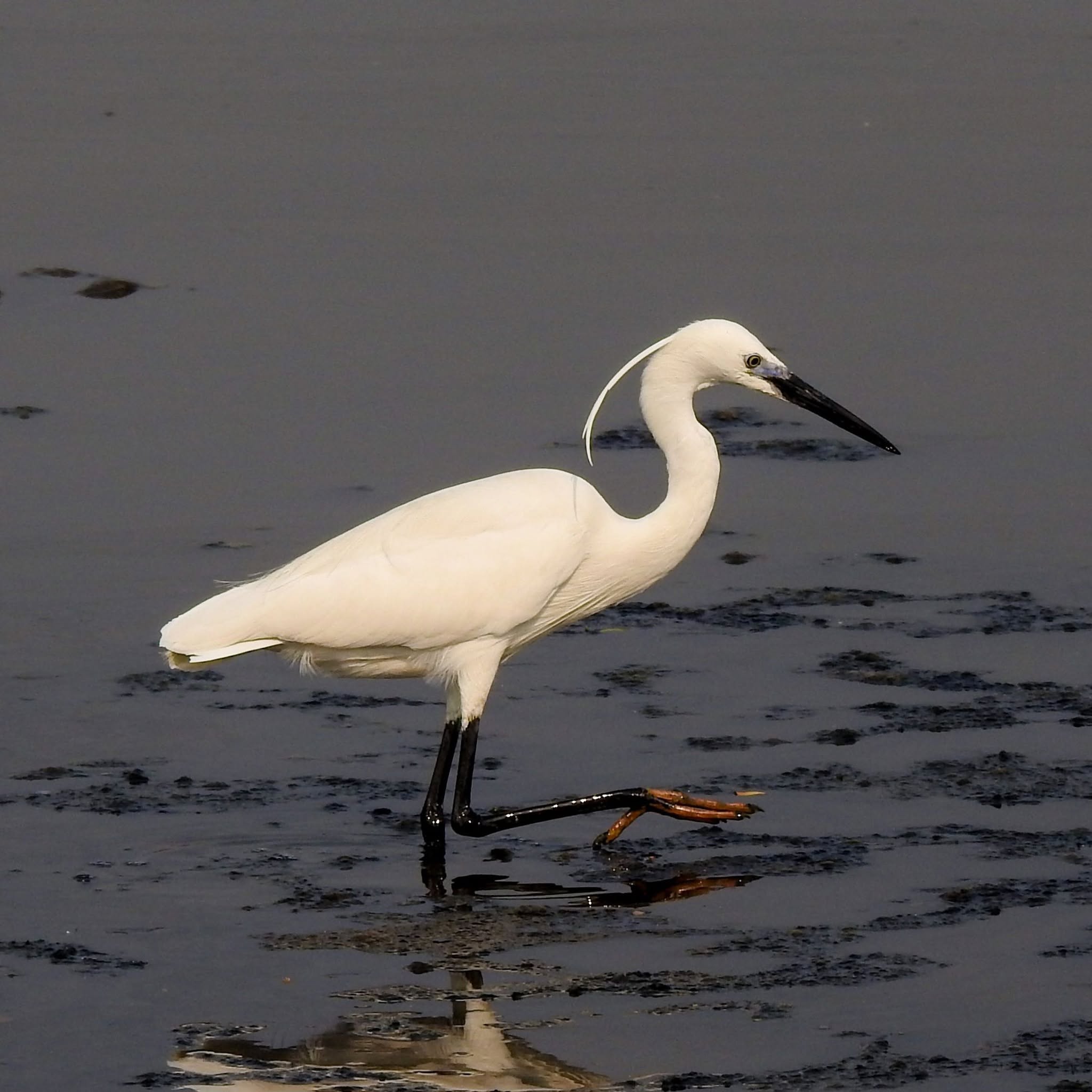
The little egret is one of the clearest examples of natural climate-driven range expansion — and one of the most dramatic changes in British bird life over the past thirty years.
In the 1980s, a little egret in Britain was a rare and notable event. Twitchers — serious birders who chase rare species — would travel significant distances to see one. They were occasional visitors from continental Europe, seen usually in late summer and autumn when post-breeding birds wandered north of their French and Spanish breeding range.
In 1996, little egrets bred in Britain for the first time — at Brownsea Island in Dorset. By the early 2000s, they were breeding at multiple sites across southern England. By 2010, they were widespread coastal and wetland birds across southern and central Britain. Today, there are estimated to be over a thousand breeding pairs in the UK, and the species is a routine sight on rivers, estuaries, and wetlands across much of England and Wales.
They did not arrive through captive escapes. They were not released. They expanded their range naturally because the conditions — milder winters, productive wetland habitats, reduced disturbance — now suit them in Britain in a way they did not thirty years ago.
- First UK breeding in 1996 — now over 1,000 breeding pairs across England and Wales
- Entirely natural range expansion driven by milder UK winters and changing habitat conditions
- Now a routine sight on rivers, coasts, and wetlands across much of lowland Britain
- The companion species cattle egret is now following the same trajectory — first UK breeding in 2008, now increasingly established
- The great white egret — a much larger species — is also expanding and has begun breeding in the Somerset Levels
- The egret expansion is considered one of the most successful natural colonisations in British ornithological history
The Bee-Eater and the Hoopoe — Southern Europe Moving North
These two species represent the more dramatic end of the range expansion story — birds that feel genuinely exotic when seen in Britain, and that would have been considered extremely rare even twenty years ago.
The European bee-eater is one of the most spectacular birds in the Western Palearctic. Multicoloured — electric blue, chestnut, yellow, green — with a curved bill and long tail streamers, it looks like something from a tropical wildlife documentary rather than a British field. Until recently, British sightings were occasional and caused genuine excitement in birding circles.
In 2002, a pair of bee-eaters bred in County Durham — the first confirmed UK breeding record. In subsequent years, sporadic breeding attempts have occurred at various southern English sites. In 2022, a colony of bee-eaters bred successfully in Nottinghamshire — further north than any previous attempt, and producing multiple fledglings. The species has not yet established a regular breeding population, but the trajectory is clear.
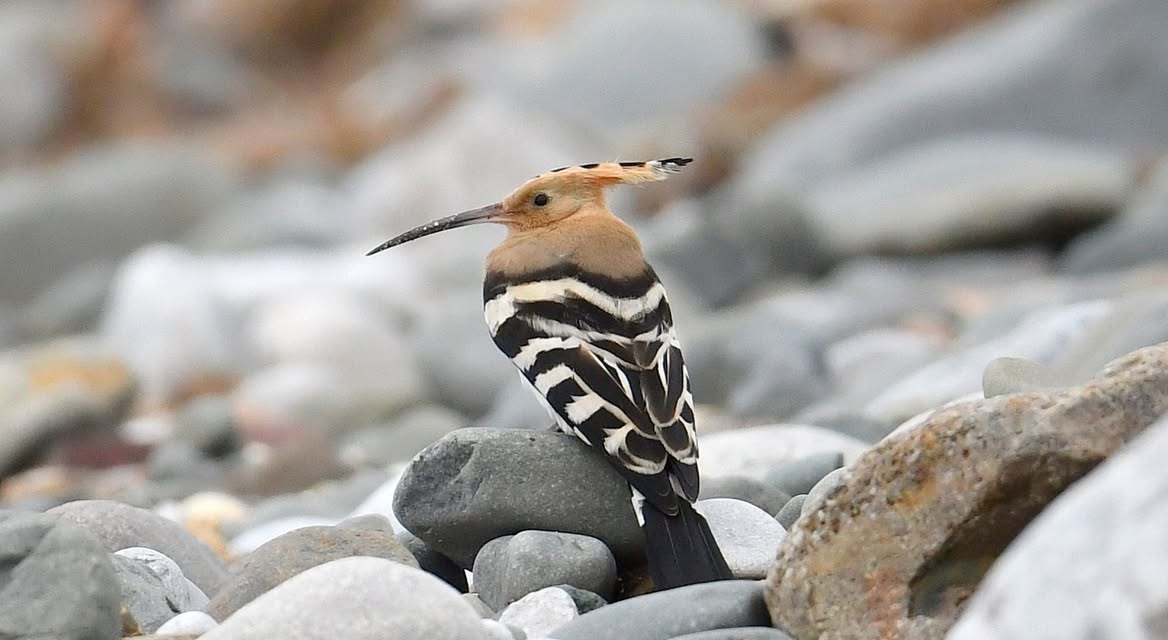
The hoopoe — with its distinctive salmon-pink plumage, black and white wings, and spectacular fanned crest — has always been an occasional spring visitor to Britain, overshooting its southern European breeding grounds on northward migration. What has changed is frequency. Hoopoe sightings in Britain have increased measurably over the past two decades, and occasional breeding attempts — always rare — have become slightly less rare. It remains an extraordinary bird to see in a British garden, but it is no longer the genuine shock it was in the 1980s.
- Bee-eaters have bred in the UK on multiple occasions since 2002 — previously unthinkable
- The 2022 Nottinghamshire breeding colony produced multiple fledglings — a landmark event in British ornithology
- Hoopoe sightings in Britain have increased as the species expands northward from its core Mediterranean breeding range
- Both species are insectivores that benefit from Britain’s warming summers producing more insect prey
- Neither species has yet established a self-sustaining breeding population — but both are moving in that direction
- Climate projections suggest both species may be regular UK breeders within the next twenty to thirty years if current trends continue
The Monk Parakeet and Other Feral Species — The Less Celebrated Story
Ring-necked parakeets are the most visible feral tropical bird in Britain, but they are not the only one — and the others raise questions that are worth thinking about honestly.
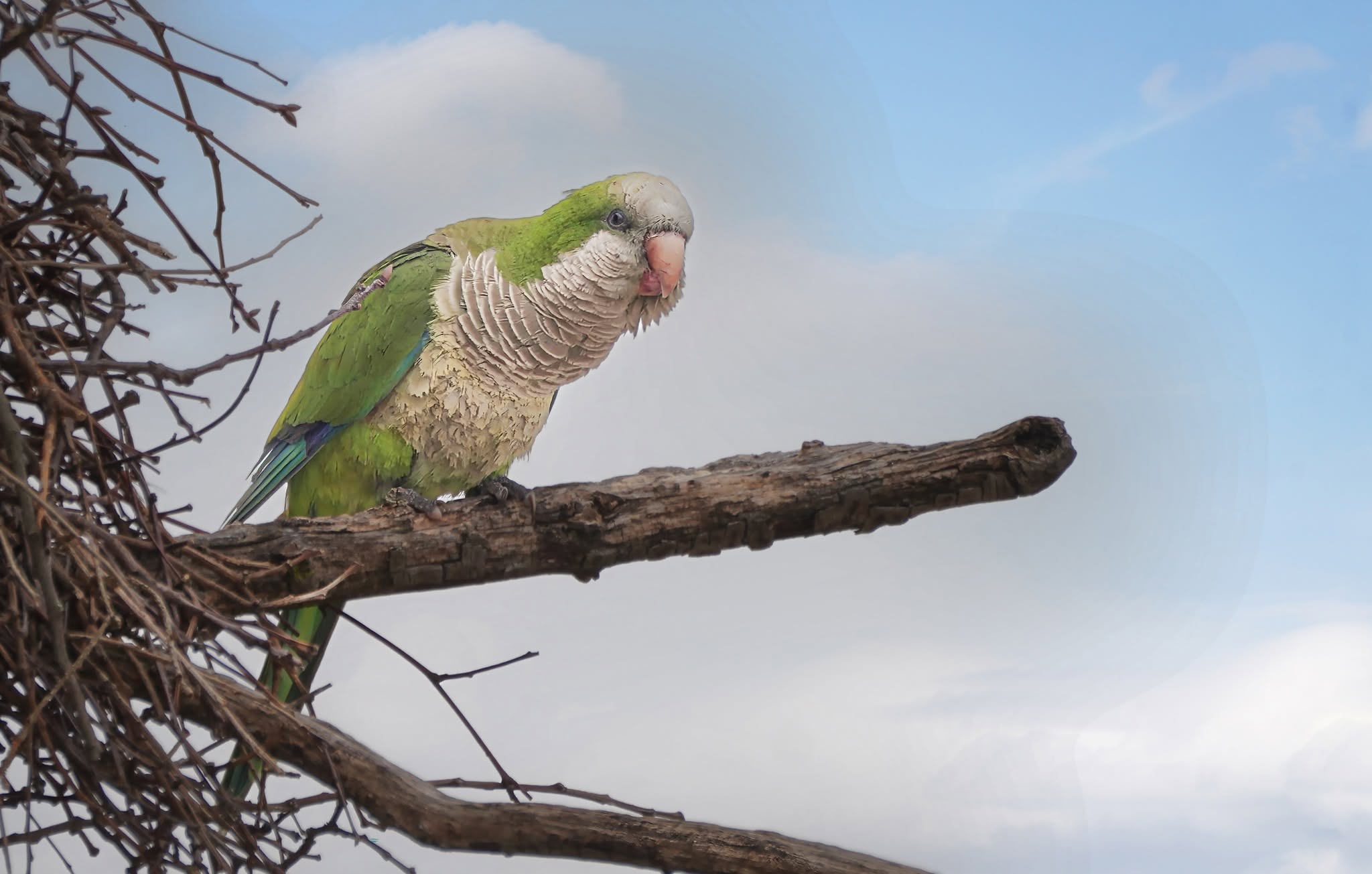
Monk parakeets — stocky, green, with grey faces, originally from South America — have established small feral populations in several UK cities, most notably in Barcelona and Brussels in continental Europe, and in pockets of London, Wales, and elsewhere in Britain. They build large communal stick nests — sometimes enormous structures that can interfere with electricity infrastructure — and are considered an invasive species in several European countries.
The monk parakeet illustrates a tension that runs through the whole story of tropical birds in Britain. The arrival of new species — whether through escapes, releases, or natural expansion — is interesting, sometimes beautiful, and genuinely changes the experience of watching birds in Britain. It also has consequences for existing ecosystems and native species that are not always positive.
Ring-necked parakeets compete with native hole-nesting species for nest sites. Monk parakeets build nests that exclude other species from the same trees. Species that arrive through human agency — accidentally or deliberately — can expand in ways that native species cannot check, because the natural predators and competitors that would limit them in their home range are absent in Britain.
- Monk parakeets have established feral colonies in parts of Britain — smaller than the ring-necked parakeet population but expanding
- Their large communal nests can create infrastructure problems and exclude native species
- Several other parrot species have small feral populations in Britain — Alexandrine parakeets, African grey parrots, and others have been reported breeding
- The ecological impact of established feral parrot populations on native UK wildlife is still being studied and is not yet fully understood
- The legal status of feral parakeets in Britain is complex — ring-necked parakeets are on the general licence for control in some circumstances, reflecting genuine conservation concern
Why Climate Change Is the Central Driver
Every category of tropical bird arrival in Britain is connected, directly or indirectly, to the same underlying reality: Britain is warmer than it was, and the rate of warming is accelerating.
The UK’s average temperature has risen by approximately 1.1 degrees Celsius since the pre-industrial period. That number sounds modest. In ecological terms, it is significant. Temperature determines which species can survive UK winters, which insects are available as food through British summers, which plants produce the fruit and seed that birds depend on, and — critically — the timing of the seasons that bird migration evolved around.
For the species arriving from the south and east, the change has made Britain a more viable proposition in several ways. Milder winters reduce the energy cost of surviving the cold months. Warming summers increase insect availability — critical for species like bee-eaters and hoopoes that are almost entirely insectivorous. Longer frost-free periods extend the growing season for the plants that support the food chains these birds depend on.
At the same time, climate change is disrupting the migration patterns of species that have historically visited Britain. Birds that migrate by instinct — following daylength cues rather than temperature cues — are arriving in conditions that have shifted. Some are finding Britain warmer than expected and remaining longer. Some are overshooting traditional stopping points and arriving further north than usual. Some are arriving earlier in spring and finding food resources not yet available.
- UK average temperature has risen by approximately 1.1°C — enough to meaningfully change which species can survive UK winters
- Milder winters reduce the primary barrier for warm-climate species remaining in Britain year-round
- Warming summers increase insect availability that supports insectivorous species from the south
- Disrupted migration patterns are producing increased vagrancy — birds appearing in Britain that would historically have stopped further south
- Climate projections suggest continued warming — the species colonisation trends visible now are likely to continue and accelerate
- Not all the consequences are positive — cold-adapted native species that depend on cold winters are simultaneously under pressure
What This Means for Garden Bird Watchers in Britain
For the person standing at their kitchen window watching their garden — which is the context in which most people encounter these changes — what does all of this actually mean?
It means that what you see in a British garden is no longer entirely predictable from what a field guide published twenty years ago told you to expect. The species list for a well-watched British garden has been expanding, and the pace of that expansion is increasing.
It means that an unfamiliar bird in your garden is worth looking at carefully rather than dismissing. Ring-necked parakeets are now regularly seen in gardens across a much wider area of Britain than a decade ago. Little egrets occasionally visit garden ponds in suburban areas near rivers or wetlands. Hoopoes do occasionally land in British gardens during spring migration — and the frequency is increasing.
It also means that the record-keeping of what is seen, and where, and when, matters more than it ever has. The expansion of these species across Britain is being documented by citizen science — BTO’s BirdTrack, the RSPB’s Big Garden Birdwatch, iNaturalist — and the records that individual observers contribute build the picture that scientists use to understand what is changing and how fast.
- The species expected in a British garden are changing — unfamiliar birds are worth identifying rather than dismissing
- Ring-necked parakeets are now realistic garden visitors across much of southern and central England
- Little egrets, cattle egrets, and other wetland species are occasionally found in garden ponds near appropriate habitat
- Recording unusual sightings through BTO BirdTrack or iNaturalist contributes to the scientific understanding of these changes
- The Big Garden Birdwatch — the RSPB’s annual garden bird count — is specifically tracking these changes year on year
- A good field guide updated within the past five years is worth having — older guides do not reflect the current distribution of several expanding species
The Conservation Question — Is This Good News?
I want to address this honestly, because it is the question I find most interesting — and the one where the simple answer is wrong.
The arrival of new species in Britain is not straightforwardly good or bad. It is complicated, and the complication matters.
The natural range expansion of little egrets, cattle egrets, and — potentially — bee-eaters and hoopoes represents wildlife responding to changing conditions and finding new opportunities. There is something genuinely wonderful about that. These are birds of great beauty and interest, and their presence enriches British bird life in ways that most observers experience as positive.
The feral parrot story is more ambiguous. Ring-necked parakeets are spectacular birds. They are also competitors for nest sites that native hole-nesting species need. The research on their ecological impact is ongoing and not yet definitive — but the precautionary case for concern is real, and the RSPB and BTO take it seriously. A population of 50,000 birds and growing cannot be ecologically neutral.
And the climate change that is driving much of what is happening is, of course, also driving the decline of cold-adapted native species — the mountain specialists, the arctic-nesting birds that winter in Britain, the species that depend on cold conditions that are becoming less reliable. The arrival of new birds and the loss of existing ones are part of the same process. Celebrating the former without acknowledging the latter is an incomplete picture.
What I think is the right response — and this is my view after thirty-five years of watching — is to be genuinely interested in all of it. The arrivals and the losses. The ecology of what is changing and why. The complexity of an island bird fauna in the middle of a period of rapid change. It is one of the most interesting stories in British natural history, happening in real time, in everyone’s garden.
Frequently Asked Questions
I’ve seen a bright green bird with a long tail in my garden in southern England — what is it?
Almost certainly a ring-necked parakeet. They are now widely established across much of southern England and are increasingly common in gardens with fruit trees, nut feeders, and large mature trees. They are unmistakable — the only long-tailed bright green bird you are likely to see in a British garden. If it was on a peanut feeder or in an apple tree, ring-necked parakeet is the overwhelmingly likely identification.
Should I feed ring-necked parakeets in my garden?
This is genuinely contested. Ring-necked parakeets will readily use garden feeders — particularly sunflower hearts, peanuts, and fruit — and many people enjoy watching them. The conservation argument against active feeding is that it supports the population expansion of a species with potential negative impacts on native hole-nesters. The counter-argument is that supplementary feeding has a limited effect on a population of this size and resilience. My honest position: if you enjoy watching them, feeding them in small quantities is unlikely to make a meaningful difference at the population level. But be aware of the ecological context.
Is the hoopoe I think I saw in my garden actually possible?
More possible than it would have been twenty years ago — but still unusual enough to warrant careful confirmation. Hoopoes do occur in British gardens, particularly in spring during migration overshoot events. If you saw a pinkish bird roughly the size of a starling with a striking black-and-white barred wings and — most distinctively — a long erectile crest of salmon-pink feathers with black tips, you have your identification. Report it to BirdTrack or your local bird recorder. It will be of genuine interest to the birding community.
Are there any truly tropical species that have established wild populations in Britain beyond parakeets?
The ring-necked parakeet is by far the most significant and widespread. Monk parakeets have very small populations in a few locations. There are occasional reports of other parrot species persisting in small numbers — Alexandrine parakeets in London, Fischer’s lovebirds in a few locations — but none have established populations comparable to the ring-necked parakeet. The broader pattern of naturalised tropical birds in Britain is dominated by parakeets, with everything else marginal by comparison.
Where can I find out more about what birds are being seen in my area?
BTO BirdTrack is the most comprehensive UK bird recording system and is free to use. The RSPB website carries regular updates on unusual sightings and range expansions. Your local county bird recorder — every county in the UK has one — publishes an annual bird report that tracks exactly what is being seen and where. Come and see us at Paradise Pets if you want a local perspective — we hear about unusual garden sightings from customers regularly and are happy to help with identification.
One Last Thing From Me
The woman who had seen the ring-necked parakeet in her Swindon garden left with a copy of a recently updated field guide and a lot more questions than she had arrived with. She came back two weeks later.
She had been watching more carefully. She had seen the parakeet again — twice. She had also identified a little egret on the river near her house that she now realised she had been seeing for two years without knowing what it was. And she had joined BirdTrack and entered her first records.
“I’ve been looking at my garden for fifteen years,” she said, “and I’ve only just started seeing it.”
That is the thing about what is happening with British bird life right now. It is visible. It is accessible. It is happening in gardens and parks and riversides across the country. You do not need specialist equipment or expert knowledge to be part of it. You need to look — and to know what you are looking at.
The birds are there. More of them, and more varied, than they were a generation ago. Britain’s bird life is changing. The best response is to pay attention.
Seen an Unfamiliar Bird? Come In and Let’s Work Out What It Was
We have been watching and advising on UK bird life for over 35 years. If you have seen something in your garden or local area that you cannot identify — particularly in recent years, when the unexpected has become increasingly expected — come in and describe it. We are happy to help with identification and point you toward the right recording resources. Free advice, no obligation. That is how we have always done things.
⭐ Customer Reviews
Amazing Bird Selection
Had a lovley visit today,staff were very friendly and very helpful,such a great petshop,their selection of birds is incredible,really impressed,thank so much to the staff at Paradise Pets

Friendly Helpful Staff
I have been coming to this place for years and they have a great stock of food for all types of pets. Have a great selection of small mammals and a lot of birds. Staff are friendly and helpful.

Great Quality Hutch
Bought a guinea pigs hutch and run combo, very happy with the service, the hutch was put in my car for me without even asking for help. The wood quality is very good, the instructions easy to follow and we are extremely happy with the fully built hutch. A good size for 2 guinea pigs

Response from Paradise Pets | Wiltshire
Thank you Melanie Latus Nice to provide services to you.
Best Bird Shop Around
It’s the best pet shop in and around Swindon. They always have an amazing selection of birds and all you need to keep them happy. I keep birds myself and the guys there are happy to answer questions and really know their stuff. I have seen budgies etc. in chain pet shops in the area looking really unhealthy and ill – I wouldn’t go anywhere else than Paradise Pets for animals.

Highly Recommended Bird Shop
I could not praise this shop enough. Really helped my Grandson buy his first bird and he’s loving it. Travelled from Somerset and was welcomed with open arms.

Great Shop with Competitive Prices
Great shop with amazing selection for small animals, hamsters, mice ect, highly recommend!
Also has a great selection for dogs & cats too & very competitive prices! 💖

