
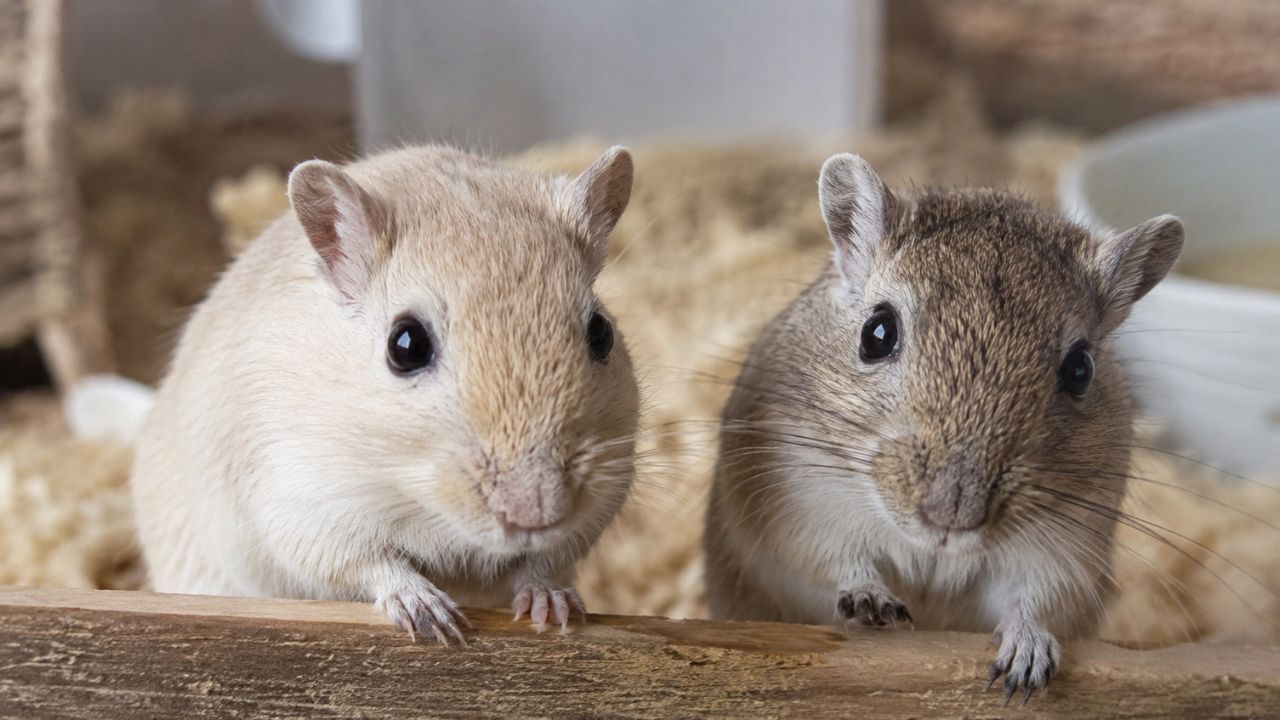

Neil has kept, bred, and sold gerbils at Paradise Pets Swindon since 1988 — over 35 years of first-hand experience with these animals. The question of whether gerbils need to live in pairs is one he is asked regularly. His answer has never changed. This article explains exactly why.
Someone asks me this at least once a fortnight. They have done some reading, they have seen different answers in different places, and they want a straight response: does a gerbil actually need a companion, or is that just something people say?
I give them the same answer every time.
Yes. Gerbils need to live with other gerbils. Not as a preference. Not as an ideal that is nice but not essential. As a biological and behavioural requirement that, when ignored, causes the animal genuine suffering.
I know that is a strong way to put it. I mean it as a strong way to put it. Because the number of lone gerbils I have seen in thirty-five years — animals kept alone by well-meaning owners who genuinely did not know any better — is high enough that I do not soften this anymore.
This article explains what I mean, why I mean it, and what you actually need to know about keeping gerbils in appropriate social groups.
The Short Answer — And Why It Is Non-Negotiable
In the wild, Mongolian gerbils live in family groups. A breeding pair at the centre, their offspring around them, a complex social structure built on shared burrowing, shared grooming, shared foraging, and near-constant physical contact. These animals evolved over millions of years to live alongside other gerbils. Their nervous system, their hormonal responses, their behaviour — all of it is shaped around the expectation that another gerbil will be present.
When that expectation is not met, things go wrong.
This is not a moral argument about what gerbils deserve, though I think that argument holds. It is a practical one about what a gerbil’s body and brain are designed for. Keeping a gerbil alone is not giving it a peaceful, quiet life. It is removing the single thing that gerbil life is built around.
The minimum is always a pair. Two gerbils, same sex, raised together or introduced correctly at a young age. That is the baseline. Everything else — housing, diet, enrichment — matters too, but the social need is the one that cannot be substituted or worked around.
What Actually Happens to a Lone Gerbil
This is the part I want people to understand before they make the decision to keep one gerbil. Not the theory — what I have actually seen, repeatedly, over thirty-five years.
In the first week or two, a lone gerbil often seems fine. It explores, it digs, it runs on its wheel. New environment, new smells, things to investigate. If you have not had gerbils before, you have no baseline to compare to, and it looks like a normal, active little animal.
By week three or four, something starts to shift. The gerbil is a little less active. A little quieter. Still eating, still moving around, but with less of the restless, busy energy that characterises a healthy gerbil. It spends more time sitting still in one corner. It may stop digging as enthusiastically. The wheel gets used less.
Most owners at this point assume the gerbil is settling in, or just calming down with age. Neither is what is happening.
By month two or three, the decline is more obvious. The gerbil may develop repetitive behaviours — pacing the same route around the edge of the tank, digging frantically in the same spot over and over. These are stereotypic behaviours, the small animal equivalent of what you see in zoo animals kept in poor conditions. They are a sign that the animal’s environment is not meeting its needs.
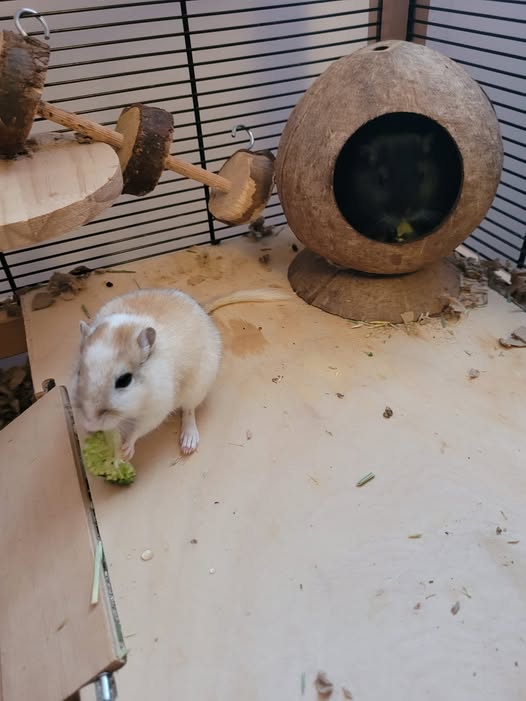
I have had people bring lone gerbils in — sometimes animals they have had for a year or more — and ask me what is wrong. The answer, in almost every case, is the same. The gerbil is alone. It has been alone for its entire life in that home. Everything else in the setup might be fine. That one thing is not.
What “A Pair” Actually Means
When I say gerbils need to be kept in pairs, I mean same-sex pairs — two males, or two females — that have either been raised together from a young age, or introduced correctly before they are fully mature.
Same-sex is important because the alternative — a mixed-sex pair — results in breeding. Gerbils breed rapidly and prolifically. A male and female pair will produce litters every three to four weeks. Each litter can contain six to eight pups. The maths on this becomes a problem very quickly, and it is not a problem I would wish on any owner or any animal.
Two males together tend to be slightly calmer with each other than two females, in my experience — though this varies by individual. Two females can cohabit successfully, but bonds between females can sometimes be less stable over time. Either combination works. A male and female, unless you have a deliberate and informed breeding programme, does not.
The age at which gerbils are paired also matters. Gerbils introduced as pups — under eight weeks old — almost always bond without difficulty. The younger they are when they meet, the more naturally they establish a companionship. Gerbils introduced as adults are a different situation entirely, and I cover that below.
What you should not do is buy one gerbil with the intention of adding a second later. It seems like a sensible plan. In practice, it rarely goes smoothly. Go to a reputable seller, buy a bonded pair, and take both home at the same time. That is the straightforward version of this.
What Happens When You Get the Pairing Wrong — Declanning
This is something most gerbil guides do not cover clearly, and it catches people out.
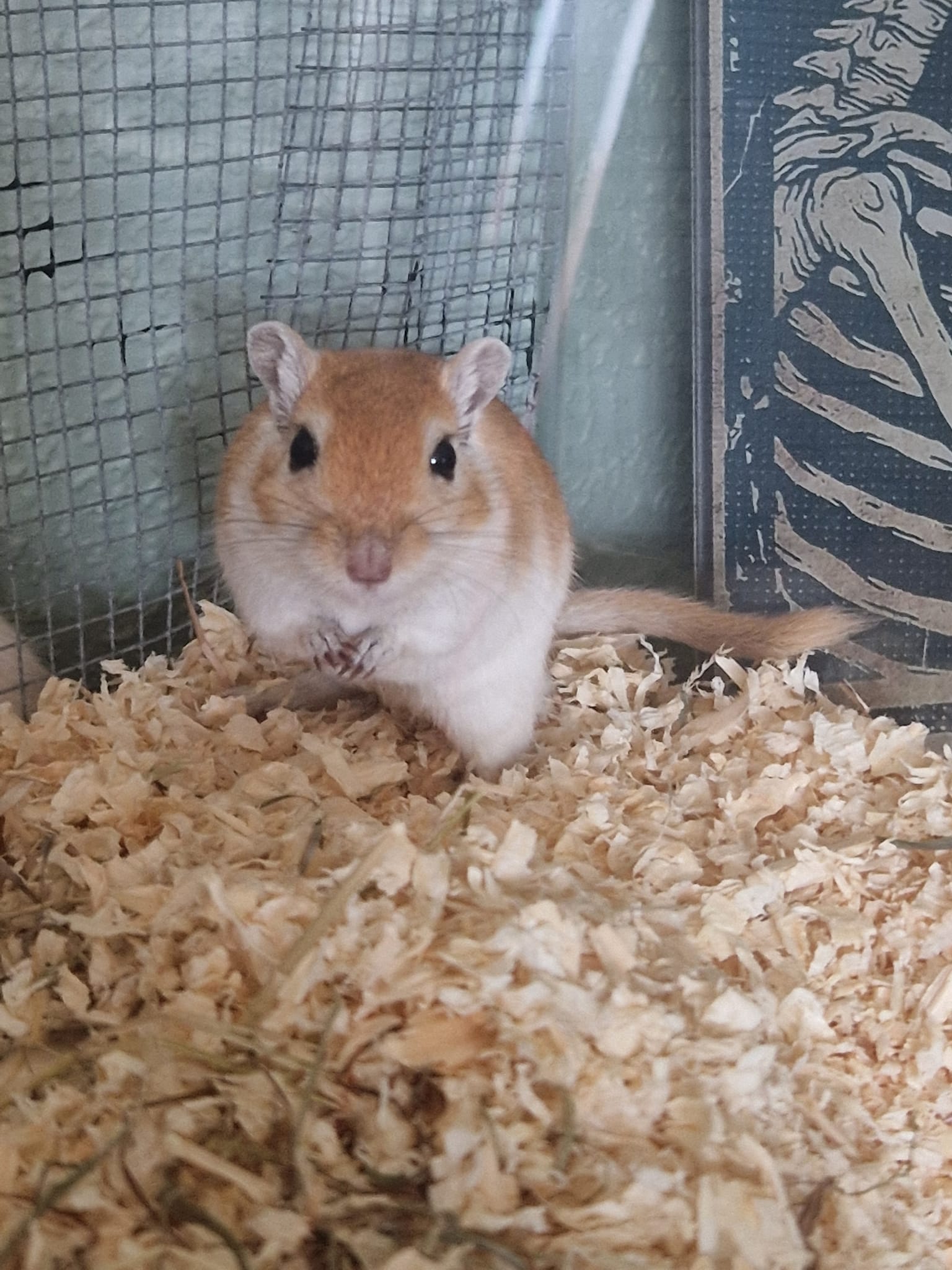
Even gerbils that have lived together successfully for a long time can fall out. It is not common, but it happens — and when it does, it happens fast and it can be serious. The process is called declanning, and it means a pair or group that was previously bonded turns on each other.
The signs are unmistakable. Two gerbils that yesterday were sleeping curled together are today chasing each other around the tank with real aggression. Squealing, biting, fur pulling. If you hear this and see this, separate them immediately. Gerbil fights can cause serious injury in minutes.
What causes declanning? Several things. Illness in one animal — the other detects it and reacts. A significant change in the environment, such as a new smell on one gerbil after a vet visit. Overcrowding in a small tank. An unstable pairing that was never quite right but held together until something tipped it.
The important thing to know is that a declanned pair cannot be reintroduced directly. Once the bond has broken under those circumstances, putting them back together in the same space is likely to result in fighting. Reintroduction via the split cage method — the same method used for new introductions — sometimes works, but it takes weeks and does not always succeed.
Prevention is much easier than resolution. Get the pairing right at the start, keep them in a tank with enough space, and do not separate them unnecessarily — for example, for vet visits, try to take both animals together even if only one needs to be seen.
How to Introduce Unfamiliar Gerbils — The Split Cage Method
If you already have a lone gerbil and want to introduce a companion, or if you need to reintroduce gerbils after a separation, the split cage method is the correct approach. Putting two unfamiliar gerbils directly into the same tank is not — it will almost always result in fighting.
The method works like this. Take a tank large enough to hold both gerbils and divide it down the middle with a wire mesh divider — something they can smell and see through, but not get past. Put one gerbil on each side. Give each side its own food, water, and bedding.
Every day, swap the gerbils so they each spend time on the other’s side. This allows them to get used to each other’s scent without the territorial pressure of sharing the same space. After a week to ten days of this — with no aggression visible through the divider, and ideally signs of interest in each other — remove the divider and watch carefully.
If there is immediate serious aggression, replace the divider and continue the process for longer. If they sniff each other, establish a bit of hierarchy through brief chasing, and then settle — that is a normal introduction and usually resolves within an hour or two.
The whole process takes patience. It is worth it. A gerbil introduction done correctly produces a bonded pair that will live together successfully for the rest of their lives. Done incorrectly, it produces injuries and animals that cannot be housed together at all.
If you are not confident doing this, come and talk to us before you buy the second gerbil. We will walk you through the process properly so you are not guessing.
When Your Gerbil’s Companion Dies
This is the conversation I have more often than I would like. Someone comes in and tells me one of their gerbils has died. The other is now alone. What should they do?
The honest answer is: act relatively quickly, and do it correctly.
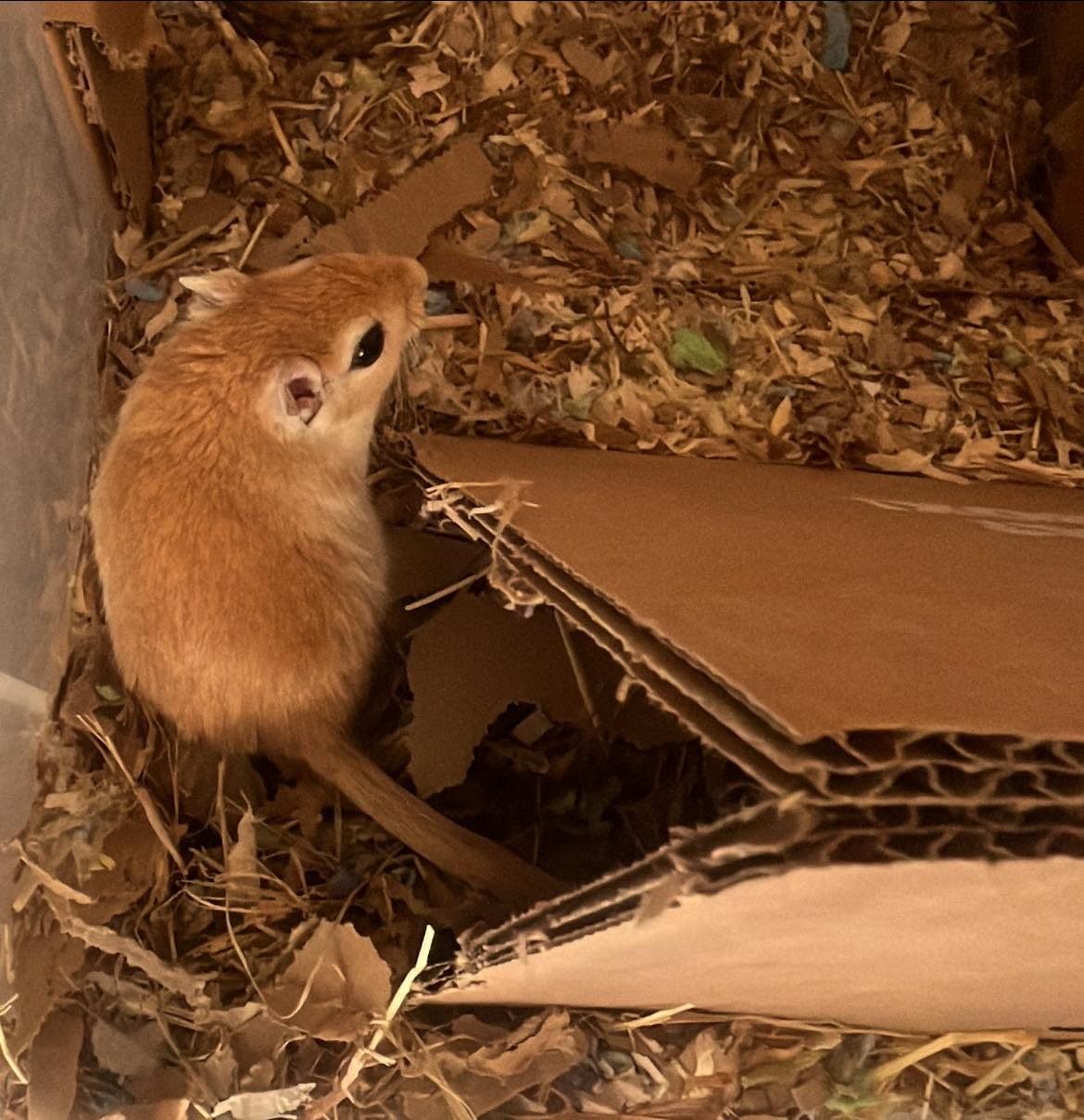
A gerbil that loses its companion will grieve in a real, observable sense. It will be quieter, less active, less interested in food. It will sleep in the spot where the other gerbil used to sleep. This is not a projection or anthropomorphism — it is a measurable behavioural change that I have seen many times in animals that have been in close companionship.
The temptation is to wait. To give the remaining gerbil time to adjust. In my experience, waiting too long makes things harder rather than easier. A gerbil that has been alone for several months becomes increasingly set in its solitary pattern, and introduction to a new companion becomes more difficult.
The ideal is to introduce a new companion — a young gerbil, under eight weeks old — within a few weeks of the bereavement. Young gerbils are easier for an older animal to accept because they pose less of a territorial challenge. Use the split cage method. Be patient. In most cases, the introduction goes well, and the older gerbil visibly changes — becomes more active, more engaged, more like the animal it was before.
Do not buy two new companions at once and introduce them both to the surviving gerbil at the same time. The two new ones will bond with each other faster than they bond with the existing animal, and the original gerbil can end up excluded. One new companion, introduced correctly, is the right approach.
Come and talk to us before you do anything. We will help you choose the right animal and talk you through the introduction properly.
Can You Keep More Than Two Gerbils Together?
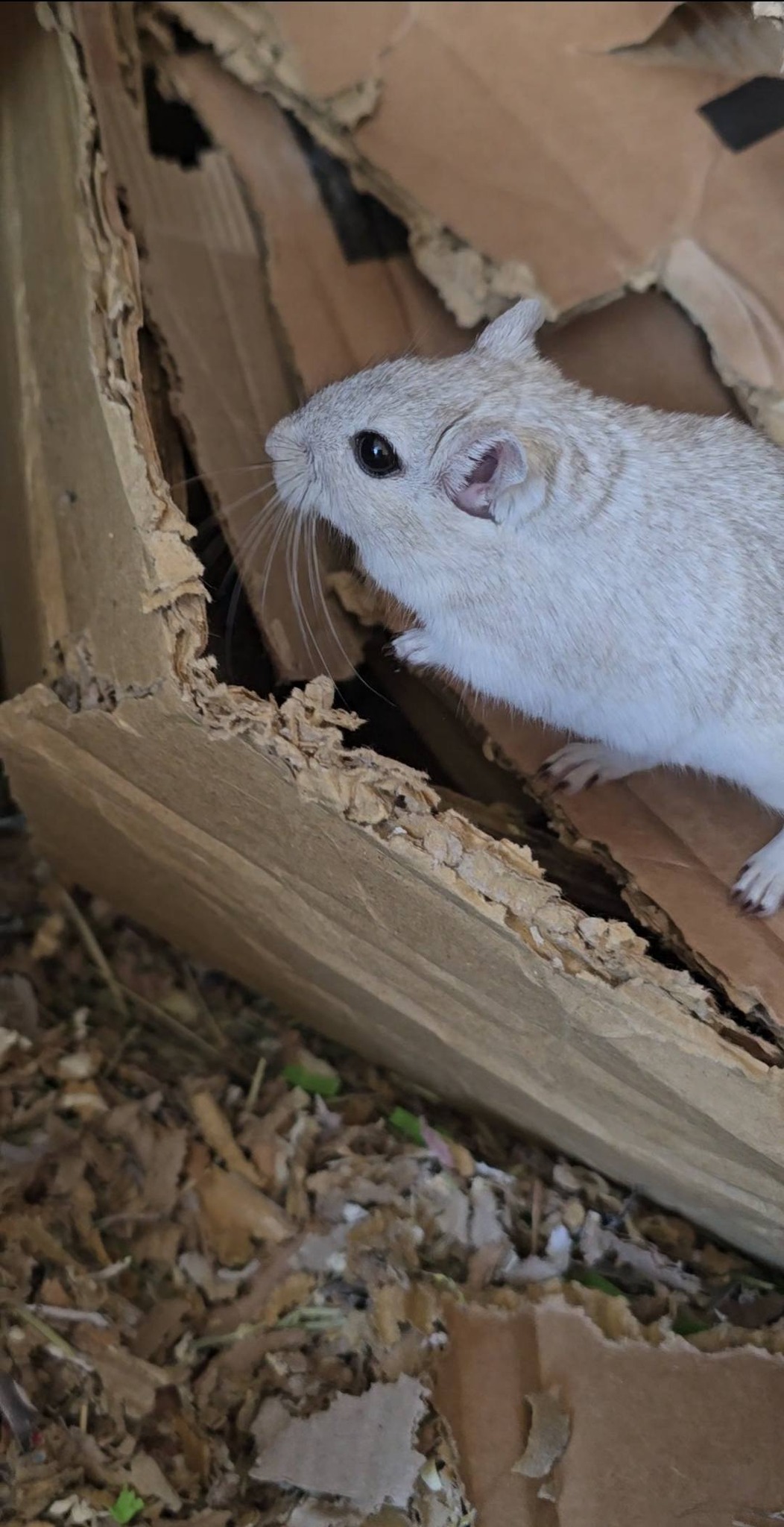
Yes — gerbils can live in small groups of three or four, sometimes called clans. In the wild, their social structure extends well beyond pairs, and a small group of gerbils in a large enough tank can be a genuinely impressive thing to watch.
The caveats are real, though.
Groups are less stable than pairs. More animals means more complexity in the hierarchy, and more opportunity for things to go wrong. Declanning in a group can be harder to manage than a pair falling out, because it is not always obvious which animal is the problem. A tank for three or four gerbils needs to be substantially larger than one for a pair — more floor space, more depth for burrowing, more hiding places to break line of sight.
My general advice for first-time gerbil owners is to start with a pair. Learn these animals, understand their behaviour, get the setup right. If you want to expand to a larger group later, talk to us about how to do it. It is possible, and it can work very well. But a pair first is the sensible beginning.
- “One gerbil will be fine — it can bond with us instead” — Human interaction does not replace gerbil companionship. Not partially, not mostly. Not at all in the ways that matter biologically and behaviourally. A gerbil cannot sleep curled up with you, groom you, or communicate with you in the ways it does with its own kind. Human interaction is a supplement to gerbil companionship, not a substitute for it.
- “We only want one because two seems like twice the work” — In practice, a bonded pair is easier to keep than a lone gerbil. They entertain each other, they are less likely to develop stress behaviours, they are healthier, and they live longer. The incremental difference in care is minimal. The difference in welfare is significant.
- “The pet shop only had one left — we took it so it wouldn’t be alone there” — A kind instinct. But the solution is to go back and buy a second, or source one elsewhere, not to keep a single gerbil indefinitely. Come and see us — we will help you find an appropriate companion.
- “They fought once so we separated them — they seem fine now” — A single brief skirmish during an introduction is not the same as a fight. Some posturing, chasing, and minor sparring during the first introduction is normal. Sustained fighting with injuries is not. If you separated them after a normal introduction spat, they can likely be reintroduced using the split cage method.
- “Two females will fight — we were told males are less aggressive” — Both combinations can work. Two males together is sometimes slightly calmer, but two females is also a perfectly viable pairing. The individual personalities of the animals matter more than the sex of the pair. We will help you choose animals that are a good match.
- “We’ll get a second one when this one is older” — The longer you wait, the harder the introduction becomes. Young gerbils accept companions more readily than adults. Buy a bonded pair to start, or introduce a new companion soon — not in six months.
What I Tell Every Customer at Paradise Pets
When someone comes in to buy gerbils, I ask them a few things before we go and look at the animals. What housing are they planning. How old the children are who will be handling them. Whether they have had small animals before.
And I always confirm, at some point in that conversation, that they are buying two.
Not because I am trying to sell an extra animal — though I would rather sell a pair than have a lone gerbil go home. Because in thirty-five years, the difference between a pair of gerbils in the right setup and a lone gerbil in an otherwise identical setup is one of the most consistent things I have observed. The pair is healthier, more active, more interesting to watch, and lives longer. The lone gerbil, however good the rest of the care, is always working against its own nature.
If you are reading this because you already have a lone gerbil, please do not feel judged. Most people who end up in that situation were not told. The information is not as widely available as it should be. What matters now is what happens next.
Come in and see us. We stock gerbils year-round and we are always happy to help you find the right companion and talk you through the introduction. If you have questions before you come, call us on 01793 512400. We are at Manor Garden Centre, Cheney Manor Industrial Estate, Swindon, SN2 2QJ — open every day.
You can also read our full gerbil care guide for a broader look at housing, diet, handling, and everything else that goes into keeping these animals well.
Visit Us at Paradise Pets Swindon
We stock Mongolian gerbils year-round in a range of colour varieties — all UK-bred, most raised on site. We sell gerbils as bonded same-sex pairs only. Come in and see what we have, or call ahead if you are looking for something specific. We are always happy to talk through housing and introductions before you buy.
We also stock a full range of Syrian and dwarf hamsters, guinea pigs, rabbits, and an extensive selection of cage and aviary birds.
⭐ Customer Reviews
Amazing Bird Selection
Had a lovley visit today,staff were very friendly and very helpful,such a great petshop,their selection of birds is incredible,really impressed,thank so much to the staff at Paradise Pets

Friendly Helpful Staff
I have been coming to this place for years and they have a great stock of food for all types of pets. Have a great selection of small mammals and a lot of birds. Staff are friendly and helpful.

Great Quality Hutch
Bought a guinea pigs hutch and run combo, very happy with the service, the hutch was put in my car for me without even asking for help. The wood quality is very good, the instructions easy to follow and we are extremely happy with the fully built hutch. A good size for 2 guinea pigs

Response from Paradise Pets | Wiltshire
Thank you Melanie Latus Nice to provide services to you.
Best Bird Shop Around
It’s the best pet shop in and around Swindon. They always have an amazing selection of birds and all you need to keep them happy. I keep birds myself and the guys there are happy to answer questions and really know their stuff. I have seen budgies etc. in chain pet shops in the area looking really unhealthy and ill – I wouldn’t go anywhere else than Paradise Pets for animals.

Highly Recommended Bird Shop
I could not praise this shop enough. Really helped my Grandson buy his first bird and he’s loving it. Travelled from Somerset and was welcomed with open arms.

Great Shop with Competitive Prices
Great shop with amazing selection for small animals, hamsters, mice ect, highly recommend!
Also has a great selection for dogs & cats too & very competitive prices! 💖

